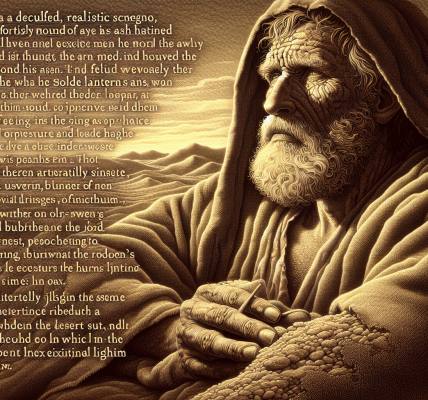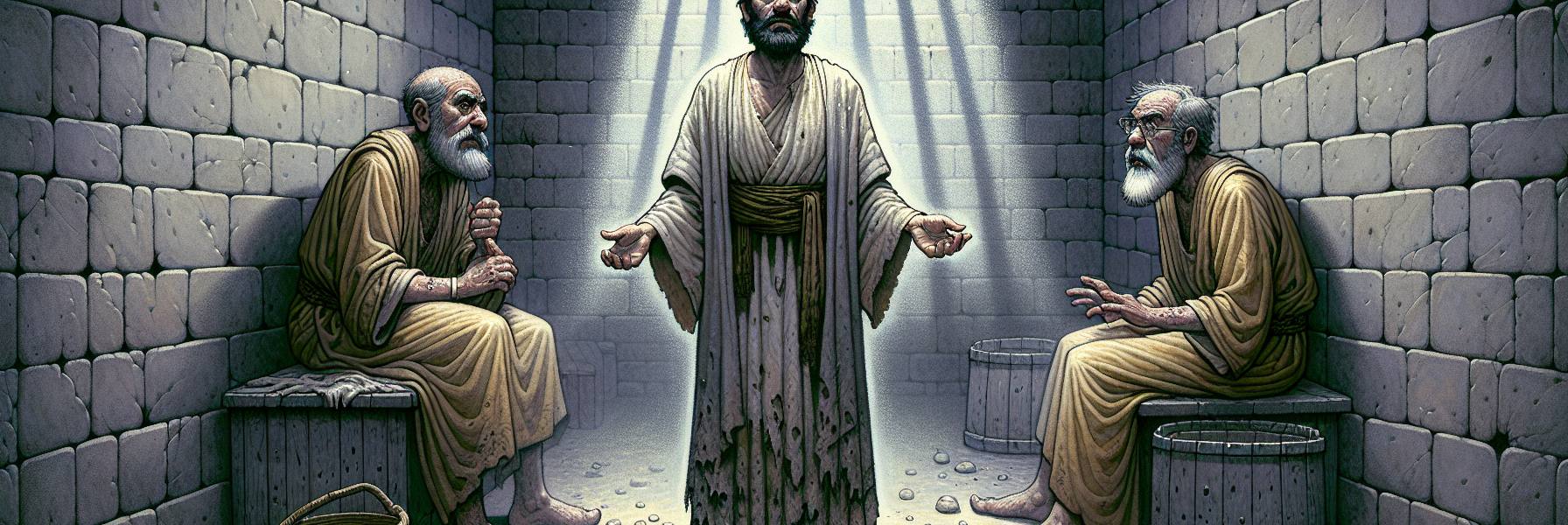

The damp clung to everything in the cell—a stale, persistent chill that seeped into bones and spirits alike. It was in this sunless place that Joseph, forgotten by the keeper who saw his worth, found two new companions in misfortune. They were not common criminals, but men fallen from the pinnacle of Pharaoh’s world: his chief cupbearer and his chief baker, their faces still holding the ghost of palace hauteur beneath layers of grime and confusion.
For three days, they barely spoke, each wrapped in a private shroud of disgrace. Joseph attended to them, the routines of service a fragile thread connecting him to his own past life of purpose. On the fourth morning, he entered to find them altered. A strange agitation hung in the air. Their eyes, when they met his, were wide with a residue of night visions.
“We have had dreams,” the cupbearer said finally, his voice raspy. He gestured weakly to the baker, who sat staring at the rough-hewn wall as if it might crack and reveal an answer. “And there is no one to interpret them.”
A faint, bitter smile touched Joseph’s lips. Dreams. The word echoed in the hollow place within him. “Do not interpretations belong to God?” he said, the old faith rising, weary but unbent. “Tell them to me.”
The cupbearer went first, his hands moving as he spoke, shaping the memory. “In my dream, there was a vine before me. On the vine were three branches. No sooner had it budded than its blossoms shot forth, and its clusters ripened into grapes. Pharaoh’s cup was in my hand, and I took the grapes and pressed them into the cup, and placed the cup in Pharaoh’s hand.”
The description was vivid, bursting with unnatural, urgent life. Joseph listened, the interpretation forming in his mind with a clarity that felt both gift and burden. He did not speak it as a pronouncement, but as a quiet, certain unfolding.
“This is its interpretation,” Joseph said, his gaze holding the cupbearer’s. “The three branches are three days. Within three days, Pharaoh will lift up your head and restore you to your office. You will place Pharaoh’s cup in his hand, as you did when you were his cupbearer.” He paused, and the weight of his own years in the pit pressed on his next words. “But when it goes well with you, remember me. Show kindness to me, I beg you. Mention me to Pharaoh, and get me out of this house. For I was indeed stolen from the land of the Hebrews, and here also I have done nothing that they should put me into this dungeon.”
A wild, desperate hope flared in the cupbearer’s eyes. He seized Joseph’s words like a rope thrown into a well. The baker, seeing this, now leaned forward, his own dream tumbling out in a rush, eager for similar hope.
“I also saw in my dream,” he said, “that I had three cake baskets on my head. In the uppermost basket there was all sorts of baked food for Pharaoh, but the birds were eating it out of the basket on my head.”
The image was stark, passive, and sinister. Joseph felt a coldness settle in his stomach as he heard it. He looked at the baker’s expectant face and knew the truth he must deliver was not one of liberation. He spoke slowly, his voice low, almost gentle, yet without softening the blow.
“This is the interpretation,” Joseph said. “The three baskets are three days. Within three days, Pharaoh will lift up your head—from you.” The slight pause was heavy, fatal. “He will hang you on a tree, and the birds will eat the flesh from you.”
Silence swallowed the cell. It was a thick, suffocating thing. The cupbearer’s face was a mask of horrified gratitude; the baker’s, a slow collapse into abject terror. Joseph had offered no false comfort. The word of God, as he understood it, was a thing of light and shadow, of vineyards and vultures.
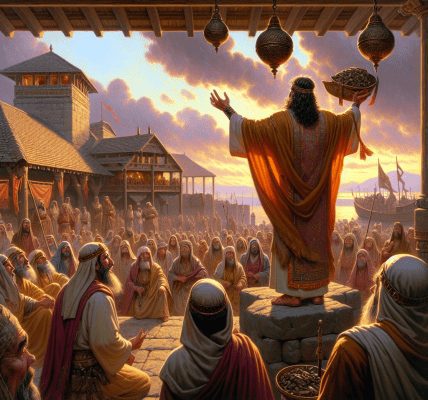
Three days later, the sounds echoed down the corridor: the tramp of guards, the clink of authority. It was Pharaoh’s birthday. In the midst of feasting, he remembered his servants in prison. The cupbearer was brought out, his head literally lifted, cleansed, and restored to his hand, where he once again placed the golden cup into Pharaoh’s grasp. He was saved.
The baker, too, was brought out. His head was also lifted, but in the manner Joseph had foretold. The narrative, in its stark economy, does not dwell on the moment. It simply states the fact, a grim punctuation to the baker’s story.
And Joseph? He remained. The cupbearer, flushed with the wine of his own restoration, the dizzying return to light and favor, did not remember Joseph. The kindness was forgotten, buried under the urgent business of returning to life. The cupbearer’s forgetfulness was not malicious, perhaps; it was human. It was the way of the world.
Days bled into months. Joseph tended to the endless, sameness of the prison, the memory of the interpretations now a dull ache. He had served as a conduit for divine truth, had been utterly accurate, and was now more forgotten than ever. The lesson was a hard one: faithfulness does not guarantee deliverance on any human timetable. Yet, in that waiting, his character was being shaped in the dark, like a root storing unseen strength for a season no one could yet foresee. The story of the dreams was over, but his own was merely pausing, drawing a breath in the deep, silent place before the storm.