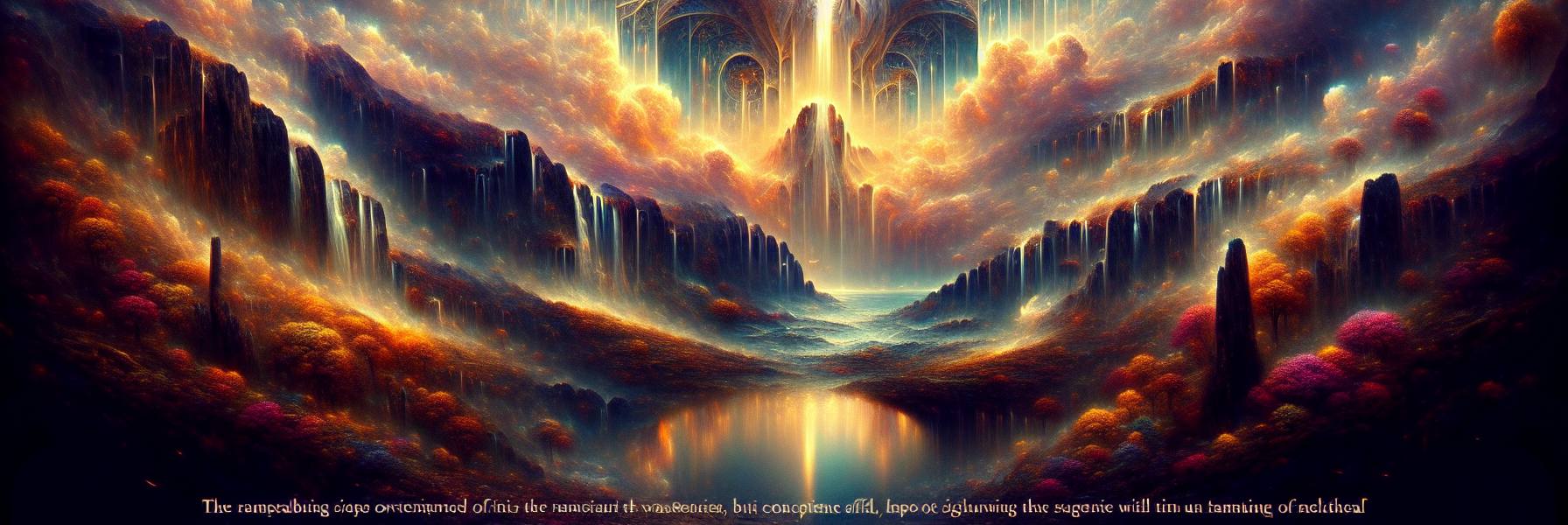

The air itself tasted of metal and incense. I was not asleep, nor fully awake, but held in that breathless space between, where the veil of what is and what must be wears thin. The roar of the sea was gone, replaced by a silence so profound it seemed to hum in my bones. Then, a sound—not a sound, but a feeling—of countless wings, a harmony that was seen more than heard.
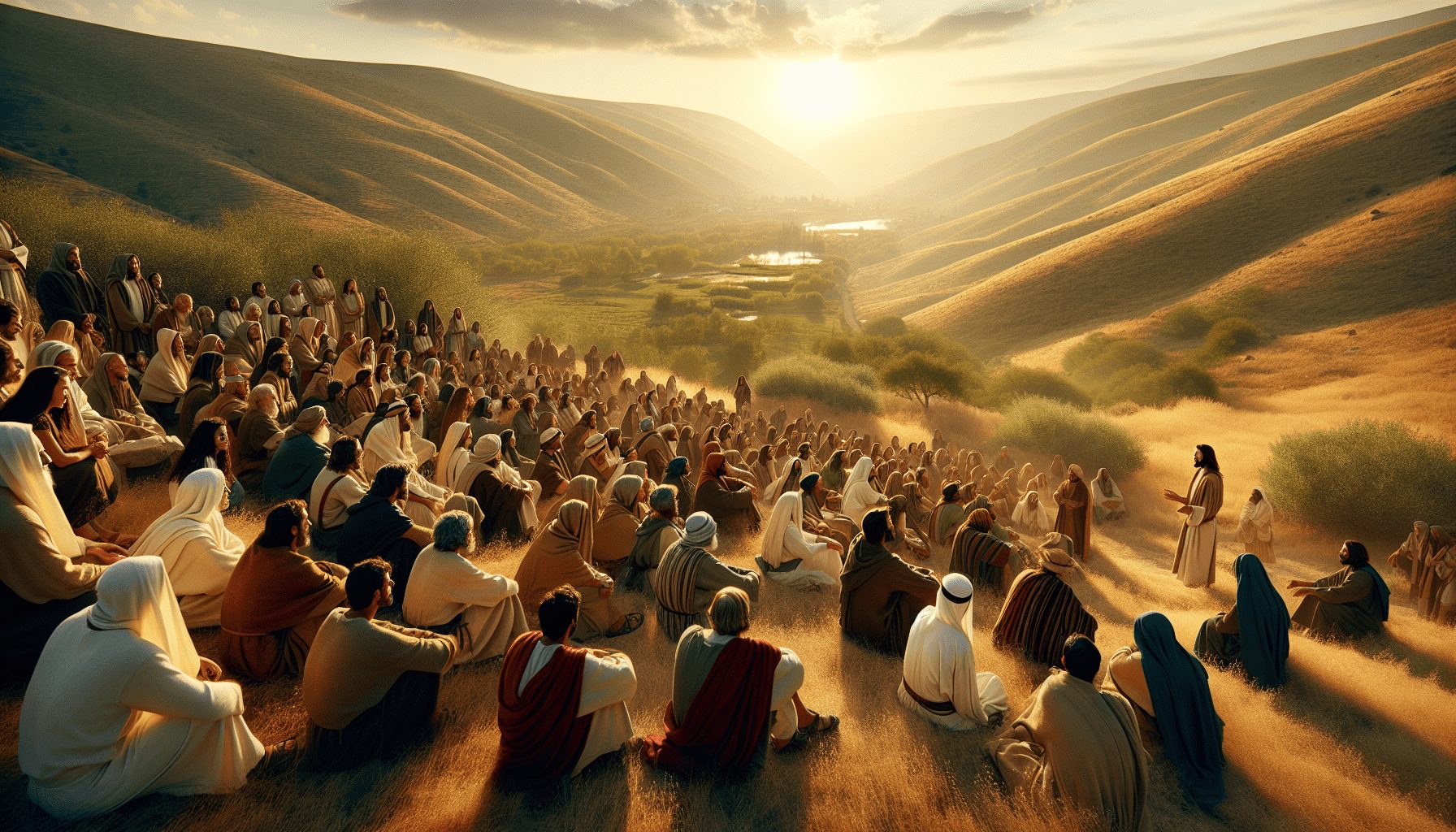
And I looked. There was Zion, not the dusty hill I knew, but a mountain of light, its foundations rooted in a dawn that had no end. Upon it stood a Lamb, bearing the marks of slaughter, yet alive in a way that made life itself seem a dim memory. About Him were a multitude, one hundred and forty-four thousand, a number I had heard before, but to see them… Their faces were not marked by triumph, but by a profound stillness, as if they had passed through a fire that burned away everything but truth. A sound flowed from them, a music that seemed sourced from the very throne, a new song that no one else could learn. It was a melody of redemption, specific and intimate, a hymn known only to those who had followed the Lamb through the desolate places. They were unstained, not by ritual, but by a fundamental purity of allegiance; they were the firstfruits, the earnest offering of a harvest yet to come.
Then, the scene shifted, pulled back as if the curtain of heaven was drawn wider. An angel crossed the midpoint of the sky, eternal, bearing an eternal gospel. His voice was not thunderous, but clear and carrying, meant for every tribe and tongue and people and nation.
“Fear God,” he cried, and the words were heavy, solid things, falling to the earth like stones. “Give Him glory, for the hour of his judgment has come. Worship him who made heaven and earth, the sea and the springs of water.”
It was not an invitation, but a proclamation. A line was being drawn in the sands of time itself.
A second angel followed, and his voice held a terrible finality. “Fallen, fallen is Babylon the great, she who made all nations drink the wine of the passion of her immorality.”
The name ‘Babylon’ hung in the air, and I understood it was not merely a city of brick, but a spirit, a system—the grand, seductive architecture of human rebellion, glittering and hollow. Its fall was announced as an accomplished fact, though its towers still seemed to scrape the sky on earth. In the economy of heaven, its doom was already sealed.
Then a third, his face stern with a warning that was also a mercy. “If anyone worships the beast and its image and receives a mark on his forehead or on his hand, he also will drink the wine of God’s wrath, poured full strength into the cup of his anger.” The vision grew acute: not mere punishment, but a consuming, undiluted confrontation with holiness itself, a fire with no mixture of grace for those who had definitively chosen the counterfeit. “And he will be tormented with fire and sulfur in the presence of the holy angels and in the presence of the Lamb. And the smoke of their torment goes up forever and ever. They have no rest, day or night.”
The words were ice and fire. This was the terrible dignity of choice made permanent.
After this, a voice, familiar and dear, came from the midst of the heavenly throne. “Write this: Blessed are the dead who die in the Lord from now on.”
“Blessed indeed,” the Spirit echoed, a sigh of profound solace. “That they may rest from their labors, for their deeds follow them.”
Then I saw a white cloud, and seated on the cloud one like a son of man, wearing a golden crown, and with a sharp sickle in his hand. Another angel came from the temple, crying in a loud voice, “Put in your sickle and reap, for the hour to reap has come, for the harvest of the earth is fully ripe.” The one on the cloud swung his sickle across the earth, and the earth was reaped.
Another angel emerged, also with a sharp sickle. Yet another angel, the one who had authority over fire, called from the altar, “Put in your sharp sickle and gather the clusters from the vine of the earth, for its grapes are ripe.” The angel swung his sickle and gathered the vintage of the earth and threw it into the great winepress of the wrath of God. And the winepress was trodden outside the city.
What I saw then defied my capacity to record it. It was a harvest, yes, but one of dreadful separation. The first sickle gathered wheat, precious and wanted. The second gathered grapes, but these were not for celebration; they were the full, swollen fruit of corruption. The winepress was not a vessel, but a place—a vast, terrible valley of decision. The juice that flowed was not wine, but a lifeblood of judgment, rising as high as the horses’ bridles for a distance of two hundred miles.
I came back to myself on Patmos, the salt spray on my lips, the ordinary sun overhead. But my hands trembled. The visions were not mere spectacle. They were a revelation of two certainties, moving on parallel tracks toward their inevitable ends: the quiet, sealed company of the redeemed on the mountain, singing their unlearnable song, and the furious, final culmination of every rebellion, trodden down in the winepress of holiness. It was a call, stark and urgent, ringing out in the heavenly silence between the angel’s cry and the swing of the sickle: to whom does your allegiance belong? The choice itself was the most human thing of all. The consequence of it was divine.