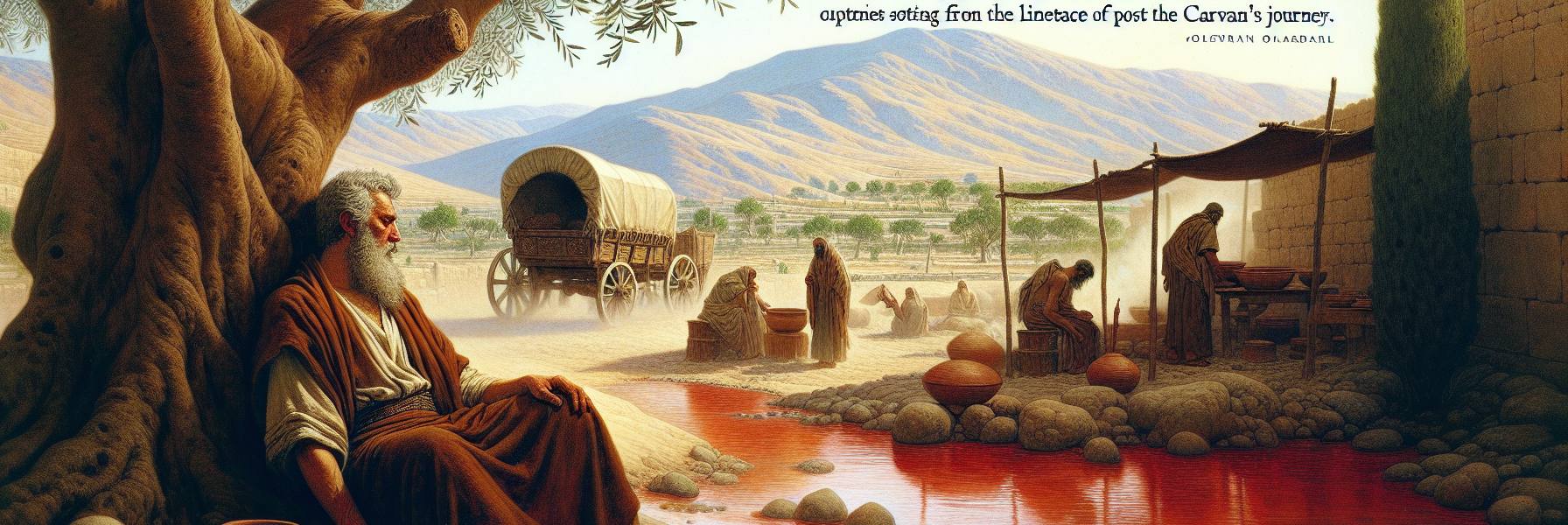

I remember the day the silence began. Not the silence of an empty street or a windless afternoon, but a heavier quiet, one that settled over the whole quarter like dust after a caravan has passed. We’d heard the prophets, of course. Old men with fire in their beards and thunder in their throats, speaking of one who would come. A king, a deliverer, a branch from the stump of Jesse. We imagined banners.
He didn’t come with banners.
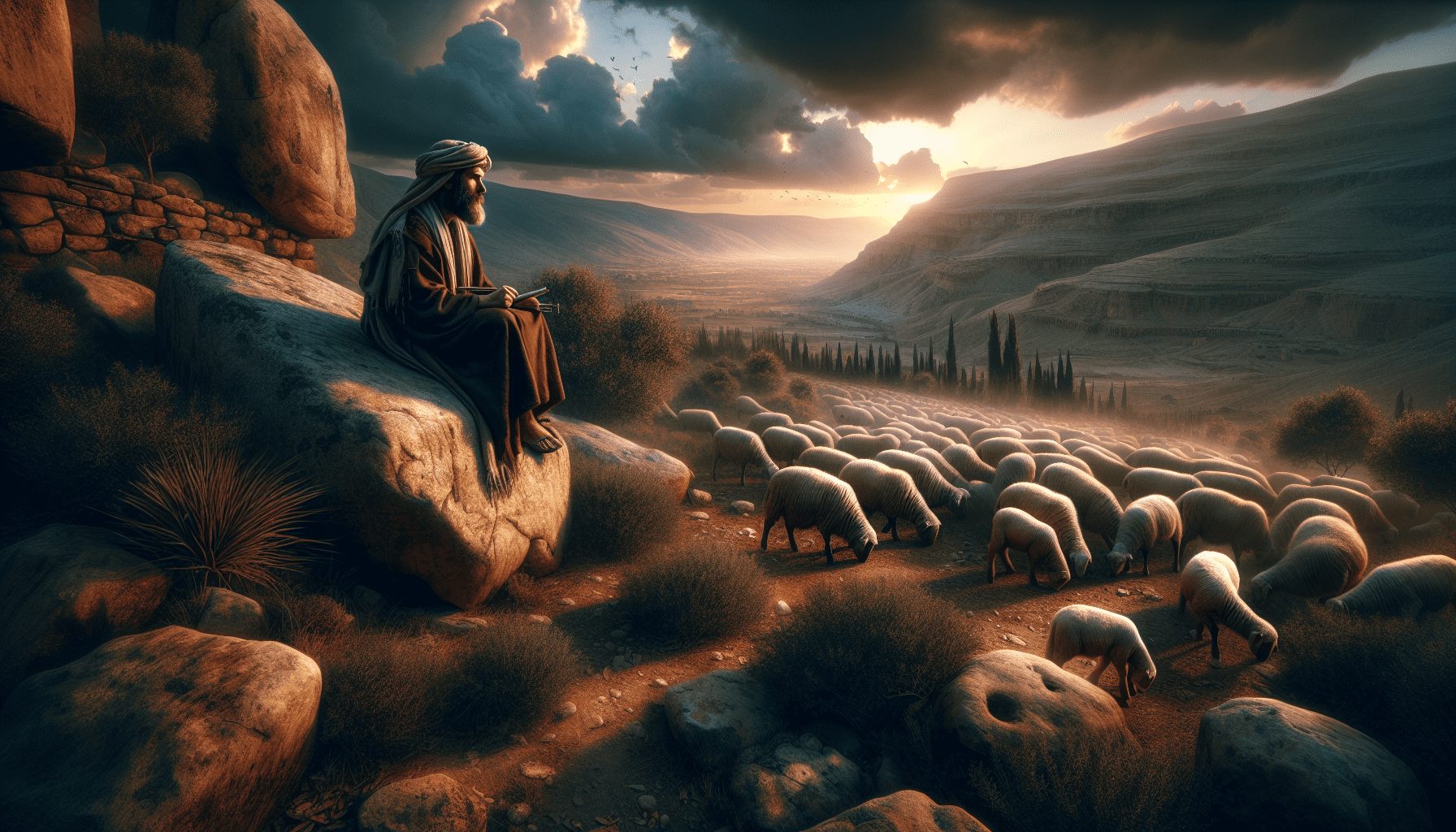
I first saw him near the potter’s field, where the clay pits bled red water into the Kidron’s trickle. He was just a man, leaning against a sun-bleached olive tree, watching the potter at his wheel. There was nothing in his appearance that we should desire him. That’s the phrase that comes to me now. His face was common, weathered early by sun and travel, his hands the hands of a carpenter—practical, strong, marked with old scars and new nicks. His cloak was the color of dust. He looked… ordinary. Disappointingly so. We wanted majesty, and he brought humility. We wanted a conquering shout, and he offered a listening silence.
He moved among us after that. Not in the temple courts debating the sharp-edged lawyers, but in the alleys where the sick huddled, in the dim rooms where grief had eaten all the air. He would sit, not stand above them. He touched the lepers—not with a quick, ritual brush of fingertips, but taking their ruined hands in his, as if greeting a kinsman. People started to follow him, a ragged train of the hopeful and the curious. And the authorities, they watched with faces like shut gates.
The whispers started. *He’s a glutton, a drunkard, a friend of the worst sorts.* They weren’t shouted; they were hissed, like steam from a crack in a stone. And he heard them. I know he did. But he’d just look at the one whispering with a kind of sorrow that seemed older than the hills, and turn back to the blind beggar or the sobbing woman.
Then the tide turned. It’s ugly how fast it happens. One week they were laying palms in his path; the next, the same mouths were twisted into snarls. It was as if a great, collective sickness took hold of us. We saw his gentleness as weakness. His refusal to raise an army, cowardice. His talk of a different kingdom, treason. We wanted to be healed, but we didn’t want the medicine. We wanted freedom, but not if it meant his kind of truth. He was despised. We rejected him. A man of sorrows, acquainted with grief. You’d see it in the slope of his shoulders at the end of the day, a weariness that went right down to the bone. It wasn’t the tiredness from miles walked, but the exhaustion of carrying a weight none of us could see.
The night they took him, the air was thick and sour. I was there, hiding in the shadow of the city wall. They led him past, his hands bound. They struck him. Spat on him. And he was silent. Like a sheep before its shearers is silent. That was the most terrible thing—the quiet acceptance of it. No defiance, no plea to the heavens. Just a dreadful, willing stillness. It felt wrong. A man should rage against that.
The next morning, under a sky the color of a bruise, they nailed him to a cross outside the wall. The religious ones, they scoffed, shaking their heads. “He saved others,” they said, their voices slick with a hateful triumph. “Let him save himself, if he is the chosen one.” The soldiers gambled for his tunic. The rest of us? We stood at a distance, watching life drain from him. And in that moment, a strange, sharp clarity cut through my fear. We thought he was being punished by God. Smitten by Him, afflicted. But looking at his broken form—the stripes on his back from the lash, the awful crown of thorns, the sheer, brutal *innocence* of his suffering—a thought, terrifying and new, pierced me: *What if this is not God’s punishment* on *him, but God’s punishment* through *him?*
The thought was too big to hold. It was like staring at the sun. He had done no violence. There was no deceit in his mouth. Yet he was pierced for our transgressions. Crushed for our iniquities. The chastisement that brought us peace was upon him. With his wounds… we are healed.
All of us, we had gone astray. Every one to his own way. And the Lord laid on *him* the iniquity of us all. It wasn’t a random act of political violence. It was a profound, terrible, deliberate substitution.
He died. They took his body down and sealed it in a tomb. And the silence returned, deeper than before, a silence that rang in your ears. For three days, it felt as if the world itself was holding its breath, guilt-stricken and ashamed.
I cannot explain what happened next. I can only tell you what I know. The silence broke. He lived. The one we rejected, the one we esteemed not, was seen, touched, spoken to. And the man with the ordinary face was revealed to be the arm of the Lord, made bare not in crushing armies, but in surrendering love. He shall see his offspring, the prophet said. He shall prolong his days. How? Through a people made whole by his stripes. Through a legacy not of blood, but of grace.
I am an old man now. My hands shake. But I remember the potter’s field, the red mud. The potter shapes the clay. Sometimes, to make it right, he must crush it and start anew. We were the marred vessel. He was the clay, willingly broken, so that in the hands of the Potter, we all might be remade.