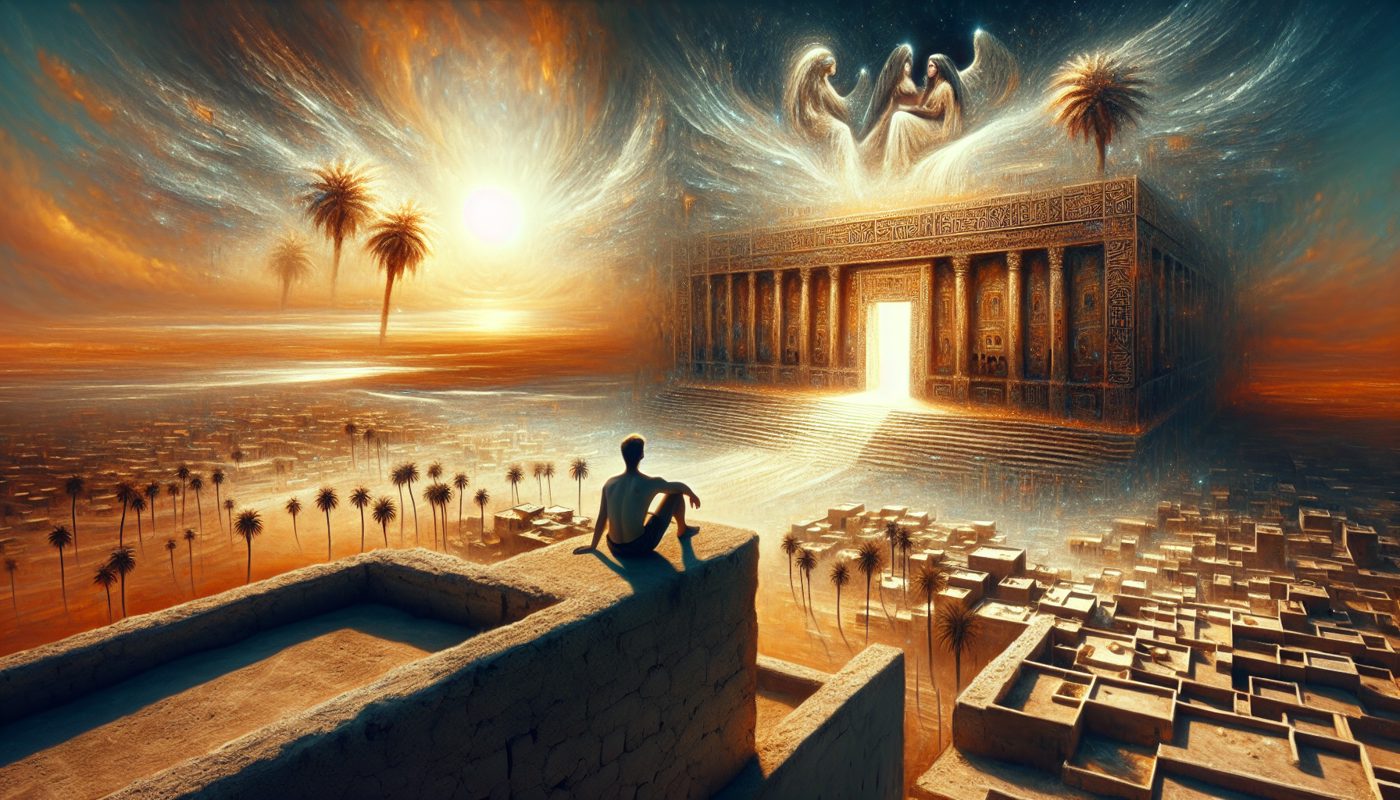
The burden of the wilderness of the sea. The phrase itself is a contradiction, and the prophet does not explain it. He lets it stand as a riddle that the vision will crack open. What comes is not a calm oracle but a storm—whirlwinds sweeping through the Negeb, the southern desert, and a voice crying out from a terrible land. The prophet does not name Babylon until the end, but the pressure of the vision is already upon him.
He hears the command: Go up, O Elam; besiege, O Media. Elam and Media are not allies of Israel. They are distant peoples, raised up by the Lord as instruments. The prophet does not question why. He only reports what he sees: the treacherous man dealing treacherously, the destroyer destroying. The sighing of Babylon, that vast city of waters and walls, has been made to cease. The vision is grievous, and it lands on the prophet like a physical weight.
His body responds before his mind can frame the words. His loins are filled with anguish. Pangs take hold of him like a woman in labor, but there is no child—only a coming ruin. He is pained so that he cannot hear; he is dismayed so that he cannot see. The twilight he once loved, that gentle pause between day and night, has become a horror. His heart flutters; terror has affrighted him.
And then he sees the feast. They prepare the table, they set the watch, they eat, they drink. The princes of Babylon are laughing, anointing their shields, polishing bronze for a battle they do not believe is coming. The prophet sees the blindness of them. They feast in the very shadow of the siege.
The Lord gives a direct command: Go, set a watchman. Let him declare what he sees. The watchman is not a volunteer. He is placed on the tower by the word of the Lord. He stands there in the daytime and is set in his ward whole nights. He watches for a troop, horsemen in pairs, a troop of asses, a troop of camels. He hearkens diligently with much heed. This is not a casual lookout. This is a man straining to see the shape of what is coming.
And then he cries out like a lion: Fallen, fallen is Babylon. All the graven images of her gods are broken to the ground. The watchman does not see the fall happening. He sees it as already accomplished. The vision collapses time. The prophet threshes the grain of the Lord's floor and declares what he has heard from the Lord of hosts, the God of Israel.
The oracle shifts. A voice calls out of Seir, from the land of Dumah: Watchman, what of the night? Watchman, what of the night? The question is urgent, repeated. The watchman answers with a riddle of his own: The morning cometh, and also the night. If you will inquire, inquire. Turn, come. The night is not over. The morning will come, but the night will return. The watchman does not offer easy comfort.
Then the burden upon Arabia. The caravans of Dedanites will lodge in the forest. The inhabitants of Tema will bring water to the thirsty and bread to the fugitives. They flee from the swords, from the drawn sword, from the bent bow, from the grievousness of war. The Lord speaks again: Within a year, according to the years of a hireling, all the glory of Kedar shall fail. The residue of the archers, the mighty men of Kedar, shall be few. The Lord, the God of Israel, has spoken it.
The chapter ends with no resolution, no prayer, no promise of restoration. The watchman has declared what he saw. The burden has been delivered. The reader is left standing on the tower with him, straining to see what comes next.
Comments
Comments 0
Read the discussion and add your voice.
Members only
Sign in to join the conversation
We keep comments tied to real accounts so the discussion stays clean and trustworthy.
No comments yet. Be the first to add one.