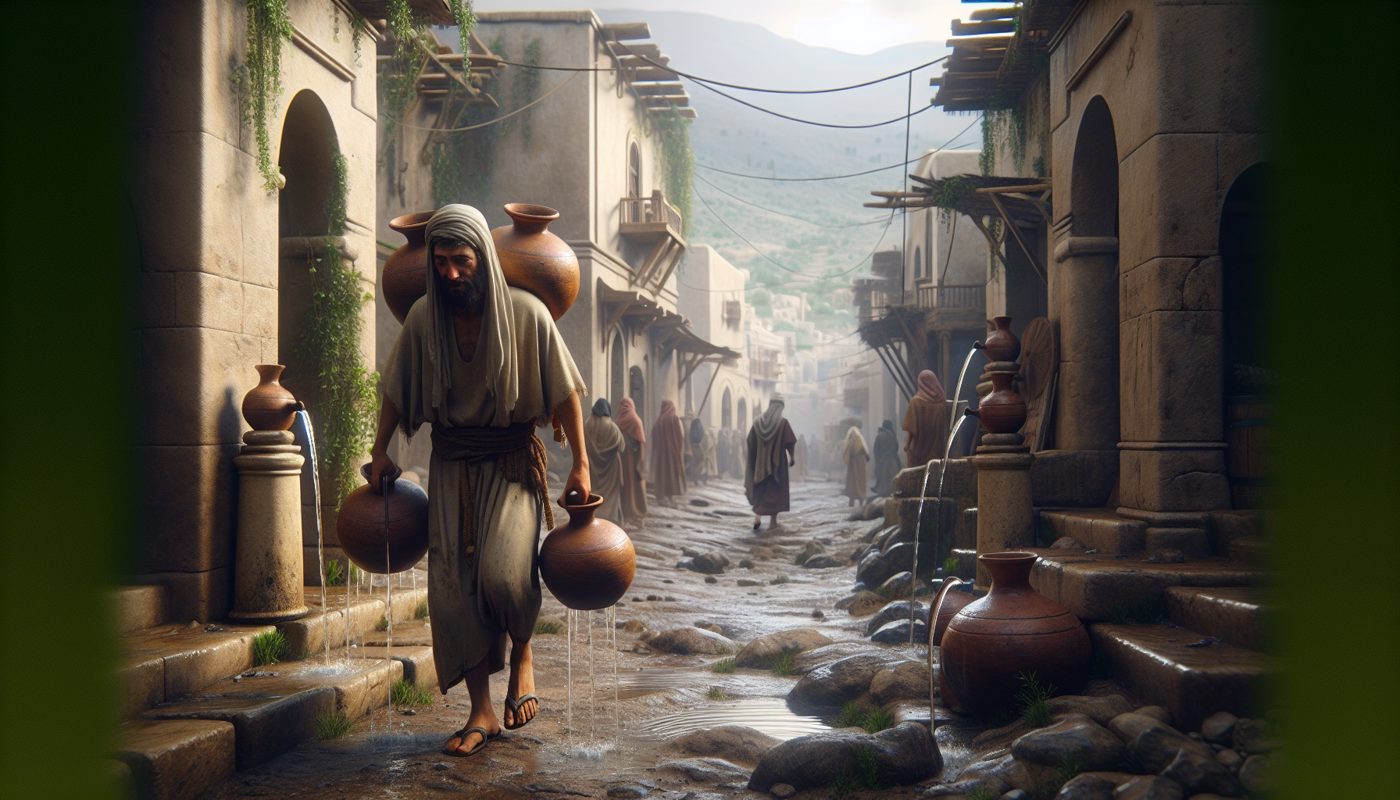
The Teacher in Ecclesiastes 9 does not soften the blow. He states plainly what every person under the sun suspects but rarely says aloud: the same end comes to the righteous and the wicked, the clean and the unclean, the one who sacrifices and the one who does not. There is one event for all. This is not a complaint that the Teacher resolves with a pious flourish. He calls it an evil under the sun, and he lets it stand.
The chapter opens with a hard confession. The righteous and the wise and all their works are in the hand of God, but whether love or hatred awaits them, no one knows. Everything is before them, but nothing is certain. The Teacher has explored this thoroughly, and what he finds is not comfort but a leveling fact: death does not discriminate, and the living cannot see what lies beyond the present moment.
Yet the Teacher does not conclude that life is therefore meaningless. Instead he makes a sharp turn. Because the dead know nothing and have no more reward, because their love and hatred and envy have perished and they have no portion forever in anything done under the sun, the living still have something. A living dog, he says, is better than a dead lion. That is not sentimental. It is a cold statement of fact: the dead have no more part in anything. The living at least still breathe and act.
So the Teacher commands what sounds like joy. Go your way, eat your bread with joy, drink your wine with a merry heart, for God has already accepted your works. Let your garments be always white, and let not your head lack oil. Live joyfully with the wife you love all the days of your vain life. This is not a call to ignore death. It is a call to receive what is given now, because death will end the receiving.
The ground for this joy is not optimism. It is the fact that God has already accepted your works. The Teacher does not explain how or why. He simply states it. The acceptance is not earned by success or virtue. It is already there. The joy is a response, not a strategy.
The Teacher also commands work. Whatever your hand finds to do, do it with your might, for there is no work or device or knowledge or wisdom in Sheol where you are going. The grave is silent. No projects, no plans, no learning. The urgency is not ambition. It is the simple pressure of a limited window.
Then the Teacher returns to the problem of chance. The race is not to the swift, nor the battle to the strong, nor bread to the wise, nor riches to the understanding, nor favor to the skillful. Time and chance happen to them all. No one knows their time. Men are caught like fish in a net or birds in a snare when the evil time falls suddenly. The Teacher does not explain why this happens. He simply observes that it does.
He offers one story to illustrate the point. There was a little city with few men in it. A great king came and besieged it. A poor wise man found within it delivered the city by his wisdom. Yet no one remembered that poor man. Wisdom is better than strength, the Teacher says, but the poor man's wisdom is despised and his words are not heard. The wise words spoken in quiet are better than the cry of a ruler among fools, but one sinner destroys much good.
The chapter does not resolve. It holds the tension: wisdom is real and valuable, but it does not guarantee remembrance or reward. Death erases the wise along with the foolish. Yet the Teacher still says to eat, drink, work, love, and wear white garments. The portion is not in the outcome. The portion is in the days themselves, accepted by God, lived under the sun, before the silence of Sheol.
Comments
Comments 0
Read the discussion and add your voice.
Members only
Sign in to join the conversation
We keep comments tied to real accounts so the discussion stays clean and trustworthy.
No comments yet. Be the first to add one.