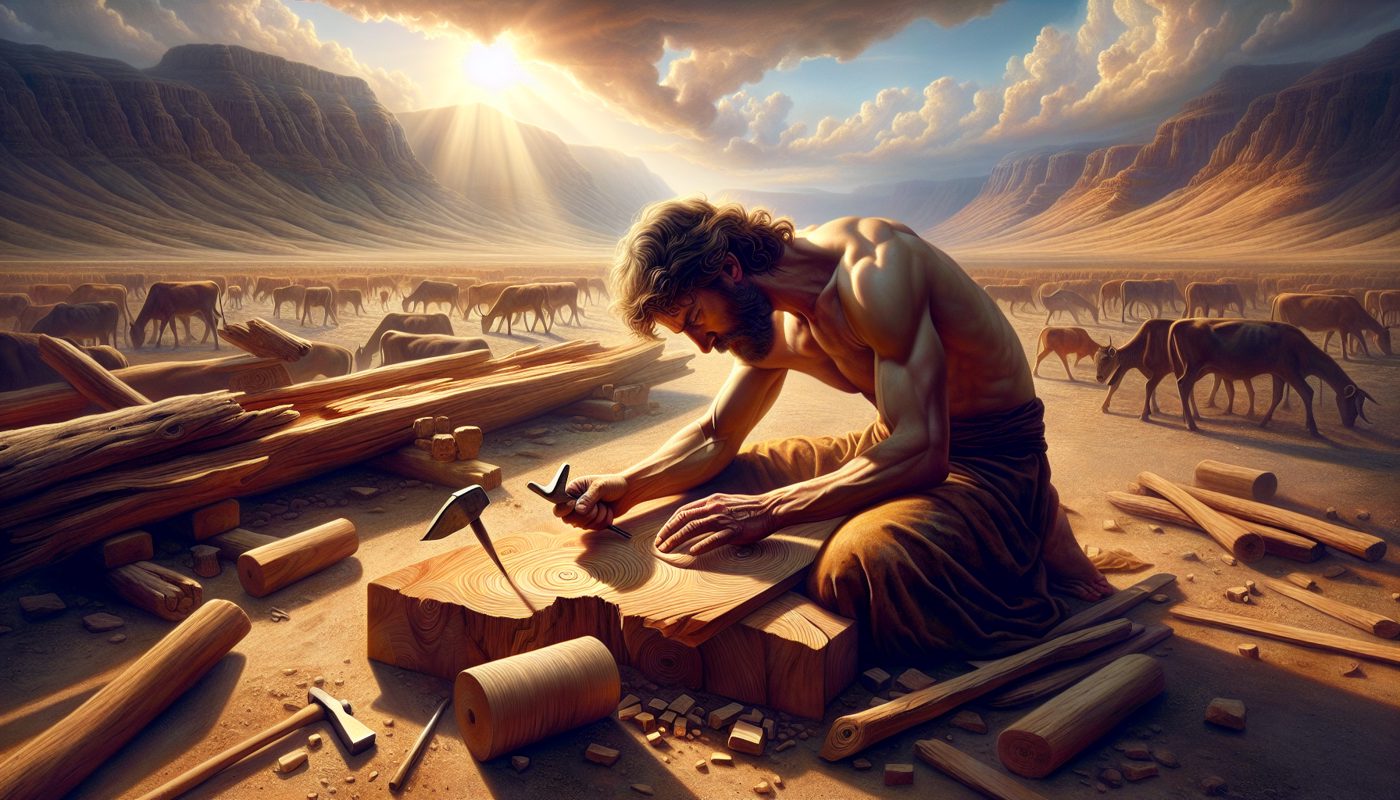
Exodus 31 opens with a direct word from the Lord to Moses, and the content of that word is startling in its specificity. God does not begin with a general command or a broad principle. He begins with a name: Bezalel, son of Uri, son of Hur, of the tribe of Judah. The Lord declares that He has called this man by name and filled him with the Spirit of God—with wisdom, understanding, knowledge, and all manner of workmanship. The text does not pause to explain why a craftsman receives the same language of divine filling that elsewhere accompanies prophets or leaders. It simply records the fact: the Spirit of God equips a man to work in gold, silver, bronze, stone, and wood.
The passage then names Oholiab, son of Ahisamach, of the tribe of Dan, as Bezalel's appointed companion. The Lord says that He has put wisdom in the heart of all who are wise-hearted, so that they may make everything He has commanded. The list of items to be made is exhaustive: the tent of meeting, the ark of the testimony, the mercy-seat, all the furniture of the tent, the table and its vessels, the pure lampstand with its vessels, the altar of incense, the altar of burnt offering with its vessels, the laver and its base, the finely wrought garments for Aaron and his sons, the anointing oil, and the incense of sweet spices. The repetition of detail makes clear that nothing is left to human invention. Every object, every material, every dimension has been specified by the Lord.
Then the chapter shifts abruptly. The Lord speaks again to Moses, but now the subject is not the sanctuary but the Sabbath. The command is absolute: the people must keep the Lord's Sabbaths, for they are a sign between Him and Israel throughout their generations. The Sabbath is holy, and any who profane it by doing work on that day must be put to death. The language is severe and unqualified. Six days for work, the seventh a Sabbath of solemn rest, holy to the Lord. The penalty for violation is not a fine or a ritual purification but being cut off from among the people.
The reason for this severity is given. The Sabbath is a sign, a perpetual covenant between the Lord and the children of Israel. It is rooted in creation itself: in six days the Lord made heaven and earth, and on the seventh day He rested and was refreshed. The Sabbath is not merely a day off. It is a marker of identity, a visible declaration that Israel belongs to the Lord who sanctifies them. To break the Sabbath is to break the sign of that relationship.
The chapter closes with a brief but weighty statement. When the Lord finished speaking with Moses on Mount Sinai, He gave him the two tablets of the testimony, tablets of stone, written with the finger of God. The phrase is stark and physical. The law was not dictated to Moses for him to write down. It was inscribed directly by God on stone. The chapter does not describe the scene further. It simply records that the tablets were given, and that they were the work of God's own hand.
The juxtaposition in this chapter is deliberate. On one side, the Lord equips human craftsmen with His Spirit to build a dwelling place. On the other, He commands a rhythm of rest that marks His people as His own. The same God who fills Bezalel with wisdom for gold and wood also commands that no work be done on the seventh day. The sanctuary and the Sabbath are not separate concerns. They are two sides of the same covenant: the Lord who sanctifies His people also provides the means for them to serve Him in the work He assigns.
The chapter does not soften the Sabbath command with exceptions or explanations. It does not say that the work of the sanctuary exempts the workers from rest. It does not suggest that the gravity of the sanctuary project overrides the sign of the covenant. The command stands as given, and the penalty stands with it. The holiness of the Lord is not compartmentalized. It extends to the materials of the tent and the days of the week alike.
What the chapter does not say is also worth noting. It does not offer a theological justification for the death penalty attached to Sabbath-breaking. It does not explain how the command will be enforced or how the community will discern a violation. It simply states the law as a boundary. The Sabbath is holy, and what is holy cannot be treated as common. The sign of the covenant carries the weight of the covenant itself.
The final image of the stone tablets written by the finger of God brings the chapter to a close with a sense of completion. The Lord has spoken. The commands have been given. The craftsmen have been named and equipped. The sign of the Sabbath has been established. And the testimony itself has been delivered in a form that no human hand could alter. The chapter ends not with a transition but with a period. The mountain has yielded its instruction, and the people are left to obey.
Comments
Comments 0
Read the discussion and add your voice.
Members only
Sign in to join the conversation
We keep comments tied to real accounts so the discussion stays clean and trustworthy.
No comments yet. Be the first to add one.