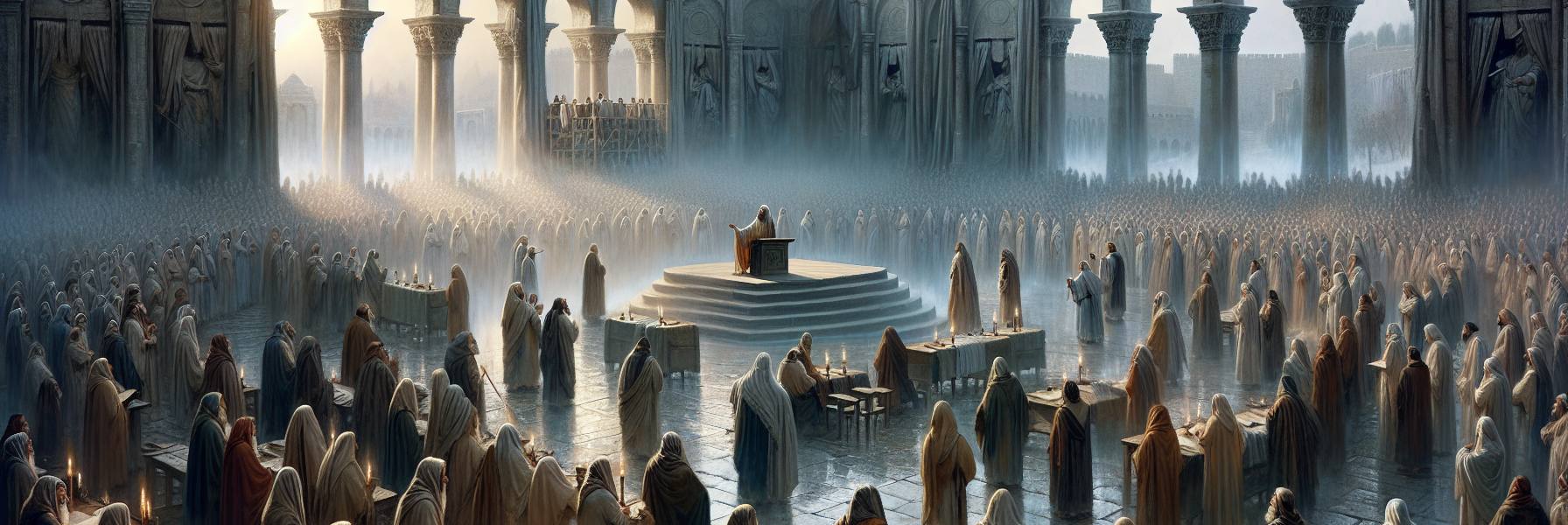

The air was cold that morning, a sharp, dry chill that came down from the hills around Jerusalem. It bit through the thin linen of their robes, but the people standing in the square before the Water Gate did not seem to feel it. They had been there for hours, a sea of heads bowed towards the wooden platform. The only sounds were the rustle of cloth, the occasional cough, and the steady, solemn voice of Ezra the scribe, reading from the Book of the Law of Moses. His words hung in the still air, heavy with meaning.
For days it had been like this. Reading, hearing, understanding. And with understanding came a profound and unsettling weight. It was a collective feeling, a deep tremor in the spirit of the community that had returned from exile. They had rebuilt the walls, yes. The stones were set, the gates hung. But standing within those new walls, they had heard the old words, and the walls around their own hearts felt fragile as parchment.
On the twenty-fourth day of that month, they assembled again. But this time, it was different. They came with intention. They separated themselves from all foreigners, not in malice, but in a fierce, focused need to be *them* again—the people of a covenant they now realized they had forgotten. They stood, and for a quarter of the day, they listened once more to the Law. For another quarter, they confessed.
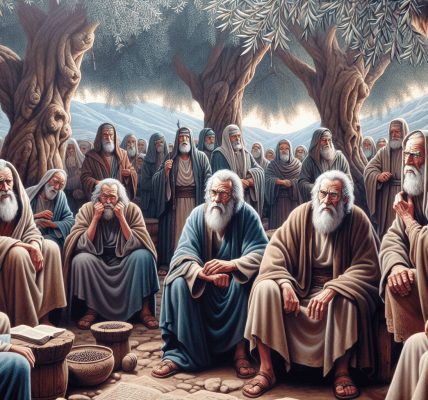
It began not with a single voice, but as a low murmur, like distant thunder before a storm. Men and women, their faces smeared with dust from the ground where they now prostrated themselves, began to speak the truth aloud. Names were not named, but sins were. The neglect. The pride. The quiet compromises made in Babylon, the small idolatries of convenience. The sound grew, not into chaos, but into a terrible, harmonious lament—a chorus of failure.
Then, from among the Levites on the platform, a figure rose. It was Jeshua, and with him Bani, Kadmiel, Shebaniah. Their faces were streaked with tears. They cried out to the Lord their God, *with a loud voice*. And then they began to lead the people in prayer. But it was not a prayer of petition. It was a prayer of remembrance. A telling of a story that was theirs.
“Blessed be your glorious name,” they began, “which is exalted above all blessing and praise.”
And they began to weave the tapestry of history there in the dusty square. They spoke of God making the heavens, the heaven of heavens, with all their starry host, the earth and all that is on it, the seas and all that is in them. They gave life to everything. The words painted a picture of vast, generous, sovereign power. “And you saw that it was good,” the Levites said, their voices thick with emotion, as if they themselves had been present at the dawn.
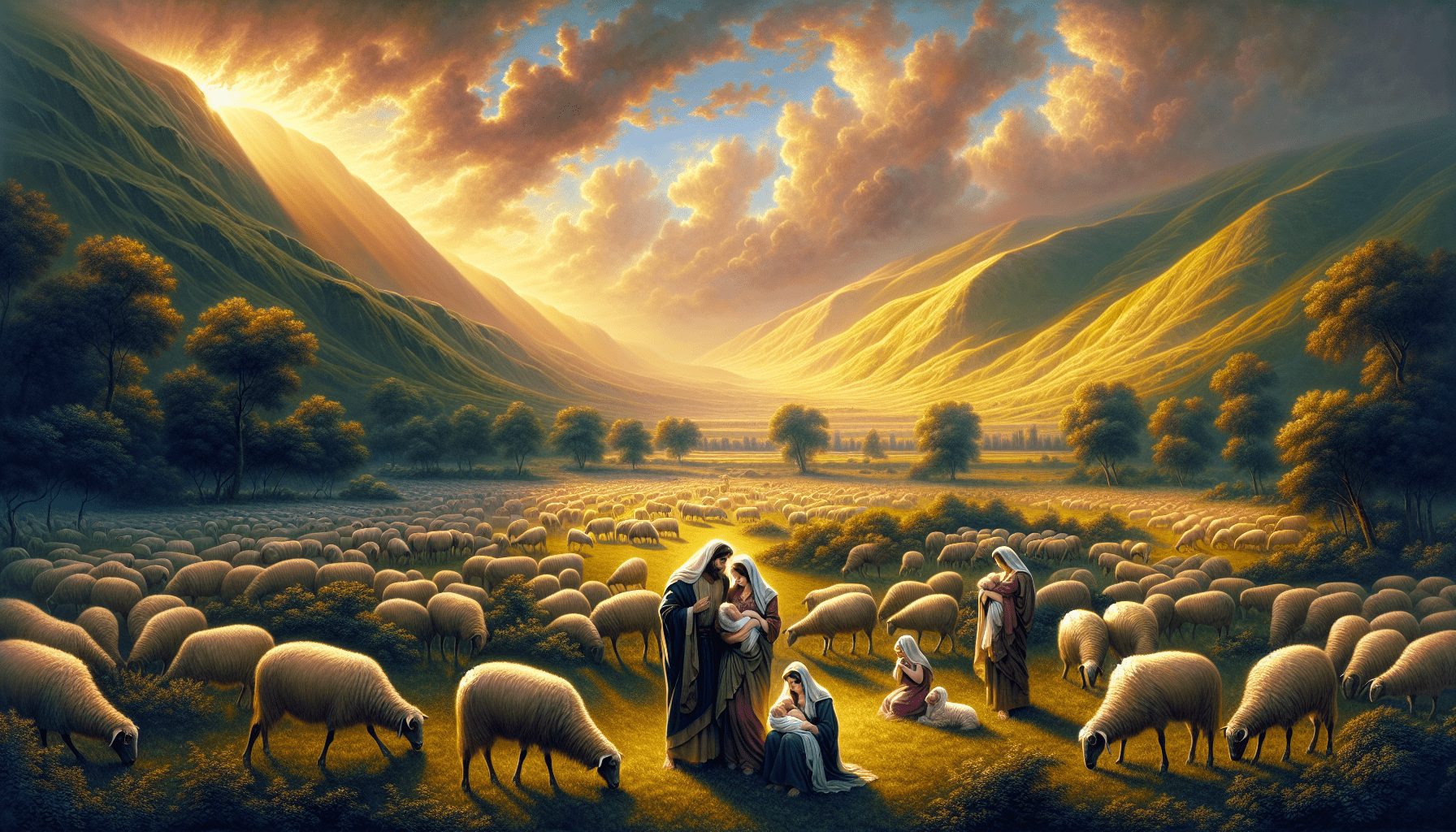
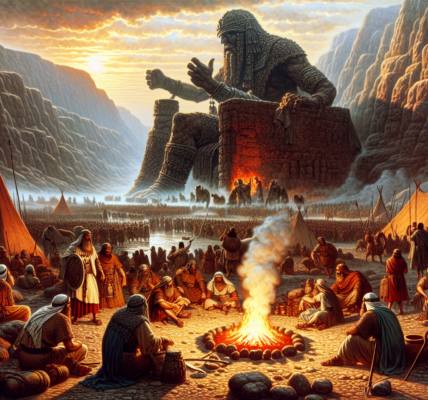
They moved to Abram, called out of Ur. They spoke of his faithful heart, found by God. The covenant cut, the promise of the land. They recounted the exodus, not as a distant myth, but with the visceral detail of a people who knew oppression. “You saw the affliction of our fathers in Egypt,” they cried, “and heard their cry at the Red Sea.” They described the signs and wonders, the pillar and the cloud, the parting of the waters. They spoke of Sinai, where God came down, and gave them right rules and true laws, good statutes and commandments. They remembered the manna, the water from the rock. The very care of God was listed, item by item, a forty-year litany of providence in a barren place.
But then the rhythm of the prayer shifted. A terrible, familiar refrain began to punctuate the narrative.
“But they… became arrogant.”
“But they… were disobedient.”
“But they… cast your law behind their backs.”
The story unspooled in a cycle of breathtaking grace and bewildering rebellion. God would give them kingdoms and nations. He would rescue them, again and again, sending judges. And they would prosper, grow fat, and turn. “They did not serve you,” the Levites intoned, a sorrowful drumbeat, “and did not turn from their wicked works.”
The people in the square wept openly now. This was no longer ancient history. This was their autobiography. The golden calf was their pride. The rejection of the prophets was their own deafness. The final, catastrophic act of the story was laid bare: “You gave them into the hand of their enemies, who made them suffer.”
A great sob seemed to pass through the crowd. They knew this part by heart. They were the living proof of it—the children of the exile, the ones who had known the *kindness* of their captors because their God, in His furious mercy, had handed them over.
Then came the turn. The Levites’ voices, hoarse from crying, softened into a tone of awestruck wonder.
“Nevertheless,” they said. The word hung in the air, a lifeline. “In your great mercies, you did not make an end of them or forsake them, for you are a gracious and merciful God.”
*Nevertheless.* Despite it all. The story was not one of abandonment, but of a fidelity that outlasted every betrayal. The prophets were sent, even as the storm clouds gathered. Warnings were issued, a last, desperate attempt to turn the tide. And even in the land of their enemies, God did not forget. He did not forget the covenant.
“Now therefore, our God,” the prayer concluded, the focus wrenching from the past to the stark, dust-covered present, “the great, the mighty, and the awesome God, who keeps covenant and steadfast love…”
They did not ask for relief. They stated a fact. “We are slaves this day.” They named it. In the land promised to their fathers, they were slaves to foreign kings. Their produce went to monarchs who did not know the God of heaven. Their lives were not their own.
“Because of our sins,” they said, in one final, collective breath of ownership.
The prayer ended. There was no dramatic closing. It simply stopped, leaving the reality of their confession hanging over them like the now-noon sun. They stood in the silence of a story fully told—a story of God’s relentless grace and their own wearying capacity for failure. They were the children of the *Nevertheless*. The walls of Jerusalem were rebuilt, but the harder work, the work of being the people who belonged within them, had only just begun. The cold of the morning had burned away, replaced by the heat of a truth acknowledged, and the long, hard road of a covenant renewed, one honest day at a time.