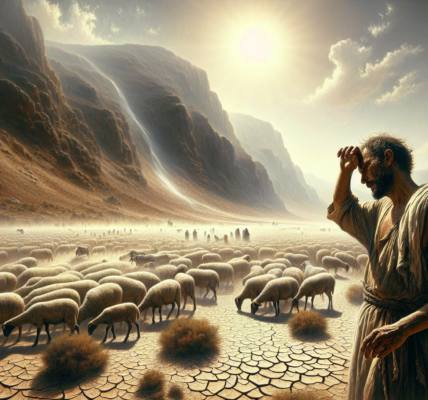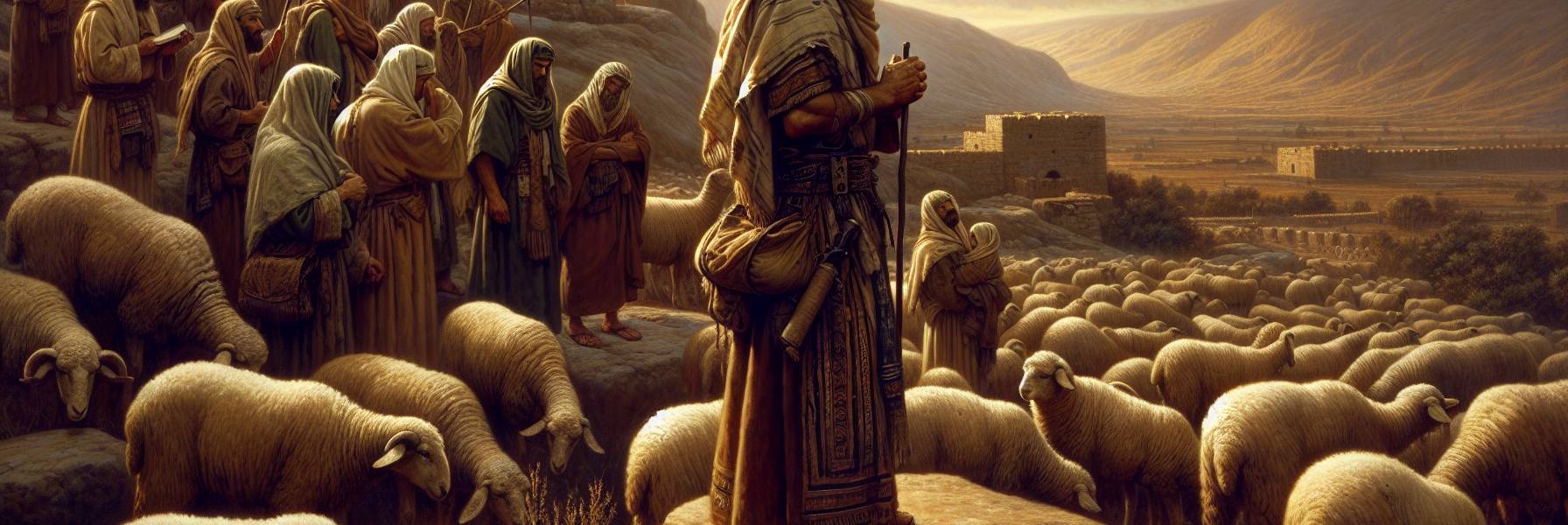

The air in Tekoa was thin and carried the scent of dust and dry thyme. Amos felt it scratch in his throat as he stood on the outcrop overlooking the sheepfolds. For days, a heaviness had settled in his chest, a weight not of stone, but of fire. It was a seeing—a terrible, clear seeing—of things distant in geography but near in the sight of Heaven. He was no prophet’s son, nor a trained speaker in the courts. His hands were rough from sycamore figs and his shoulders ached from bearing strays. But the word, when it came, was not a whisper. It was a roar that began in the bones.
He left the flocks with his younger brother. The man’s questioning eyes got no answer, only a clasp of the arm. The road north to Bethel was long, and with each step, the fire coalesced into sentences, into a cadence that pounded in his temples like a tribal drum.
He did not go to the polished priests or the king’s advisors. Instead, on a market day, when the noise of commerce and complaint filled the space before the royal sanctuary, he climbed onto the broad base of a broken olive press. His voice, used to calling across ravines, cut through the din.
“The Lord roars from Zion,” he began, and the sheer, unfamiliar force of the declaration made a pocket of silence around him. Faces turned, curious, then wary. “And utters his voice from Jerusalem. The pastures of the shepherds mourn, and the top of Carmel withers.”
He let that hang, the image of a divine roar shaking the very land they stood on. Then he turned his gaze, as if looking through the hills to the north-east.
“Thus says the Lord: ‘For three transgressions of Damascus, and for four, I will not revoke the punishment…’”
A merchant from the coast paused, his load of Phoenician glass forgotten. Damascus was a name, a rival, a far-off power.
“‘…because they threshed Gilead with threshing sledges of iron.’”
The words were not vague diplomacy. They were agricultural, brutal. Amos saw it as he spoke: not a battle, but a systematic, post-war atrocity. The image was of the fertile highlands of Gilead, east of the Jordan, and the armies of Damascus returning not just as conquerors, but as farmers of death, dragging iron-threaded sledges over living men, women, and children as if they were grain stalks, to shred them, to crush them into the earth for the husks. The crime was not mere war. It was a defiling of the created order, turning tools of harvest into instruments of grotesque waste.
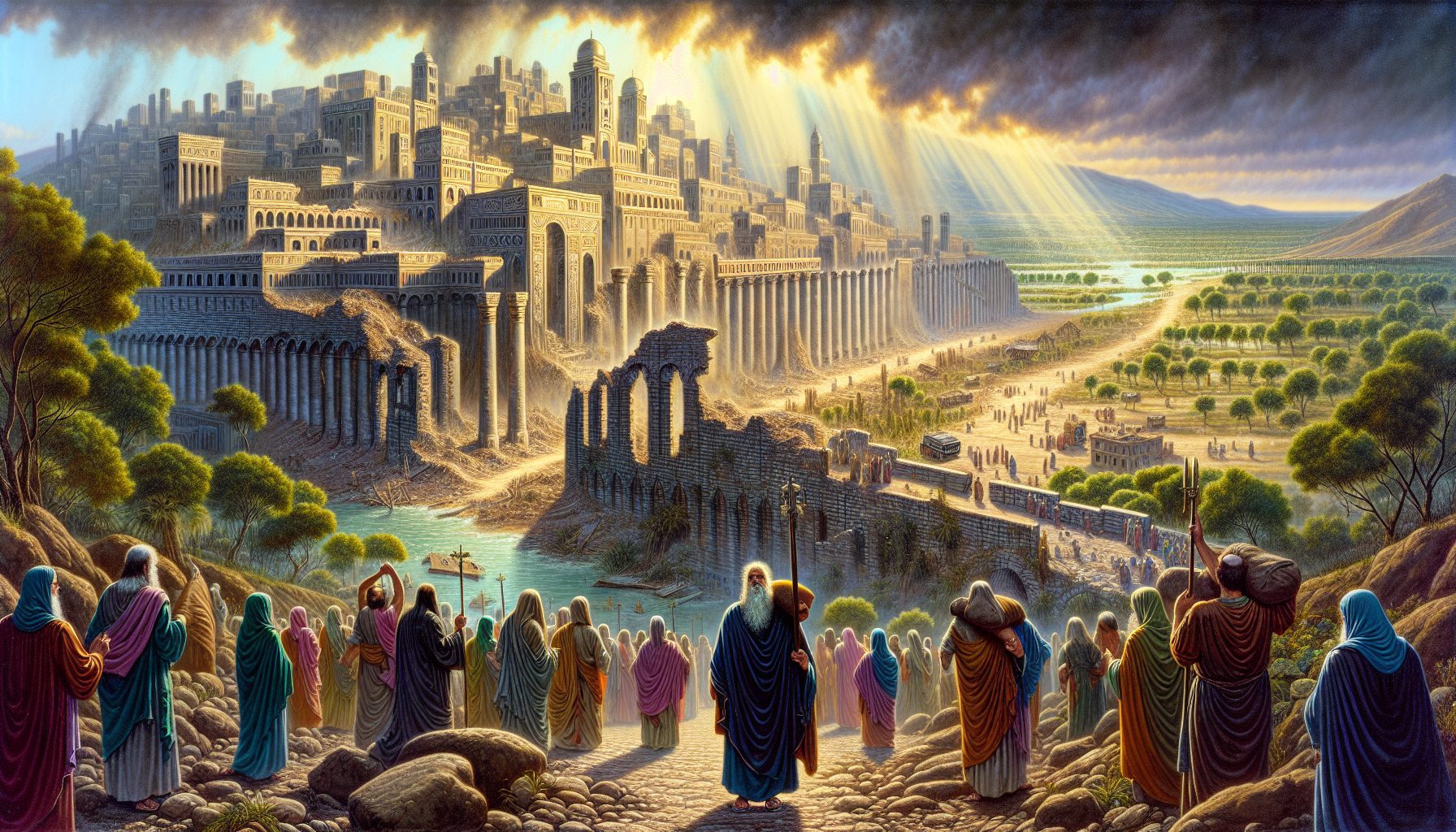
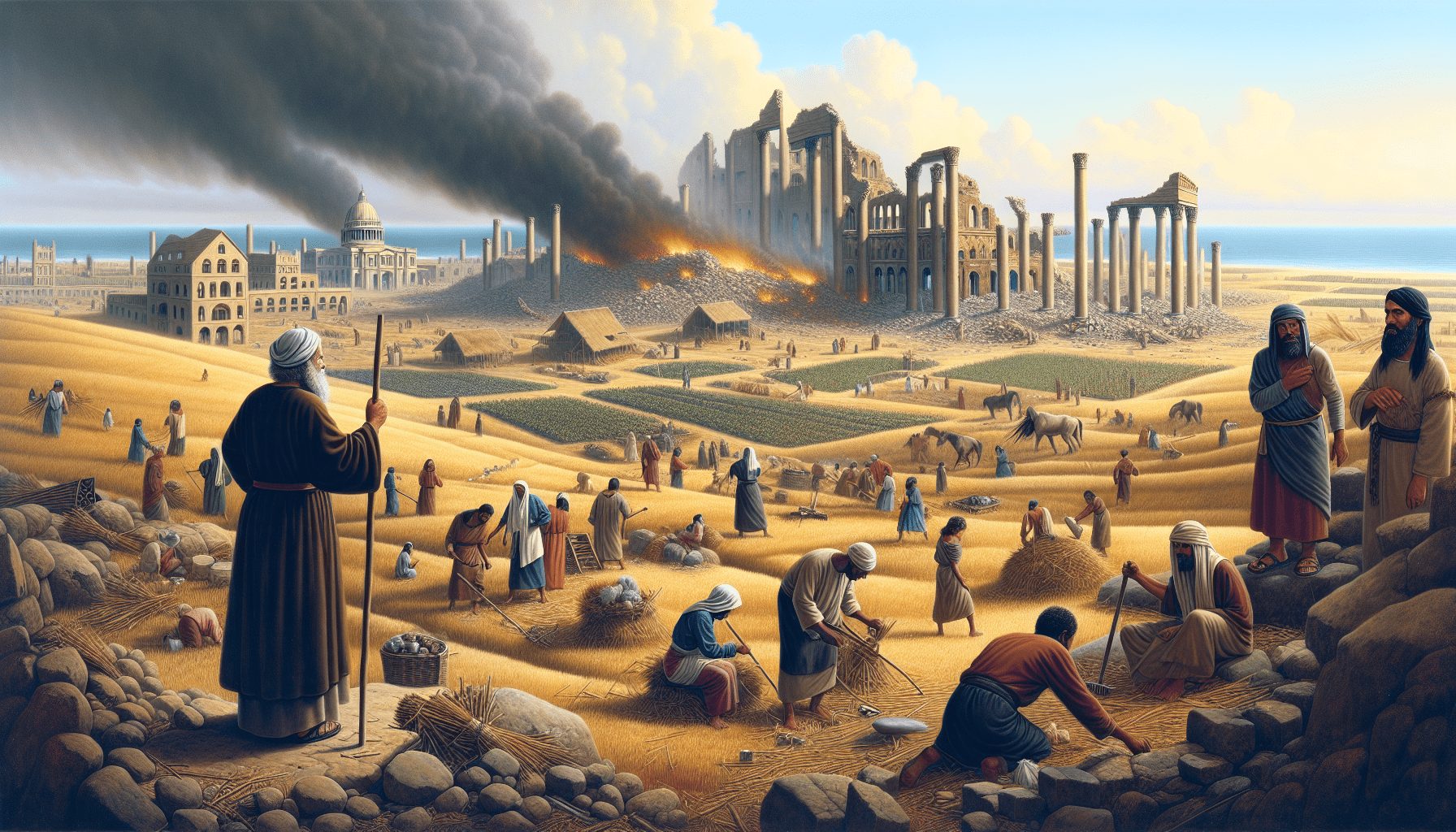
“‘So I will send a fire upon the house of Hazael,’” Amos continued, the promise coming not with glee, but with the grim finality of a judge’s gavel. “‘And it shall devour the strongholds of Ben-hadad. I will break the gate-bar of Damascus…’” He described the coming ruin with a shepherd’s concrete imagery: the ruler cut off from the valley of Aven, the scepter-shattered in Beth-eden. The Syrians would go captive to Kir. The Lord had spoken it.
He did not pause for applause from the Israelite crowd. He pivoted, as if following a bloody map only he could see.
“‘For three transgressions of Gaza, and for four…’” Now his voice swept southwest, towards the Philistine coast. “‘…because they carried into exile a whole people to deliver them up to Edom.’” It was the slave trade. Not the clash of armies, but the cold, profitable kidnapping of entire villages from the coastline, selling them to the bitter enemies in the eastern mountains. Communities erased for silver. The fire would fall on Gaza’s wall, devour its palaces. A remnant would perish in Ashdod, the king in Ashkelon. Ekron would be uprooted. The sentence was comprehensive.
On he went, his locust-eater’s face set. Tyre next—the glittering, merchant island. Their crime was the same: mass slavery delivered to Edom. But with a chilling addendum: they had forgotten the “covenant of brotherhood.” A treaty sworn, perhaps in the name of their gods, utterly broken. Faithlessness between nations was an offense to the Faithfulness above all. Their fortresses too would burn.
Then Edom itself, the ultimate recipient of that human cargo. “‘…because he pursued his brother with the sword and cast off all pity…’” The ancient, festering grudge of Esau against Jacob, played out in ceaseless, ruthless border raids. His anger tore perpetually, his wrath was kept forever. Teman and Bozrah, Edom’s proud cities, would be kindling.
The crowd was utterly still now. This was no patriotic rant against their enemies. This was a circling, terrifying justice, closing in. He named the Ammonites to the east. “‘…because they have ripped open pregnant women in Gilead, that they might enlarge their border.’” The brutality was spelled out in its raw, horrific ambition: territorial expansion through the extinction of future generations. Their capital, Rabbah, would become a storm-tossed ruin, its leaders going into exile amid shouts of battle.
Finally, Moab. And here, the crime was unique, a sacrilege that seemed to silence even the market’s flies. “‘…because he burned to lime the bones of the king of Edom.’” It was not an attack on Judah or Israel. It was a violation of the dead. In their hatred for Edom, they had disinterred an enemy king’s bones and burned them to powdered lime—the ultimate denial of rest, of dignity, of any shadow of resurrection. It was an affront to the dust from which all humanity was taken. Moab would fall with shouting, the trumpet of war sounding over its high places.
Amos stopped. The fire in his chest was spent, leaving him hollow and trembling. The silence was thicker than before. He had drawn a ring of divine judgment around them, a circle of fire consuming every neighbor for crimes of cruelty, treachery, and profanity. The people of Israel listened, and a nervous, righteous approval began to stir. Yes! Let the fire fall on Damascus, on Gaza, on Ammon! They deserve it!
Amos stepped down from the press stone, his legs unsteady. The crowd parted for him, some faces alight with vindication. He met their eyes, and in his own there was no triumph, only a bottomless grief. For the circle was not complete. The roaring from Zion was not finished. He walked away, back toward the road to Tekoa, bearing the unbearable knowledge that the circle was still tightening, and the next name on the list—the name that would suck the approval from their faces and turn their blood to water—was their own.