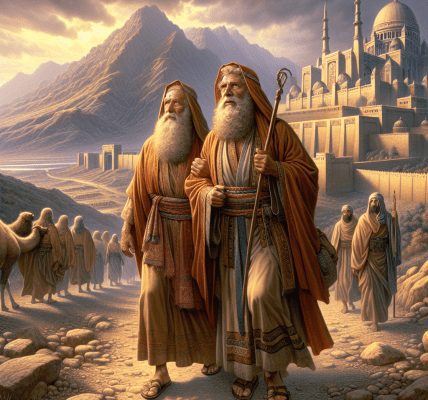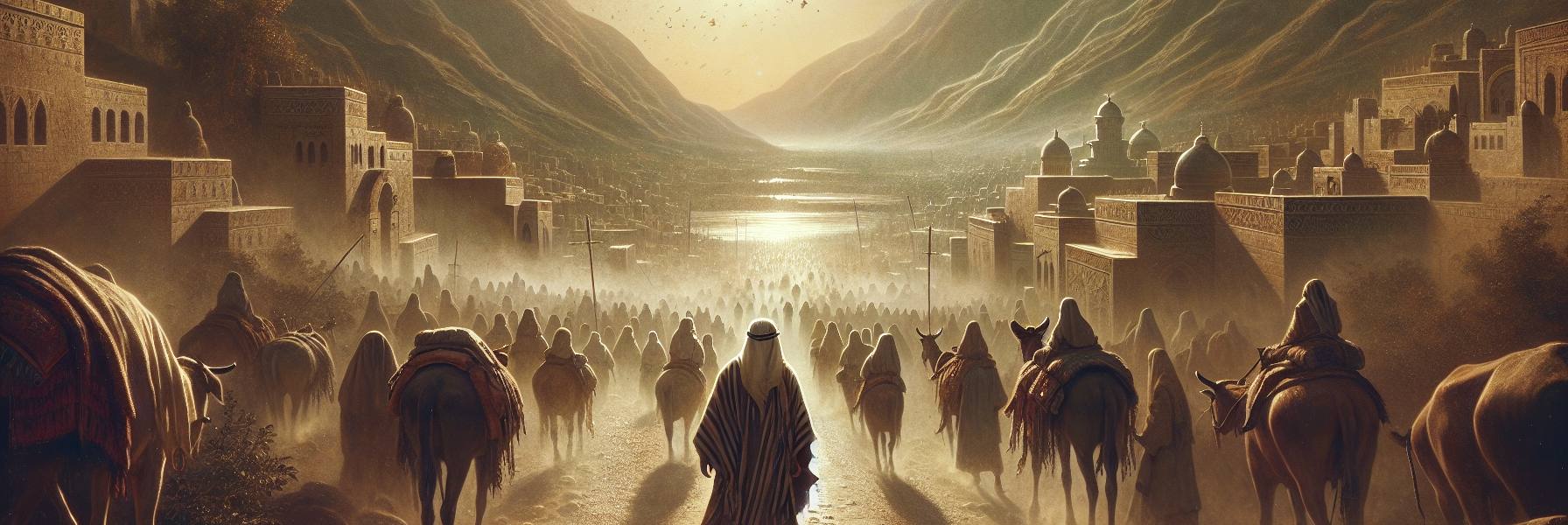

The sun, a hammered disk of pale brass, beat down on the Anathoth road. Dust, fine as ground bone, coated Jeremiah’s sandals and the hem of his robe. It was the dust of pilgrims, churned by ten thousand feet all moving toward the same gleaming promise on the hill: the Temple. He could hear the lowing of beasts for sacrifice, the distant murmur of a city swelling beyond its walls, a sound like the sea. The smell reached him even here—woodsmoke, spice, dung, and the faint, iron-tinged scent of blood from the altar fires. It was the smell of certainty, of a people secure in their ritual.
He walked not as a pilgrim, but as a man carrying a cold stone in his gut. The word he carried was not a comfort; it was a fracture.
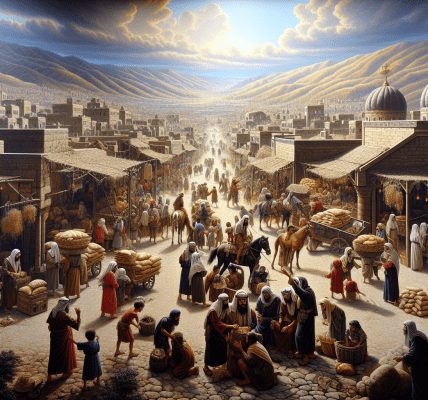
Pushing through the Fish Gate, the noise engulfed him. Hucksters cried out prices for doves and lambs, their voices competing with Levitical singers practicing psalms. Merchants sold “pure” olive oil for anointing at inflated prices. Children darted underfoot, clutching small, honey-drenched cakes shaped like stars. Everyone was busy, fervent, *religious*. Their faces shone with a kind of relieved piety. *We are here. We have come. All is well.*
Jeremiah’s throat was tight. He saw a man in rich robes, his fingers heavy with rings, arguing fiercely with a seller of fine flour. “You cheat me! This is for the *minchah* offering! Would you dare cheat God?” The seller bowed, apologetic, swapping the bag. The rich man turned, satisfaction smoothing his features, and strode toward the Temple mount, the unjust flour in his hands.
The steps of the House were a cascade of humanity. Priests in white linen moved with bureaucratic haste between the altars. Jeremiah climbed, his legs heavy. At the entrance of the court, where the crowd was thickest, he stopped. He drew a long, shaky breath. The air here was different—charged with myrrh and dread holiness.
Then he raised his voice. It wasn’t a shout, not at first. It was a carrying, resonant cry that cut through the liturgical buzz, a voice worn smooth by desert winds and private tears.
“Hear the word of the Lord, all you of Judah who enter these gates!”
A few heads turned, annoyed. A Levite glanced over, frowned, and went back to inspecting a goat.
Jeremiah’s voice found its strength, rising like a black pillar. “Thus says the Lord of Hosts, the God of Israel: Amend your ways and your deeds! Do not trust in these deceptive words: ‘This is the temple of the Lord, the temple of the Lord, the temple of the Lord!’”
The repetition, a mocking echo of their mantra, hooked them. Conversations died. The man with the flour paused, his brow furrowed.
“You stand before me in this house,” Jeremiah proclaimed, his arm sweeping across the glorious facade, the gold, the carved cherubim, “and you say, ‘We are delivered!’—only to go right back to all these abominations! Has this house, which bears my name, become a den of robbers in your eyes? Behold, I have seen it!”
Murmurs now, angry and defensive. “Who is this?” “A prophet from Anathoth.” “He defiles the day with his clamor!”
He pressed into their discomfort, a finger probing a wound. “Go to my place in Shiloh, where I made my name dwell at first. See what I did to it because of the wickedness of my people Israel. This house will be like Shiloh. This city will become a curse to all the nations of the earth!”
A gasp rippled through the crowd. Shiloh was a ruin, a whispered lesson from a dead time. To speak its name here, now, was to breathe a corpse into the holy air. A priest, his face mottled with outrage, stepped forward. “You speak treason! You speak against the City of David, against the very throne of God!”
Jeremiah turned his fierce gaze on the priest. “You steal, murder, commit adultery, swear falsely, burn incense to Baal, and walk after other gods you have not known…and then you come and stand before me in this house and say, ‘We are delivered!’—so that you may go on doing all these abominations?”
He looked past the priest, into the faces of the crowd—the merchant, the farmer, the mother with her child. His voice dropped, becoming almost conversational, which was more terrifying than his shouts. “Stand in the gate of the Lord’s house and proclaim this word. Say, ‘Hear the word of the Lord, all you of Judah.’ Thus says the Lord of Hosts, the God of Israel: ‘Add your burnt offerings to your sacrifices and eat the flesh yourselves. For in the day I brought your fathers out of Egypt, I did not speak to them or command them concerning burnt offerings and sacrifices. But this command I gave them: Obey my voice.’ But they did not obey.”
The market noises from the lower city seemed to flood up the steps then, a stark counterpoint: the clink of coins, the laugh of a cheat, the cry of a wronged customer. The sounds of the life they lived once they walked back down these very steps. The Temple was not their life; it was their excuse.
He spoke of Topheth in the Valley of Hinnom, where they burned their children in fire to Molech. He spoke of a coming desolation so complete the birds and beasts would inherit the ruins. The crowd was silent now, a silence of stone. Some looked at the ground, their festive robes suddenly feeling like shrouds. Others glared with pure hatred.
Jeremiah finished. The word was spent. The cold stone in his gut remained. He looked at the beautiful, terrible building one last time—the people’s proud refuge, God’s occupied throne. No lightning came from heaven. No earth shook. Only the ordinary sun beat down on the extraordinary sin.
He turned and began to walk back down the steps, against the tide of pilgrims still coming up. They jostled him, their eyes bright with anticipation, chanting the old, deceptive words to themselves. He did not look back. The dust of Jerusalem clung to him, but it was the dust of Shiloh he carried in his heart.