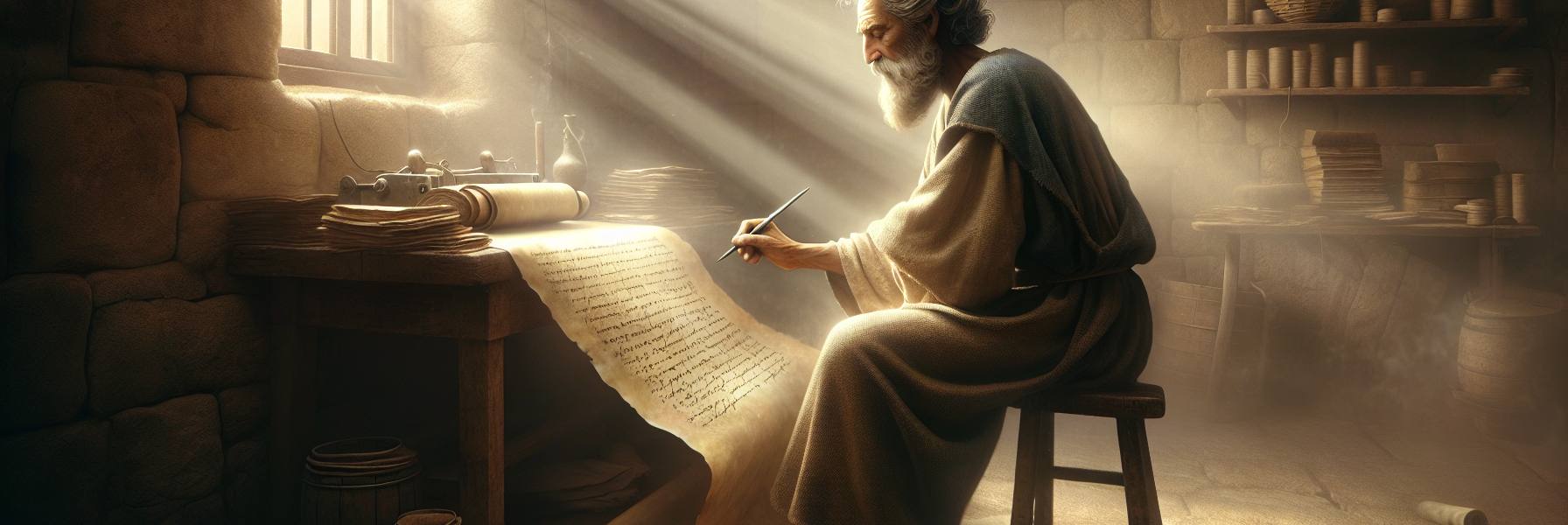

The ink was dry, but the words still felt wet to the mind, heavy with the salt of a distant sea. Simon Peter, an old man now, sat not on a fishing boat’s thwart but on a simple stool, the Jerusalem light falling in a thick, dusty bar across the parchment. His hands, gnarled and rope-scarred, did not hold nets but a stylus. The memory of the Lord’s voice was clearer to him now than the chatter from the street below. It wasn’t a sermon he was writing; it was a last testament, a straining of his heart onto the page for those he would leave behind in a world growing shadowy and confused.
He began with the raw material of faith. Not as a theory, but as something granted, a sheer gift, as startling and unearned as the haul of fish that had once nearly sunk two boats. *“To those who have obtained a faith of equal privilege with ours…”* He paused, the memory of his own denials, his own failures, thick in his throat. Equal privilege. That was the scandal of it. The young zealot in Corinth, the frightened servant in Rome, the merchant in Ephesus—their faith, however tremulous, held the same divine currency as his own, purchased by the same righteous blood. He wrote of the righteousness of our God and Savior, Jesus Christ. The words felt like anchors.
Then he built, stone upon stone. To faith, he said, you must add virtue. *Areté.* Excellence. Moral muscle. It was the difference between having a boat and knowing how to sail it through a squall. He thought of the years after Pentecost, the daily choice to act with a courage that did not come naturally. From virtue, knowledge. Not just facts, but a deep, intimate acquaintance—the *gnosis* of a sailor who knows the mood of the sea and the touch of the wind on his neck. The knowledge of Christ, learned over miles of dusty road and in quiet moments of brokenhearted awe.
The chain lengthened, each link forged in the heat of daily living. To knowledge, self-control. *Enkrateia.* A ship’s rigging must be taut, not slack. The passions, the appetites—they were not enemies to be slain, but horses to be bridled, directed toward the long journey. And from self-control, perseverance. *Hupomonē.* Steadfastness. That was the deep-water sailing. It was the quality of the wood of the mast itself, able to endure the relentless beating of the waves, the howling of contrary winds. It was the quiet determination to keep praying when heaven seemed brass, to keep loving when love was not returned.
Out of perseverance, godliness. *Eusebeia.* A right reverence that soaked into the bones, affecting how one held a tool, spoke to a child, conducted business in the agora. It was a life oriented, moment by moment, toward the Holy. And from that profound orientation, brotherly affection. *Philadelphia.* The specific, practical love for the family within the household of faith. It was sharing bread, tending the sick, bearing a burden without complaint, forgiving the petty offence before it festered.
At the pinnacle, he placed love. *Agapē.* The sail that caught the very wind of God’s own nature. This was not a feeling, but a willed, sacrificial, outward-moving force. It was the love that had looked at him, Simon the failure, beside a charcoal fire and restored him with a question. *“Do you love me?”* This love was the culmination, the proof that the divine nature was truly at work within. Possessing these qualities in increasing measure, he scrawled, kept one from being useless, unfruitful. A barren fig tree was a tragedy; a barren life, a cosmic waste.
He leaned back, his old bones aching. The light had moved. He saw them so clearly—Lydia, Gaius, young Mark, the scattered flock in Pontus, Galatia, Cappadocia. They were not scholars. They were farmers, slaves, mothers, tradesmen. The world offered them easier stories, softer philosophies. Some among them were already twisting the grace of God into license, denying the Master who bought them. His jaw set.
So he returned to the foundation, his tone shifting from exhortation to urgent reminder. *“Therefore I intend always to remind you of these qualities, even though you know them and are established in the truth you now have.”* It was the work of a shepherd, to repeat the essential things. He, Peter, would stir them up by way of reminder for as long as he was in this tent. He glanced at his hands, the skin like old parchment. His departure was imminent, as the Lord had shown him. But his words would remain.
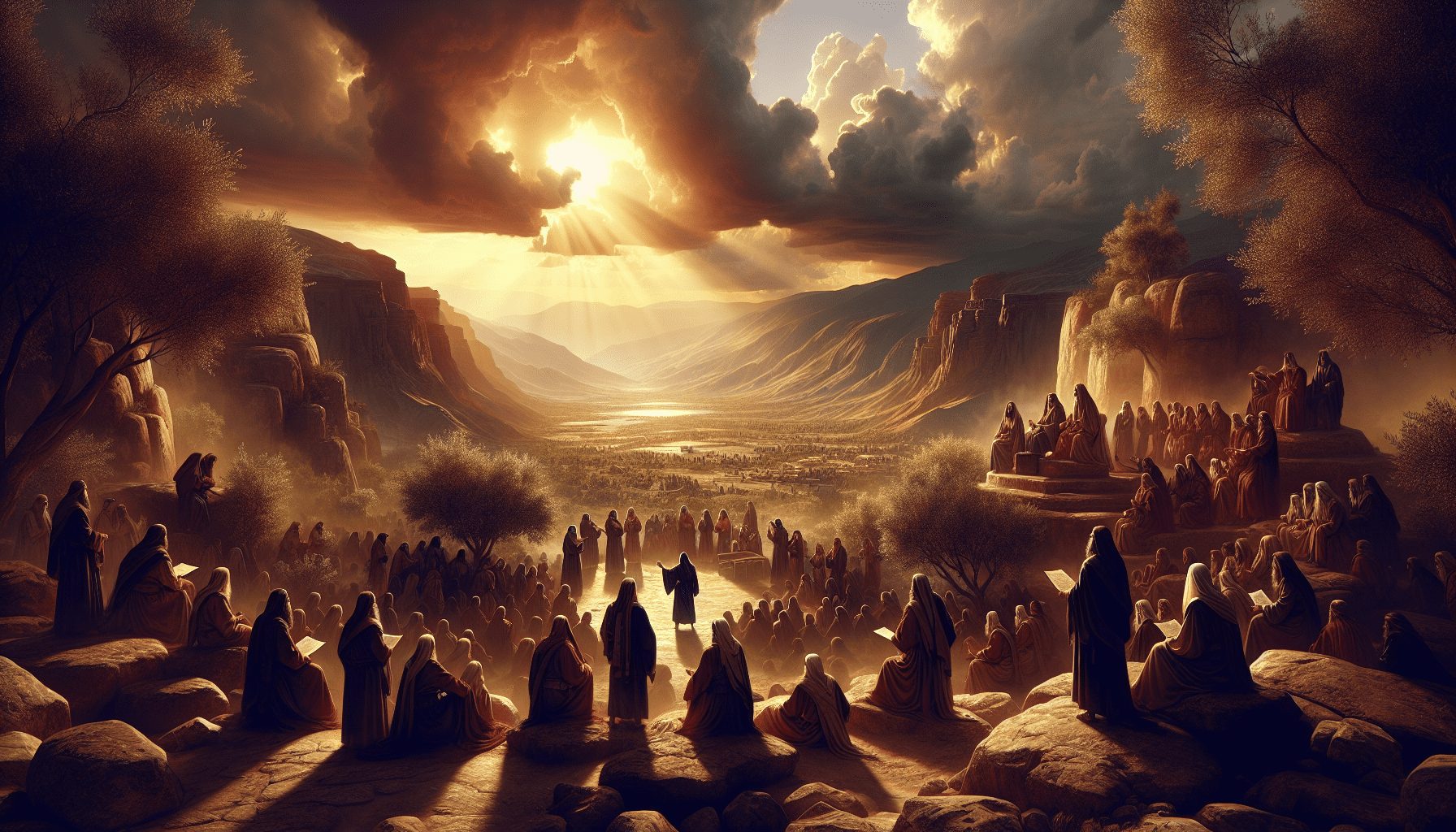
And then, the bedrock of it all. He had not followed cleverly devised myths. The authority was not in his eloquence, but in his eyes. *“We were eyewitnesses of his majesty.”* The memory came, not as a theological concept, but as a sensory flood: the sharp, thin air of the high mountain, the light that was not of the sun, the blinding whiteness of the garments, the voices—Moses, Elijah—speaking of an exodus he was to accomplish in Jerusalem. And then the Voice from the magnificent glory: *“This is my beloved Son, with whom I am well pleased.”* He, Peter, had heard that Voice with his own ears. They were on the holy mountain. It was as real as the splinter in the stool beneath him.
Thus, he wrote, we have the prophetic word confirmed. Pay attention to it, as to a lamp shining in a dark, squalid place, until the day dawns and the morning star rises in your hearts. His final warning was fierce, tender, and wholly practical. No prophecy of Scripture, he insisted, is a matter of one’s own private interpretation. It did not originate from the human will, but from God, as men carried along, borne by the Holy Spirit.
He laid down the stylus. The letter was finished. It was not elegant, but it was strong, like a fisherman’s knot. It held together faith and practice, memory and hope, the dazzling light of the mountain and the gritty need for love in a back alley. He had given them, not just a list, but a living chain to cling to, a description of the journey from the raw gift of faith to the mature, weather-proofed character of divine love. It was his last will and testament, written not on papyrus, but etched onto the hearts of those who would have to sail on without him, guided by the lamp of the word, waiting for the Dawn.