
In the days when David was king over all Israel, after he had subdued the neighboring kingdoms and expanded the borders of the promised land, there came a season of testing from the Lord. The armies of Edom had risen in the valley of Salt, a great host gathered against the people of God. Though David had known many victories, this battle brought him to his knees before the Almighty.
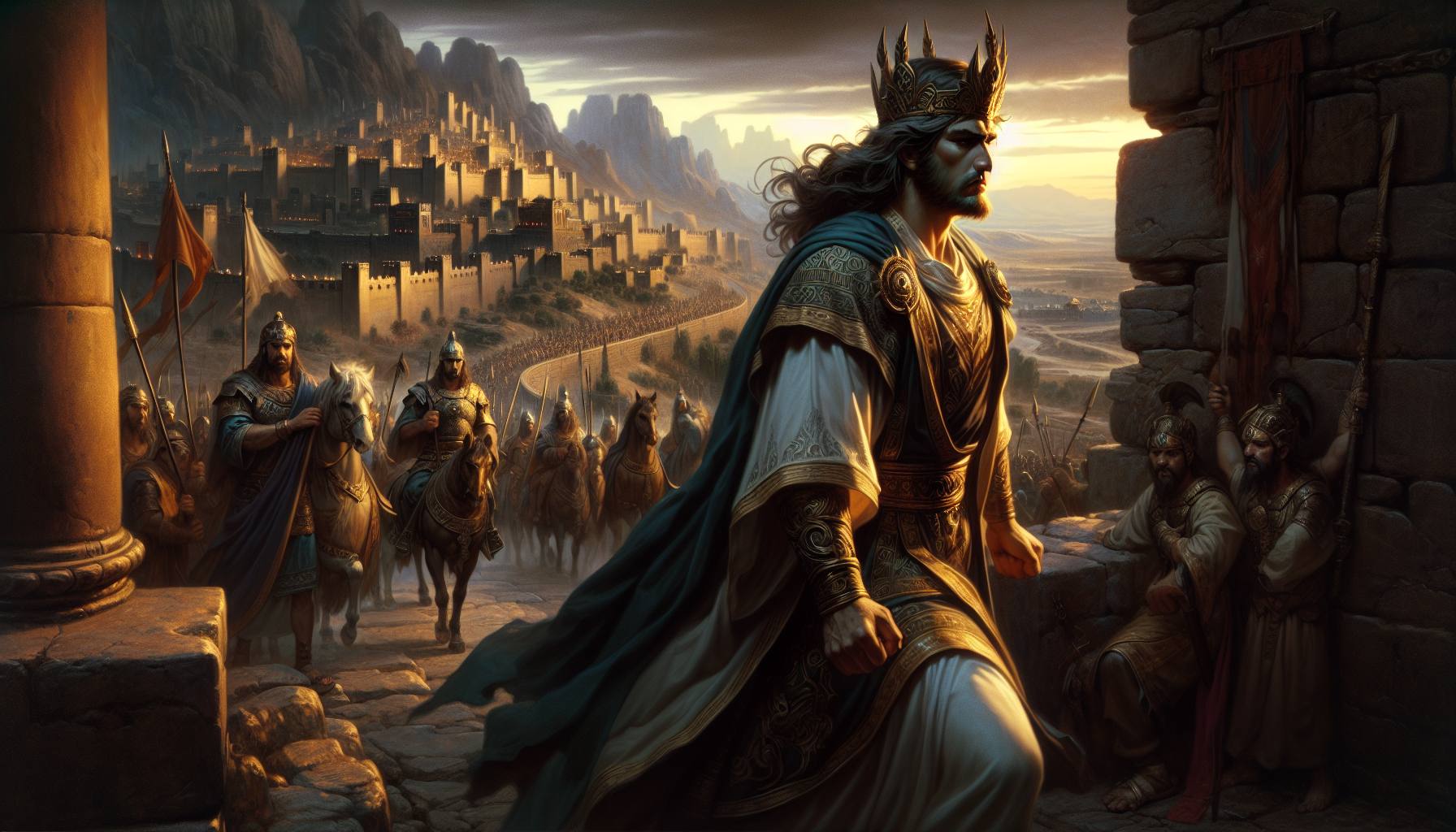
The king walked the parapets of Jerusalem as twilight descended, his royal robes whispering against the stone. Below him, the city lamps flickered to life one by one, like distant stars mirroring the heavens above. But David’s eyes saw beyond the peaceful scene to the reports that had reached his throne—the Edomite forces advancing, the fear among his commanders, the strange reversal of fortune that had befallen his seasoned warriors.
He remembered how God had once torn the heavens and came down, how the mountains had trembled at His presence. But now, the Lord seemed to have rejected them, breaking down their defenses. The land quaked under divine judgment, gaping open like a wounded soldier. The kingdom staggered like a drunken man, uncertain in its steps.
In his chamber, David took up his lyre, his fingers finding familiar strings. The melody that emerged was mournful yet hopeful, a tension between present distress and eternal truth.
“O God,” he sang softly, “you have cast us off and broken us down. You have been displeased with us. You have made the earth tremble and split it open. Heal its breaches, for it shakes to its foundations.”
His mind traveled back to Shechem and the Succoth valley, to Gilead across the Jordan and Manasseh in the north, to Ephraim the warrior’s helmet and Judah the royal scepter—all territories God had promised and given. Yet now these very lands felt the strain of battle, the pressure of enemies on every side.
“Moab is my washpot,” David declared, his voice growing stronger. “Over Edom I will cast my shoe. Philistia, shout triumphantly because of me!”
But then his shoulders slumped as he considered their present predicament. “Who will bring me to the strong city? Who will lead me to Edom?”
The question hung in the quiet room. For all his military prowess, David knew true victory came only from the Lord. Human strength would fail; strategies would prove insufficient without divine favor.
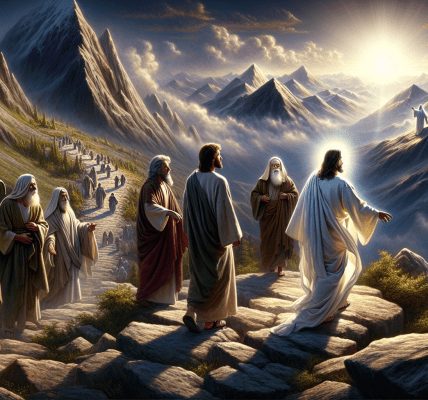
He thought of the times God had marched before them in the wilderness, how the pillar of cloud and fire had guided their ancestors. The Lord had spoken through Moses, through Joshua, through the judges—always promising His presence in the battle.
“Have you not cast us off, O God?” David’s voice broke. “You do not go out with our armies anymore.”
Then, as if in answer to his lament, a memory surfaced—the words God had spoken in His holy place, a promise that transcended their present circumstances:
“I will exult. I will divide Shechem and measure out the valley of Succoth. Gilead is mine, and Manasseh is mine. Ephraim is my helmet, Judah my scepter. Moab is my washbasin; upon Edom I cast my sandal. Over Philistia I shout in triumph.”
The divine declaration echoed in David’s spirit, pushing back the shadows of doubt. God’s ownership of the land remained, His sovereign rule unchallenged by temporary setbacks. The territories belonged to Him before they belonged to Israel.
David’s fingers found a new rhythm on the lyre, the melody shifting from lament to declaration. “Who will bring me to the strong city? Who will lead me to Edom?”
The answer came not as a battle plan or reinforcement strategy, but as bedrock truth: “Will you not, O God, you who have cast us off? Will you not go out with our armies, O God?”
The king rose from his seat, conviction straightening his posture. The same God who had seemed to reject them would become their salvation. The One who had allowed their stumbling would now uphold them by His right hand.
“Give us help from trouble,” David prayed, his voice now clear and strong, “for vain is the salvation of man. Through God we will do valiantly, for He Himself will tread down our enemies.”
The next morning, David summoned Joab and his commanders. The fear had left his eyes, replaced by the calm assurance of one who has heard from heaven. He dispatched Joab and Abishai with the army, not with grandiose promises of easy victory, but with the quiet confidence that God would honor His word.
When the messengers returned weeks later with news of victory in the valley of Salt, when they reported how twelve thousand Edomites had fallen before Israel’s armies, David did not exult in military might. Instead, he returned to his chamber and added the final lines to the psalm that would be preserved for generations:
“Through God we will do valiantly. It is He who shall tread down our enemies.”
And the people of Israel learned that day that even when God seemed distant, even when the earth shook beneath their feet, His promises remained firm. The temporary rejection served to magnify the eternal faithfulness of the One who ruled over all nations, the God who measured out the valleys and claimed the mountains as His own.