The Lord spoke to Moses in the wilderness, and the instructions that followed were not for the present camp but for the land yet to come. The chapter opens with a detailed system of grain and drink offerings to accompany burnt offerings and sacrifices. For each lamb, a tenth of an ephah of fine flour mixed with a quarter hin of oil was required, along with a quarter hin of wine. For a ram, the amounts doubled for flour and increased to a third hin of oil and wine. For a bull, three-tenths of an ephah of flour with half a hin of oil and half a hin of wine were prescribed. The proportions scaled with the size of the animal, and every offering was to be made as a sweet savor to the Lord. The law applied equally to every home-born Israelite, and the stranger who sojourned among them was bound by the same statute. One law and one ordinance stood for the native and the foreigner alike, for all were before the Lord.
Then the Lord gave a command about the first of the dough. When the people entered the land and ate of its bread, they were to offer a cake as a heave-offering to the Lord. This was to be done throughout their generations, a perpetual acknowledgment that the land and its produce came from the Lord who brought them out of Egypt. The offering of the first dough mirrored the heave-offering from the threshing floor, a concrete act of remembrance tied to daily bread.
The chapter then turns to the matter of sin. If the whole congregation sinned unwittingly—if they failed to observe any of the Lord's commandments without knowing it—they were to offer one young bull for a burnt offering, with its grain and drink offering, and one he-goat for a sin offering. The priest would make atonement for the entire congregation, and they would be forgiven. The same provision applied to the stranger who sojourned among them, for the error was unwitting and the atonement covered all the people.
For an individual who sinned unwittingly, the requirement was a she-goat a year old for a sin offering. The priest would make atonement for that soul, and the person would be forgiven. One law governed the home-born and the sojourner in cases of unintentional sin. But a different standard applied to the one who sinned with a high hand—whether native or stranger. That person blasphemed the Lord and was to be cut off from among the people, for he had despised the word of the Lord and broken His commandment. His iniquity remained on him.
The chapter does not leave this principle abstract. While Israel was still in the wilderness, a man was found gathering sticks on the Sabbath day. Those who caught him brought him to Moses and Aaron and the whole congregation. They put him in custody because it had not been declared what should be done to him. The Lord spoke directly: the man must be put to death. The entire congregation was to stone him with stones outside the camp. They did as the Lord commanded, and the man died. The incident made clear that the law against defiant sin was not theoretical; it was enforced in the wilderness itself, before the people ever entered the land.
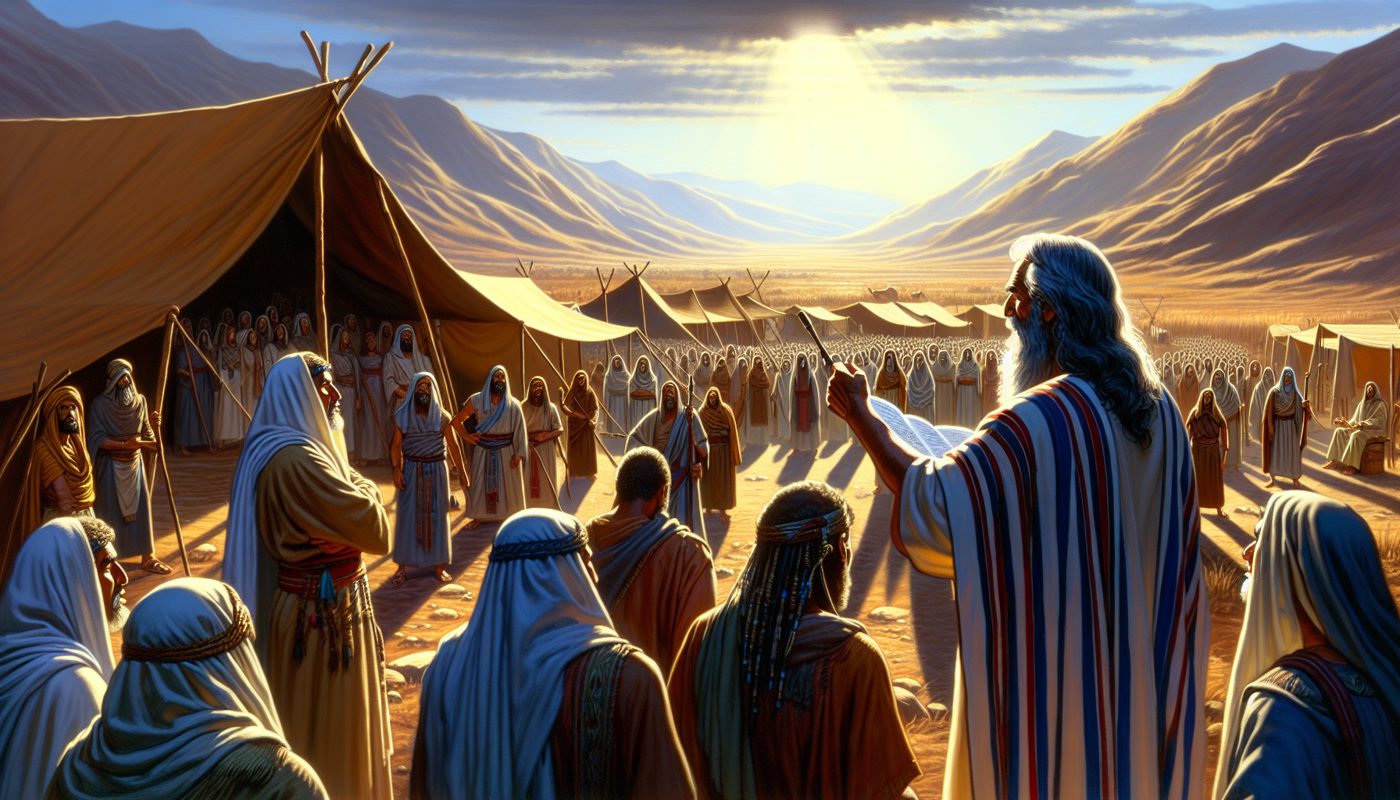
Finally, the Lord gave a command about fringes. The people were to make fringes on the borders of their garments throughout their generations, and on each fringe they were to put a cord of blue. The purpose was visual and mnemonic: when they looked upon the fringe, they would remember all the commandments of the Lord and do them. They would not follow after their own heart and their own eyes, after which they used to play the harlot. The fringe was a constant reminder to be holy to their God. The Lord closed with the declaration that He is the Lord their God, who brought them out of the land of Egypt to be their God.
Comments
Comments 0
Read the discussion and add your voice.
Members only
Sign in to join the conversation
We keep comments tied to real accounts so the discussion stays clean and trustworthy.
No comments yet. Be the first to add one.