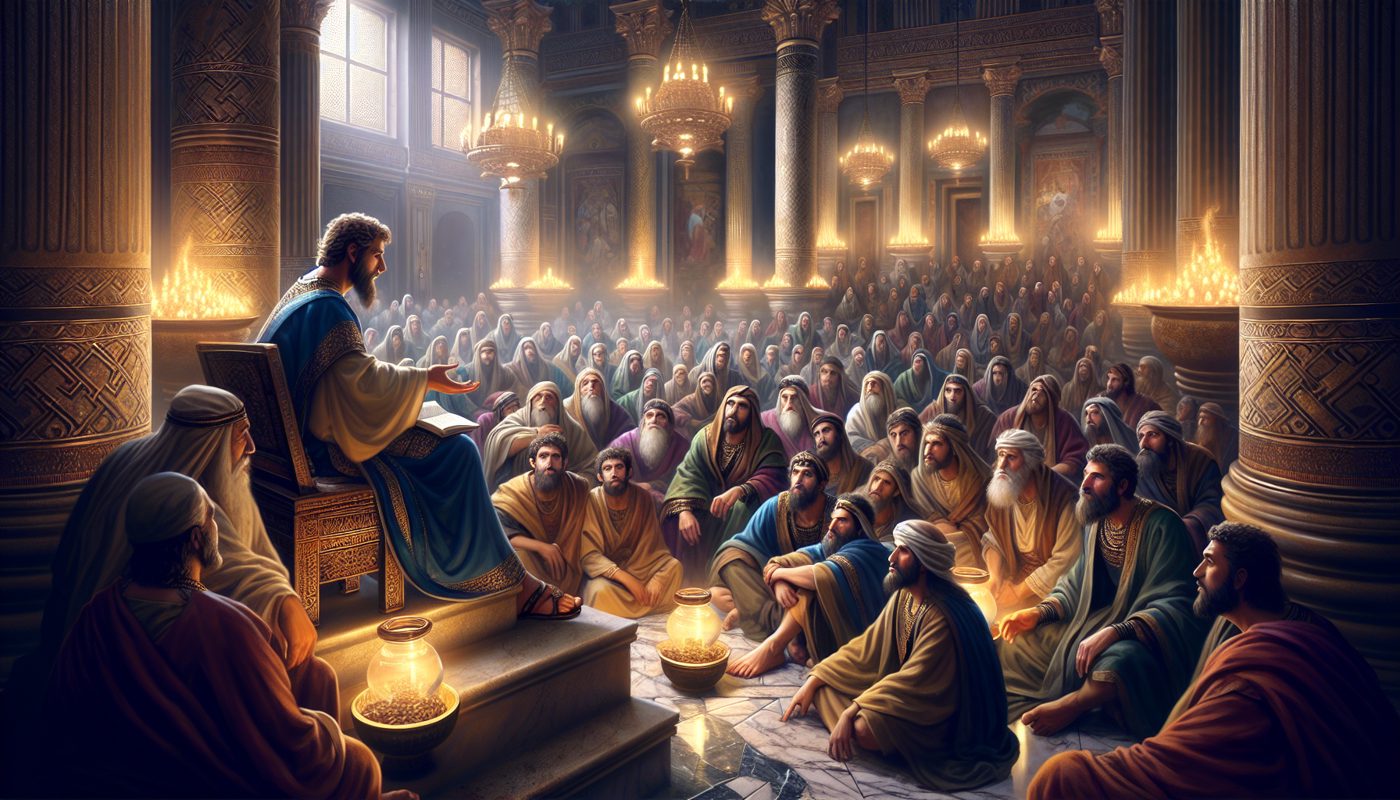
The chapter opens with a direct command: attend to wisdom, incline the ear to understanding. The goal is not abstract knowledge but preservation—discretion kept, knowledge held on the lips. The warning that follows is concrete and urgent.
The danger is a woman whose speech is honey and oil. Her words are smooth, but the chapter does not dwell on her appearance or garments. What matters is the end. Her path leads to death, her steps seize hold of Sheol. She does not find the level path of life, and her ways are unstable, though she does not know it.
The father speaks again, calling his sons to hear and not depart. The instruction is not vague: remove your way far from her, do not come near the door of her house. The consequences are spelled out in physical and social terms. Honor given to others, years handed to the cruel, strength consumed by strangers, labor lost in the house of an alien.
Then comes the lament. At the end, when flesh and body are consumed, the man will say he hated instruction, despised reproof, did not obey his teachers. He will recognize that he was nearly in all evil, in the midst of the assembly and congregation. The regret is total, but it comes too late.
The chapter shifts to a positive command. Drink water from your own cistern, running water from your own well. The image is domestic and exclusive. Springs should not be dispersed abroad, streams should not run in the streets. The blessing is for oneself alone, not for strangers.
The fountain is to be blessed. The command is to rejoice in the wife of youth. She is described as a loving hind and a pleasant doe. Her breasts are to satisfy at all times, and the man is to be ravished always with her love. The language is direct and physical, not romanticized.
The rhetorical question follows: why be ravished with a strange woman, why embrace the bosom of a foreigner? The answer is not given in moral terms but in the structure of reality. The ways of man are before the eyes of the Lord, and he makes level all his paths. Nothing is hidden.
The chapter closes with the fate of the wicked. His own iniquities take him; he is held with the cords of his sin. He dies for lack of instruction, and in the greatness of his folly he goes astray. The warning is complete: the path of the strange woman ends in death, but the path of wisdom ends in blessing within the bounds of the covenant.
Comments
Comments 0
Read the discussion and add your voice.
Members only
Sign in to join the conversation
We keep comments tied to real accounts so the discussion stays clean and trustworthy.
No comments yet. Be the first to add one.