The chapter opens with a death. Samuel dies, Israel laments and buries him at Ramah, and David goes down to the wilderness of Paran. That is the frame. The story that follows is not about Samuel, but it takes place in the kind of unsettled time his absence leaves behind. David is in the wilderness, not yet king, hunted, living off the land, and dependent on the goodwill of those who have means.
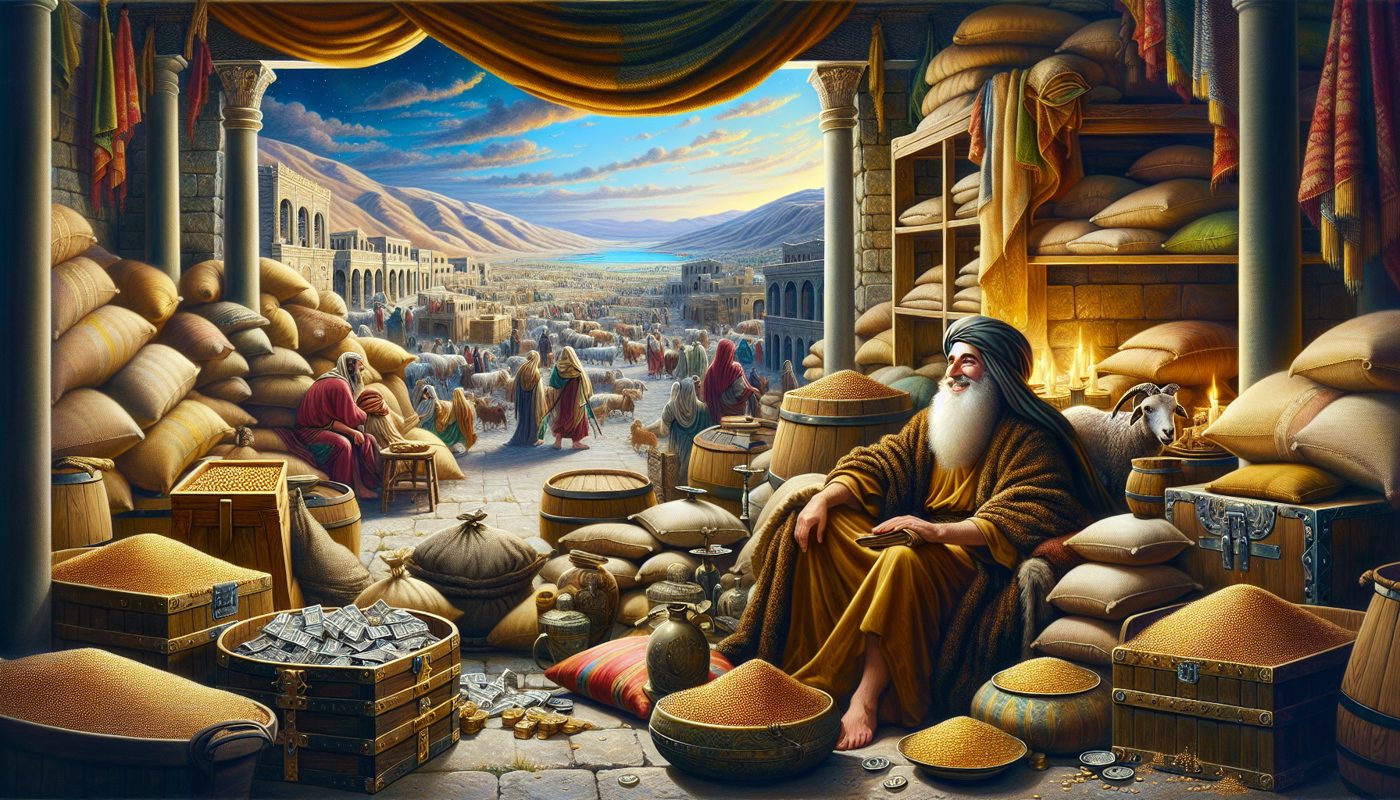
A man named Nabal is shearing sheep in Carmel. He has three thousand sheep and a thousand goats. He is very great in possessions, but the text says plainly that he is churlish and evil in his doings. He is of the house of Caleb, a lineage that once meant faith and courage. Nabal carries none of that. His wife Abigail is intelligent and beautiful. That contrast is drawn before any action begins.
David hears that Nabal is shearing. Shearing was a feast season, a time of generosity. David sends ten young men with a courteous greeting. He reminds Nabal that his shepherds were protected while they were near David's men. Nothing was stolen, no harm was done. David asks only for whatever Nabal can spare. It is a reasonable request made on a good day.
Nabal answers with contempt. He asks who David is, who the son of Jesse is, and says there are many servants nowadays who break away from their masters. He refuses to take his bread, his water, and his meat to give to men he does not know. The insult is deliberate. He knows exactly who David is. He chooses to treat him like a runaway slave.
David's reaction is immediate and violent. He tells his men to gird on their swords. Four hundred go with him. Two hundred stay with the baggage. David swears that by morning he will leave not one male of Nabal's household alive. He says he has kept this fellow's goods safe for nothing, and he has been repaid evil for good. David is about to become a blood avenger on his own behalf.
One of Nabal's young men goes to Abigail. He tells her everything. He says David's men were good to them, a wall around them day and night. He says Nabal is such a worthless fellow that no one can speak to him. He warns that disaster is determined against the whole house. Abigail does not hesitate. She does not consult her husband. She takes two hundred loaves, two bottles of wine, five dressed sheep, five measures of parched grain, a hundred clusters of raisins, and two hundred cakes of figs. She loads them on donkeys and sends them ahead. She follows without telling Nabal.
She meets David coming down the mountain. She dismounts, falls on her face, and bows to the ground. She takes the blame on herself. She asks David not to regard Nabal, whose name means fool, and whose folly is with him. She says she did not see the young men David sent. She tells David that the Lord has kept him from bloodguilt and from avenging himself. She speaks of David's future as prince over Israel. She asks only that when the Lord has dealt well with him, he remember her.
David blesses the Lord who sent her. He blesses her discretion. He says that if she had not hurried to meet him, by morning not one male of Nabal's house would have been left alive. He accepts her gift and sends her home in peace. David was stopped by a woman's words, not by a command from heaven. The restraint came through her.
Abigail returns to find Nabal drunk at a feast like a king. She tells him nothing until morning. When the wine wears off and she tells him what happened, his heart dies within him and he becomes like a stone. Ten days later, the Lord strikes Nabal and he dies. David hears and blesses the Lord who has pleaded his cause and kept him from evil. He sends for Abigail and takes her as his wife. The chapter ends with a note that Saul had given David's wife Michal to another man. David's path to the throne is still not clean or simple.
The story does not moralize about wealth. It shows what a fool does with it and what a wise woman does to keep a future king from becoming a murderer. Nabal had everything and gave nothing. Abigail gave generously and saved everyone. The difference was not in their possessions but in their understanding of what was happening around them.
Comments
Comments 0
Read the discussion and add your voice.
Members only
Sign in to join the conversation
We keep comments tied to real accounts so the discussion stays clean and trustworthy.
No comments yet. Be the first to add one.