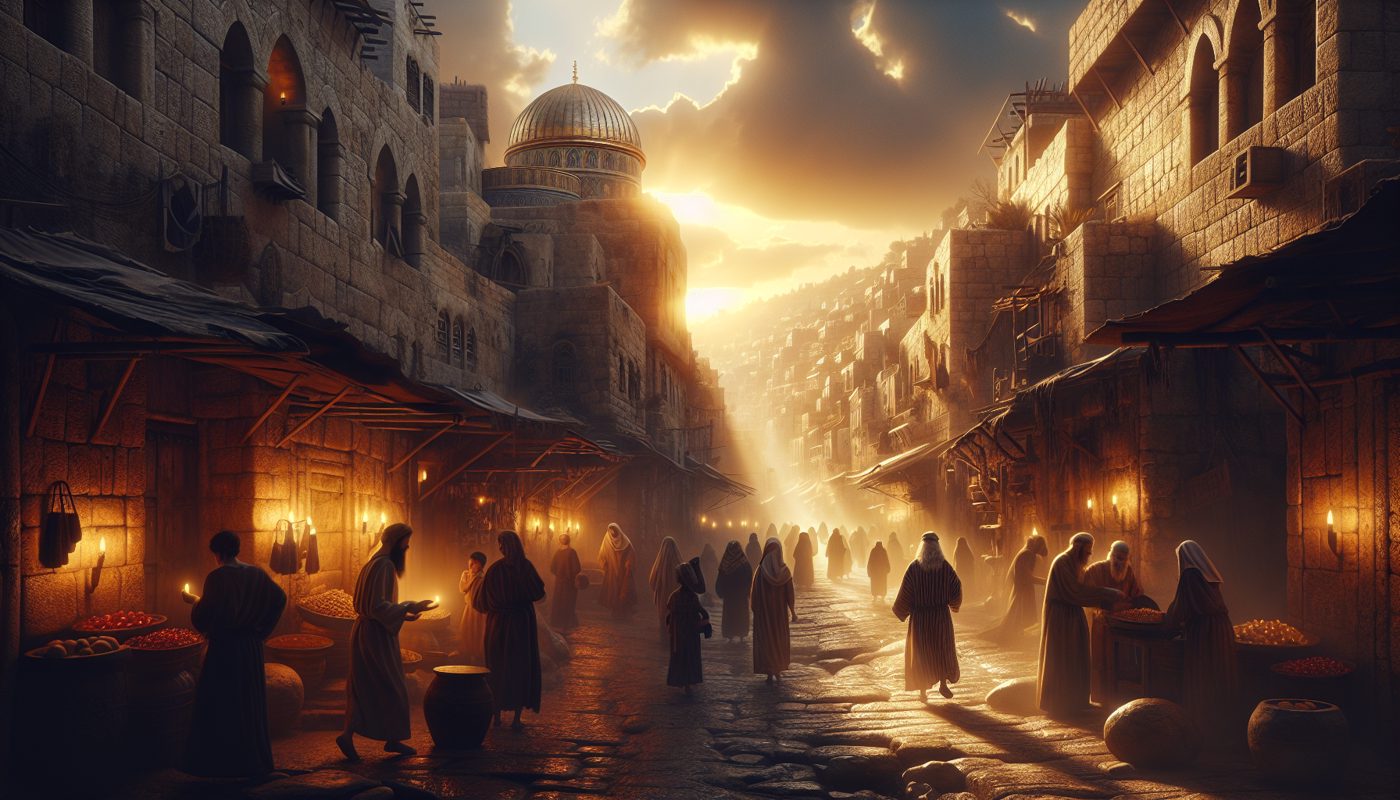
The poem that opens Ecclesiastes 3 is the most famous passage in the book, but it is not a comfort piece. It is a catalog of opposites—birth and death, planting and uprooting, killing and healing, weeping and laughing, war and peace—and the point is that each of these arrives by a fixed appointment. The Preacher does not say that everything will work out well. He says that everything has its time, and that time is not chosen by the person who lives through it.
The list runs fourteen pairs long, and it covers the full range of human experience. There is a time to embrace and a time to refrain from embracing. There is a time to keep silence and a time to speak. There is a time to love and a time to hate. The Preacher does not tell his reader which time is coming next. He only insists that every season is assigned, and that no one can change the assignment by effort or wisdom.
After the poem, the Preacher asks a blunt question: What profit does a person get from all the labor they pour into their work? The question is not rhetorical. He has already answered it in chapter 2—profit under the sun is an illusion. But here the answer is different. The labor itself is not the point. The point is that God has given human beings something to be exercised by, a travail that keeps them occupied, and that God has made everything beautiful in its time.
That word beautiful does not mean pleasant. It means fitting, appropriate, right for the moment. The Preacher says that God has also set eternity in the human heart, but that humans cannot find out what God has done from beginning to end. The result is a permanent gap: people sense that there is a larger pattern, but they cannot see it. They are locked inside their own season, unable to step back and view the whole.
The Preacher draws a practical conclusion from this limitation. He says there is nothing better than to rejoice and do good while a person lives, and to eat and drink and enjoy the good in all their labor. That enjoyment, he says, is the gift of God. It is not a reward for hard work. It is a gift given during the work, whether the season is planting or uprooting, weeping or dancing.
Then the Preacher shifts to a harder register. He says that whatever God does lasts forever. Nothing can be added to it, and nothing can be taken from it. The purpose of this permanence is that people should fear before God. The fear is not terror. It is the recognition that the human will has no leverage against the divine order. What is now has already been, and what will be has long ago been, and God seeks again what has passed away.
The Preacher then looks at the places where justice is supposed to happen—the courts, the seats of judgment—and he sees wickedness there. In the place of righteousness, wickedness is present. This is not an exception. It is the normal condition under the sun. But the Preacher does not call for reform. He says in his heart that God will judge the righteous and the wicked, because there is a time for every purpose and every work. Judgment is coming, but it is not coming on the Preacher's schedule.
Next, the Preacher makes a statement that has troubled readers ever since. He says that God tests human beings to show them that they are like beasts. The same fate comes to both: one dies, the other dies. Both have the same breath. Man has no preeminence over the beast. All go to the same place, all are from dust, and all return to dust. The Preacher does not soften this. He asks who knows whether the spirit of a human goes upward and the spirit of a beast goes downward. He does not answer the question. He leaves it open.
The chapter ends where it began—with the same conclusion. The Preacher sees nothing better than that a person should rejoice in their works, because that is their portion. No one can bring them back to see what happens after them. The seasons keep turning, the fixed appointments keep arriving, and the human task is not to master the times but to receive the gift of joy within the time that is given.
Comments
Comments 0
Read the discussion and add your voice.
Members only
Sign in to join the conversation
We keep comments tied to real accounts so the discussion stays clean and trustworthy.
No comments yet. Be the first to add one.