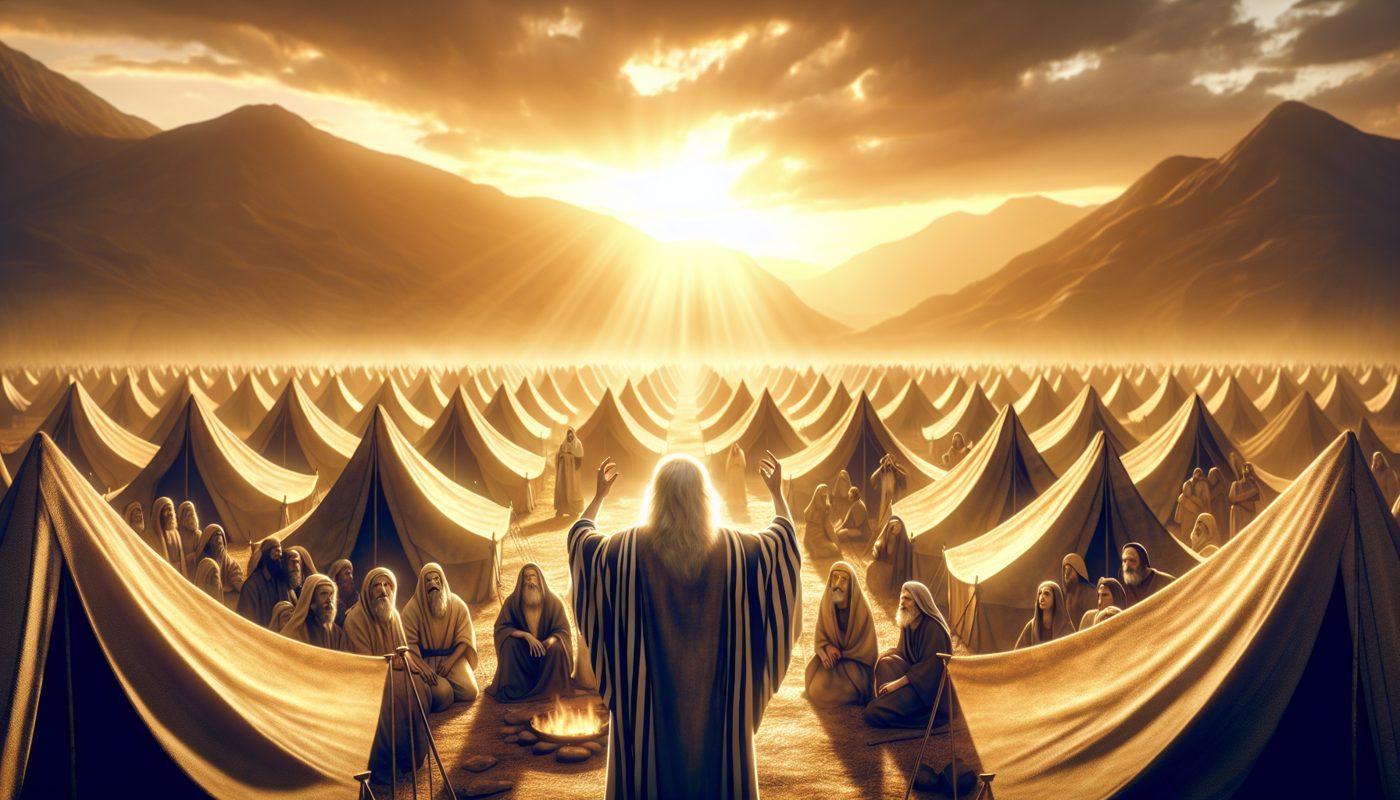
Moses assembled the whole congregation of Israel and gave them the words the Lord had commanded. The first word was not about gold or acacia wood. It was about the Sabbath: six days for work, the seventh a holy day of solemn rest to the Lord, with the death penalty for anyone who worked on it, and a command to kindle no fire in their dwellings on that day. The Lord’s dwelling would be built by hands that knew when to stop.
Then Moses spoke the offering. The Lord did not demand a tax or a census. He asked for a freewill offering from whoever was of a willing heart. The list of materials was specific: gold, silver, bronze; blue, purple, and scarlet yarn; fine linen and goats’ hair; ram skins dyed red and sealskins; acacia wood; oil for the light; spices for the anointing oil and the fragrant incense; onyx stones and stones to be set for the ephod and the breastplate. Nothing was left vague.
Moses also called for every wise-hearted man to come and make all that the Lord had commanded. He recited the entire inventory of the tabernacle: the tent, its coverings, clasps, boards, bars, pillars, and sockets; the ark with its staves and mercy-seat and the veil of the screen; the table with its staves and vessels and the showbread; the lampstand with its vessels and lamps and the oil; the altar of incense with its staves, the anointing oil, the sweet incense, and the screen for the door; the altar of burnt offering with its bronze grating, staves, and vessels, the laver and its base; the hangings of the court, its pillars, sockets, and the screen for the gate; the pins and cords for the tabernacle and the court; and the finely woven garments for ministering in the holy place—the holy garments for Aaron the priest and for his sons.
After Moses finished speaking, the whole congregation departed from his presence. But they did not scatter to their tents in indifference. Everyone whose heart stirred him up and whose spirit made him willing came and brought the Lord’s offering for the work of the tent of meeting, for all its service, and for the holy garments.
Men and women came, as many as were willing-hearted, bringing brooches, earrings, signet rings, armlets—all kinds of gold jewelry. Everyone who had blue, purple, scarlet, fine linen, goats’ hair, ram skins dyed red, or sealskins brought them. Those who had silver or bronze brought their offerings. Those who had acacia wood brought it for the work.
The women who were wise-hearted spun with their hands and brought what they had spun—the blue, the purple, the scarlet, and the fine linen. Other women, whose hearts stirred them up in wisdom, spun the goats’ hair. The rulers brought the onyx stones and the stones to be set for the ephod and the breastplate, as well as the spice and the oil for the light, the anointing oil, and the sweet incense.
The children of Israel brought a freewill offering to the Lord—every man and woman whose heart made them willing to bring for all the work the Lord had commanded through Moses. The offering was not coerced. It was not a quota. It was the response of a people whose hearts had been moved.
Then Moses told the people that the Lord had called by name Bezalel son of Uri, son of Hur, of the tribe of Judah. The Lord had filled him with the Spirit of God—with wisdom, understanding, knowledge, and all manner of workmanship—to devise skillful works in gold, silver, and bronze, in cutting stones for setting, in carving wood, and in every kind of skillful workmanship. The Lord had also put in his heart the ability to teach, both him and Oholiab son of Ahisamach, of the tribe of Dan.
The Lord had filled them with wisdom of heart to work all kinds of craftsmanship: the engraver, the skillful workman, the embroiderer in blue, purple, scarlet, and fine linen, and the weaver—everyone who does any workmanship and devises skillful works. The tabernacle would be built not only by willing hearts but by skilled hands, filled by the Spirit of God.
Comments
Comments 0
Read the discussion and add your voice.
Members only
Sign in to join the conversation
We keep comments tied to real accounts so the discussion stays clean and trustworthy.
No comments yet. Be the first to add one.