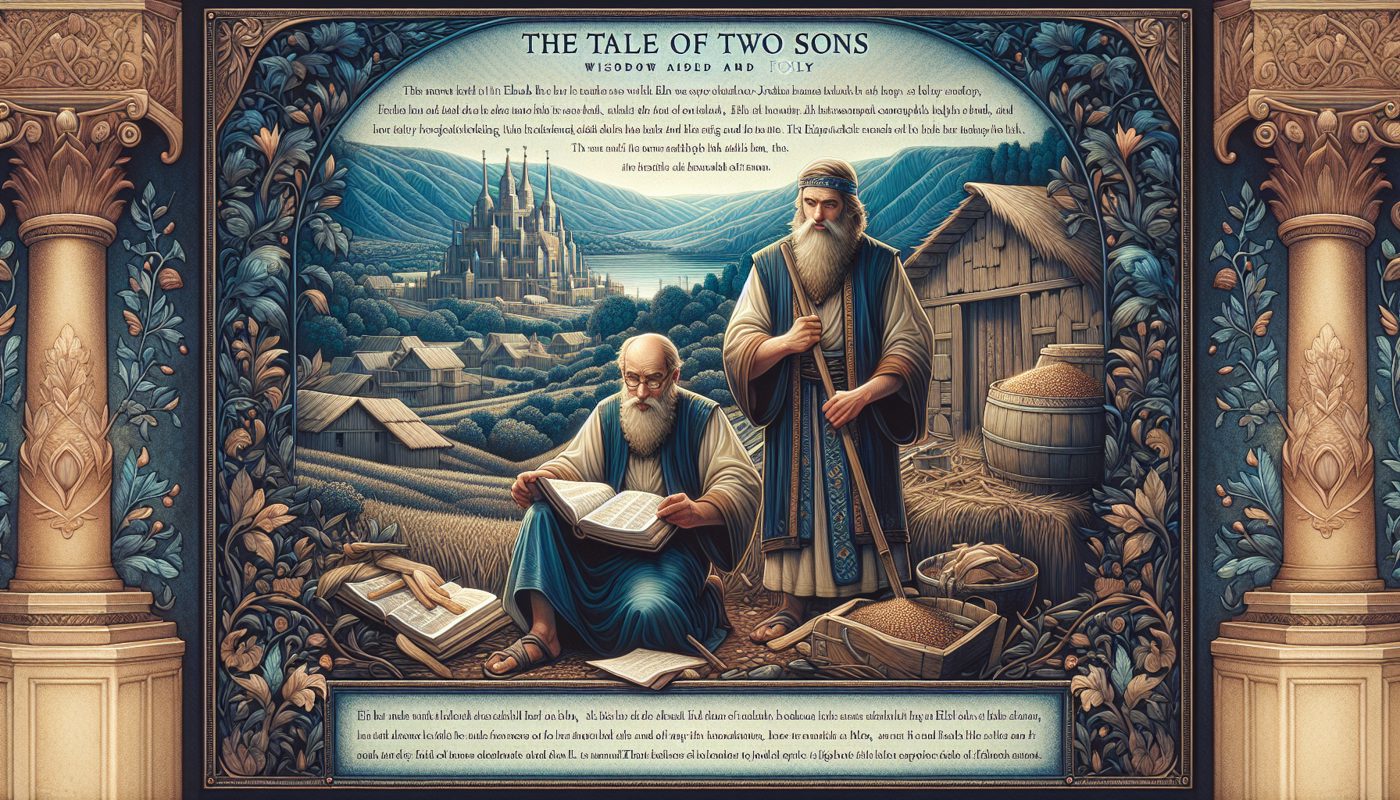
Proverbs 10 opens with a single household image that governs the whole chapter: a wise son makes a glad father, a foolish son is the heaviness of his mother. The verse does not name the sons or locate them in any city. It simply draws the line that runs through every verse that follows. The rest of the chapter is a series of sharp contrasts, each one pressing the same division between two kinds of people.
The chapter does not build a story. It stacks proverbs. A slack hand brings poverty; a diligent hand makes rich. Gathering in summer is the mark of a wise son; sleeping through harvest brings shame. The righteous receive blessings on the head; the wicked are covered by violence. These are not observations about luck or temperament. They are statements about how the Lord orders the world.
Treasures gained by wickedness profit nothing. Righteousness delivers from death. The Lord will not let the righteous starve, but He thrusts away the desire of the wicked. The language is blunt. The wicked do not merely fail. Their desire is actively pushed aside. The righteous do not merely survive. Their memory is blessed, while the name of the wicked rots.
The mouth appears repeatedly. The mouth of the righteous is a fountain of life. The mouth of the wicked is covered by violence. The lips of the righteous feed many. The foolish die for lack of understanding. Speech is not neutral. It either nourishes or destroys. The one who restrains his lips does wisely; the one who multiplies words steps into transgression.
Hatred stirs up strife. Love covers all transgressions. This is the only verse in the chapter that names love directly, and it does not soften the contrast. Hatred is active. Love is also active, but its action is covering, not exposing. The chapter does not explain how love covers. It simply states the fact.
Wealth is a strong city in the imagination of the rich. Poverty is the destruction of the poor. The verse does not praise wealth or blame poverty. It reports what each condition looks like from the inside. The labor of the righteous tends to life. The increase of the wicked tends to sin. The same effort, the same harvest, leads to opposite destinations depending on the heart behind the work.
The blessing of the Lord makes rich, and He adds no sorrow with it. This is not a promise of material prosperity for every righteous person. It is a statement about the quality of blessing that comes from the Lord. It carries no regret, no hidden cost, no aftermath of grief. The chapter does not say that the righteous will be wealthy. It says that when the Lord blesses, the blessing is clean.
The fear of the Lord prolongs days. The years of the wicked will be shortened. The hope of the righteous ends in gladness. The expectation of the wicked perishes. The way of the Lord is a stronghold to the upright and a destruction to the workers of iniquity. The same path leads to safety for one and ruin for another. The difference is not the path but the walker.
The righteous will never be removed. The wicked will not dwell in the land. The mouth of the righteous brings forth wisdom. The perverse tongue will be cut off. The lips of the righteous know what is acceptable. The mouth of the wicked speaks perverseness. The chapter ends where it began, with the mouth and with permanence. The wise son stands. The foolish son falls.
Comments
Comments 0
Read the discussion and add your voice.
Members only
Sign in to join the conversation
We keep comments tied to real accounts so the discussion stays clean and trustworthy.
No comments yet. Be the first to add one.