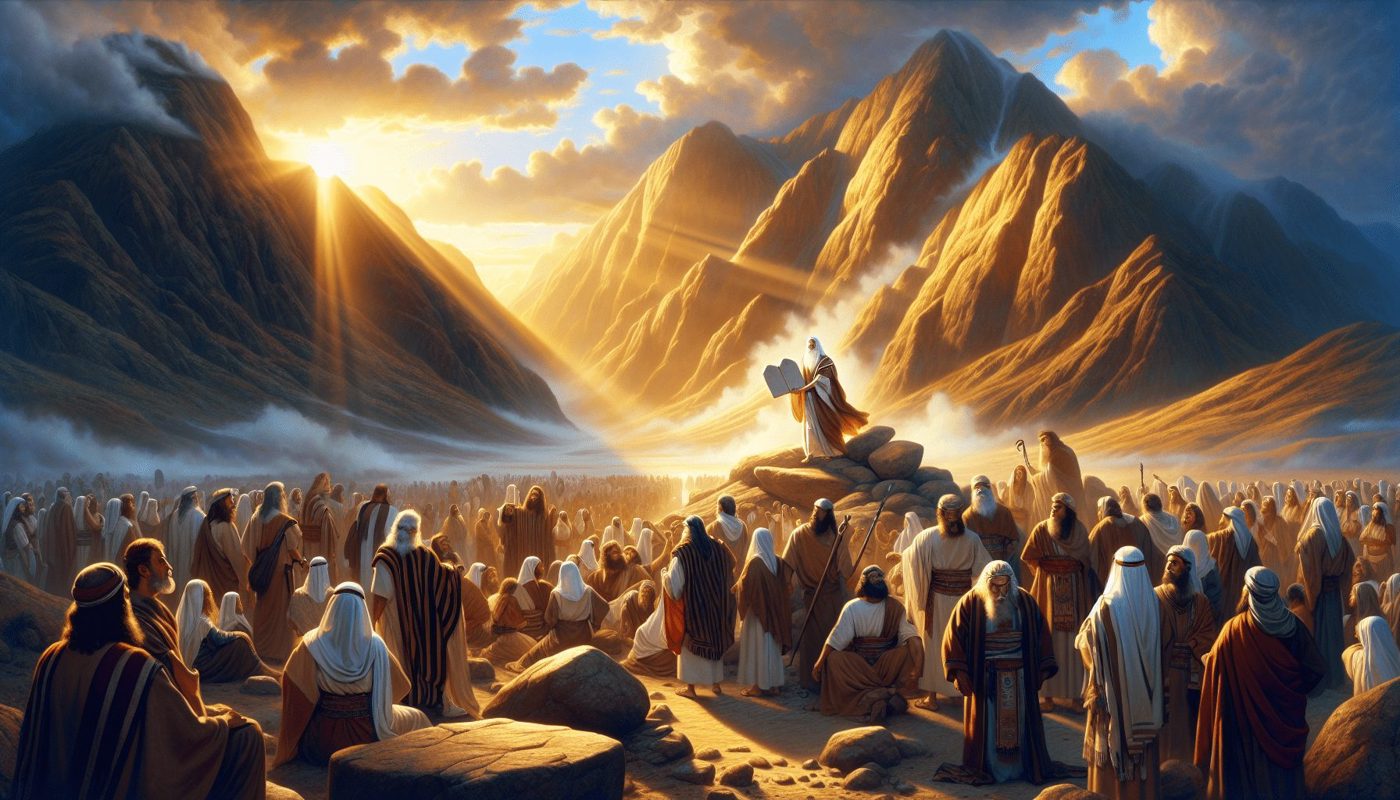
The Lord gave Israel a body of law that touched the courtroom, the field, the calendar, and the road ahead. This chapter moves without pause from the ethics of testimony to the rhythm of the land to the promise of an angel who carries the Lord's own name. It is not a collection of scattered rules. It is a single covenant built on the character of the Lord and the memory of what Israel had been.
The opening commands strike at the heart of public justice. A man must not carry a false report or put his hand with the wicked to be an unrighteous witness. He must not follow a multitude to do evil, nor turn aside in a dispute to side with the majority and so wrest justice. And he must not favor a poor man in his cause simply because he is poor. The law does not tilt toward the crowd or toward pity. It demands a straight scale.
Then the Lord extended the same justice into private life. If a man sees his enemy's ox or donkey going astray, he must bring it back. If he sees the donkey of someone who hates him lying under its burden, he must not leave it. He must help release it. The law did not permit hatred to excuse neglect. The animal's need and the owner's humanity were both bound by the same command.
The Lord also forbade bribes, because a bribe blinds clear-sighted men and perverts the words of the righteous. He commanded that the sojourner not be oppressed, because Israel knew the heart of a sojourner, having been sojourners themselves in Egypt. The law rested on memory and on the fear of the Lord, not on abstract theory.
The land itself was brought under the covenant. For six years a man could sow and gather, but the seventh year the land was to rest and lie fallow. What grew on its own belonged to the poor, and what the poor left belonged to the beasts of the field. The same pattern applied to vineyards and oliveyards. The seventh day followed the same logic: rest for the ox and the donkey, rest for the son of the handmaid and the sojourner. The Lord built rest into the bone of the year and the week.
Three times each year Israel was to hold a feast before the Lord: the Feast of Unleavened Bread at the appointed time in the month Abib, when they came out of Egypt; the Feast of Harvest, the firstfruits of their labor; and the Feast of Ingathering at the end of the year. No man was to appear before the Lord empty. The first of the firstfruits of the ground was to be brought into the house of the Lord. And the Lord gave a sharp prohibition: do not boil a kid in its mother's milk.
Then the chapter turned from the laws of worship to the promise of the journey ahead. The Lord said He would send an angel before Israel to keep them on the way and bring them into the place He had prepared. They were to take heed before him and listen to his voice, because he would not pardon their transgression, for the Lord's name was in him. If they listened and did all that the Lord spoke, He would be an enemy to their enemies and an adversary to their adversaries.
The angel would bring them into the land of the Amorites, Hittites, Perizzites, Canaanites, Hivites, and Jebusites, and the Lord would cut them off. Israel was not to bow down to their gods or serve them. They were to overthrow them utterly and break their pillars in pieces. If they served the Lord, He would bless their bread and water and take sickness away from them. No woman would miscarry or be barren, and their days would be fulfilled.
The Lord said He would send His terror before them and discomfit every people they encountered. He would send the hornet to drive out the Hivite, the Canaanite, and the Hittite. But He would not drive them out in a single year, lest the land become desolate and the wild beasts multiply against them. He would drive them out little by little, until Israel increased and inherited the land. The border would run from the Red Sea to the Sea of the Philistines, from the wilderness to the River.
And the Lord gave a final warning: Israel was to make no covenant with the inhabitants of the land or with their gods. The people were not to dwell in the land, because they would cause Israel to sin against the Lord. If Israel served their gods, it would become a snare. The chapter ends with the road open and the danger named.
Comments
Comments 0
Read the discussion and add your voice.
Members only
Sign in to join the conversation
We keep comments tied to real accounts so the discussion stays clean and trustworthy.
No comments yet. Be the first to add one.