Proverbs 10 opens with a single verse that sets the entire chapter in motion: a wise son makes a glad father, a foolish son weighs down his mother. This is not abstract moralizing. It is a concrete claim about how a household feels when a son chooses one way or the other. The chapter that follows does not drift into generalities. It drives a series of sharp, unadorned contrasts between the righteous and the wicked, the diligent and the slack, the wise talker and the fool who cannot stop talking.
The language is economic. Treasures gained by wickedness profit nothing, but righteousness delivers from death. The Lord will not let the righteous starve, but He shoves away the craving of the wicked. These are not promises of material ease. They are statements about what ultimately holds. A slack hand produces poverty; a diligent hand makes rich. The sluggard sleeping through harvest is not merely lazy—he is a son who brings shame. The chapter treats work and rest as moral acts, not neutral habits.
The mouth appears constantly. The mouth of the righteous is a fountain of life, but violence covers the mouth of the wicked. The tongue of the righteous is choice silver; the heart of the wicked is worth little. The lips of the righteous feed many, but fools die for lack of understanding. Speech is not a minor matter. It is the channel through which wisdom or destruction flows. Hatred stirs up strife, but love covers all transgressions. The one who restrains his lips does wisely; the one who talks endlessly cannot avoid sin.
The chapter also deals with memory and reputation. The memory of the righteous is blessed, but the name of the wicked rots. A name does not decay by accident. It rots because the life behind it produced nothing worth remembering. The righteous walk securely; the one who perverts his ways will be found out. The wink of an eye, the sly signal, causes sorrow. The fool who babbles will fall. The chapter does not allow anonymity. Character is eventually visible.
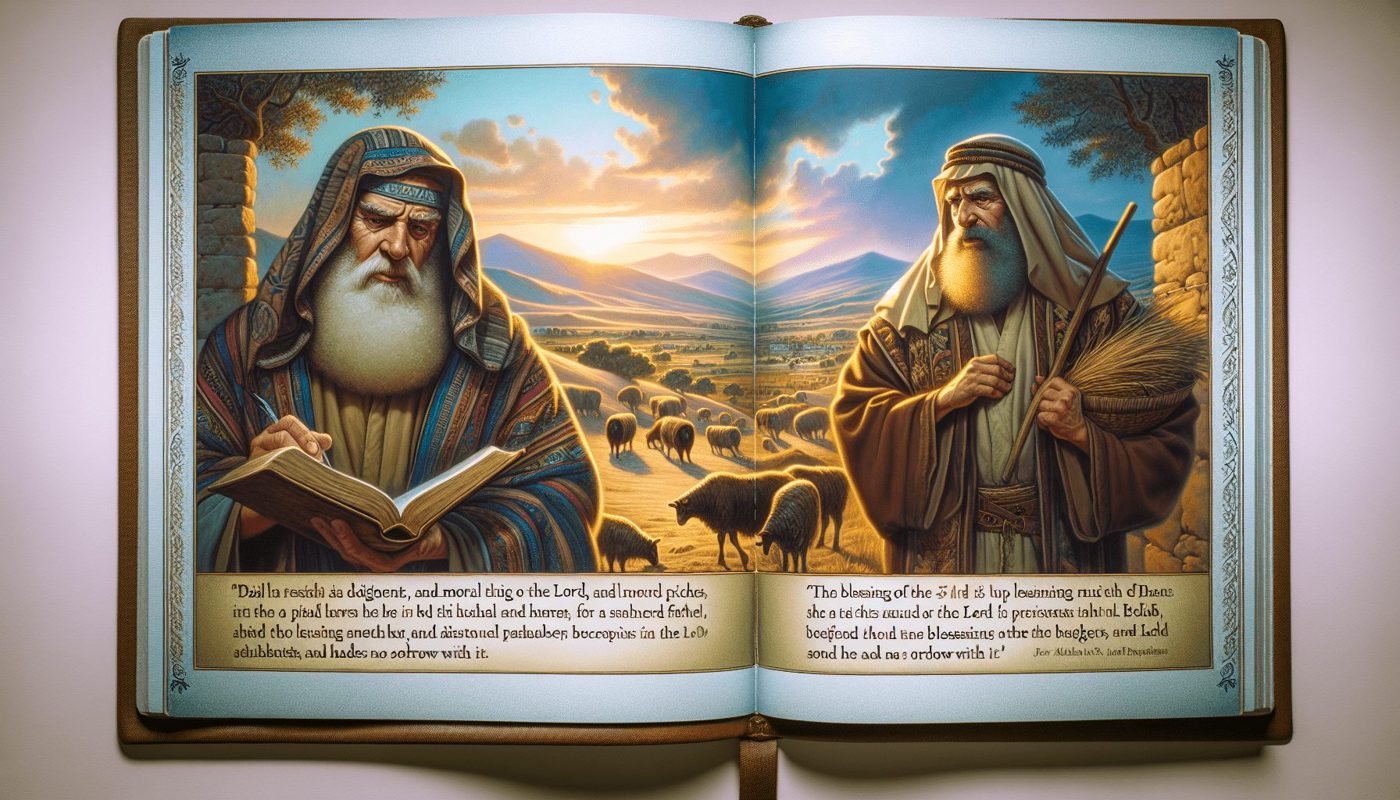
Wealth and poverty appear not as fixed states but as conditions tied to conduct. The rich man's wealth is his strong city; the destruction of the poor is their poverty. That is not a celebration of wealth. It is an observation that poverty, in a fallen world, leaves a person exposed. The labor of the righteous tends to life; the increase of the wicked tends to sin. The blessing of the Lord makes rich, and He adds no sorrow with it. The chapter does not say all rich men are blessed or all poor men are righteous. It says the source of wealth matters, and the Lord's blessing does not bring the grief that dishonest gain carries.
The fear of the Lord prolongs days, but the years of the wicked are shortened. The hope of the righteous is gladness; the expectation of the wicked perishes. The way of the Lord is a stronghold to the upright but destruction to workers of iniquity. The righteous cannot be removed; the wicked will not dwell in the land. These are not predictions about lifespan statistics. They are claims about the shape of a life under the Lord's order. The wicked may flourish for a season, but the chapter insists that season ends.
The closing verses return to the mouth. The mouth of the righteous brings forth wisdom; the perverse tongue will be cut off. The lips of the righteous know what is acceptable; the mouth of the wicked speaks perverseness. The chapter does not end with a call to try harder. It ends with a diagnosis: the righteous know what is fitting, and the wicked do not. That knowledge is not innate. It is learned through correction, through heeding reproof, through walking in the way of life. The one who forsakes reproof errs. The one who receives commandments is wise.
Proverbs 10 does not tell a story about two named men. It gives the raw material for a thousand such stories. Every verse is a lens through which to see actual households, actual fields, actual marketplaces, and actual conversations. The chapter does not sentimentalize the righteous or caricature the wicked. It simply shows the two paths and lets the reader feel the weight of each.
Comments
Comments 0
Read the discussion and add your voice.
Members only
Sign in to join the conversation
We keep comments tied to real accounts so the discussion stays clean and trustworthy.
No comments yet. Be the first to add one.