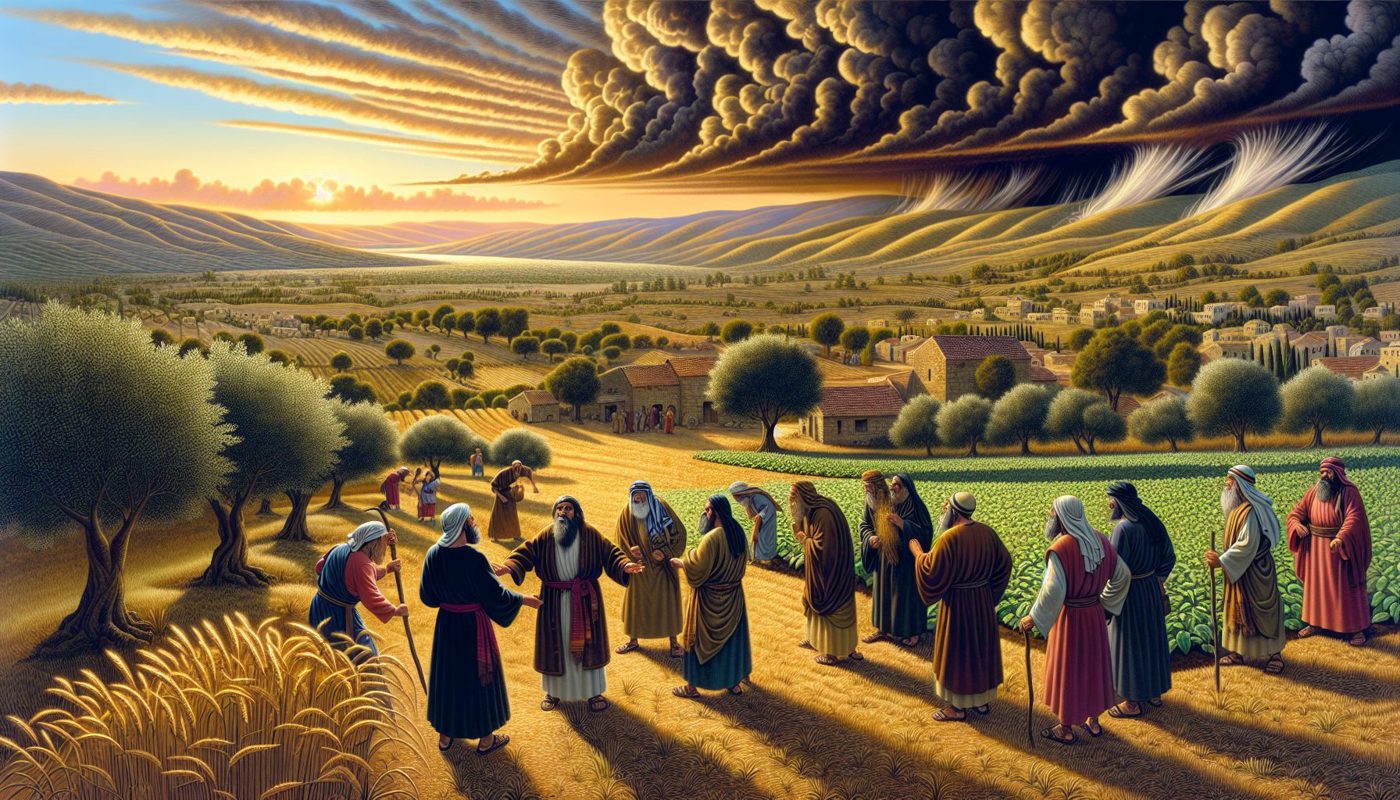
The Teacher of Ecclesiastes does not soften the uncertainty of life under the sun. He opens this chapter with a command that sounds reckless: cast your bread on the waters. The image is not about charity alone. It is about sending out what sustains you into a medium where you cannot track it, cannot retrieve it, and cannot guarantee it will return. The only promise is that after many days you will find it again—but the Teacher does not say how many, or in what form.
The second verse pushes further. Give a portion to seven, even to eight. The numbers are not precise; they mean give to more people than you can count on one hand. The reason given is not altruism but ignorance: you do not know what disaster will come on the earth. Generosity here is not presented as a moral ideal but as a hedge against a future you cannot predict. You spread your resources wide because you do not know which investment, which relationship, which act of kindness will survive the crash.
Then the Teacher shifts to the natural world. Clouds full of rain empty themselves on the earth. A tree falls where it falls. These are statements of inevitability, not of judgment. The clouds do not ask permission. The tree does not choose its landing spot. The point is that some things happen regardless of human observation or preference. You cannot stop the rain by watching the sky, and you cannot move the tree by staring at it.
This leads to the sharpest line in the chapter: whoever watches the wind will not plant, and whoever looks at the clouds will not reap. The Teacher is describing a paralysis that comes from over-attention to conditions. The farmer who waits for the perfect wind and the ideal cloud cover will never put seed in the ground. The harvest belongs to those who act despite incomplete information.
The Teacher grounds this in human limitation. You do not know the path of the wind. You do not know how bones form in the womb. These are mysteries that belong to God, who does all things. The point is not to provoke wonder but to expose the limits of human knowledge. If you cannot explain the wind or the formation of a child, you certainly cannot predict which of your efforts will succeed.
So the command becomes urgent: sow your seed in the morning, and do not hold back your hand in the evening. Work both ends of the day. The reason is not that hard work always pays off. The reason is that you do not know which effort will prosper—this one, that one, or both. The Teacher does not guarantee that both will be good. He only says they might be. That uncertainty is the ground for action, not an excuse for delay.
The chapter then pivots to joy. Light is sweet, and it is pleasant to see the sun. This is not a sentimental observation. It is a counterweight to the darkness that the Teacher insists is coming. If a man lives many years, let him rejoice in all of them. But he must also remember that the days of darkness will be many. The Teacher does not let the reader forget the vanity that brackets every human effort. All that comes is vanity.
The final verses address the young directly. Rejoice in your youth. Let your heart cheer you. Walk in the ways of your heart and in the sight of your eyes. This sounds like permission for unrestrained pleasure, but it comes with a boundary: know that for all these things God will bring you into judgment. The joy is real, but it is not free from accountability. The Teacher is not a libertine. He is a realist who knows that youth and the dawn of life are vanity—not worthless, but fleeting.
The last instruction is to remove sorrow from your heart and put away evil from your flesh. This is not a command to deny pain or to achieve moral perfection. It is a practical directive: do not let grief paralyze you, and do not let corruption consume you. The window of youth is narrow. The days of darkness are coming. The only sane response is to act, to give, to sow, and to rejoice—without pretending you control the outcome.
Comments
Comments 0
Read the discussion and add your voice.
Members only
Sign in to join the conversation
We keep comments tied to real accounts so the discussion stays clean and trustworthy.
No comments yet. Be the first to add one.