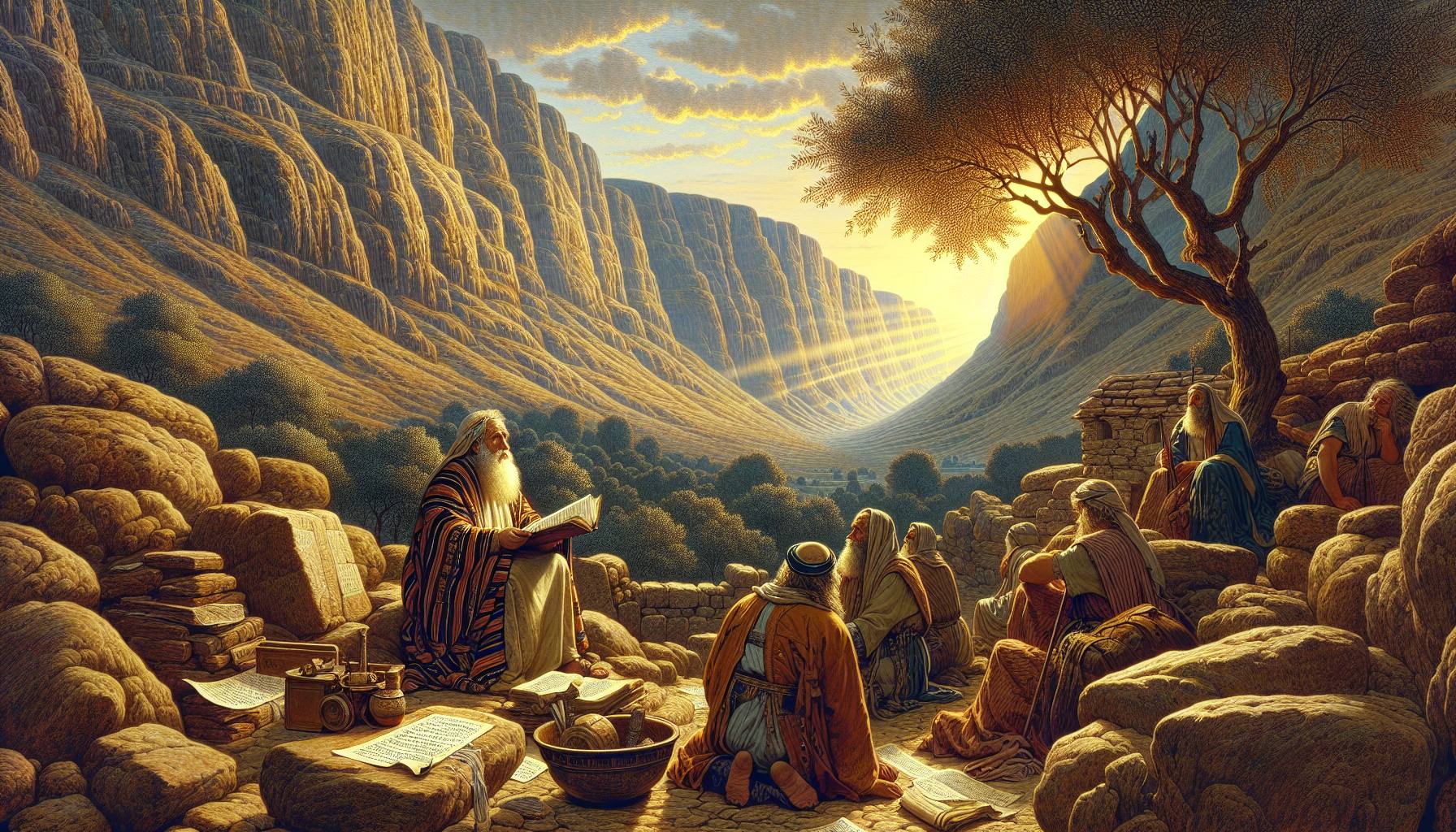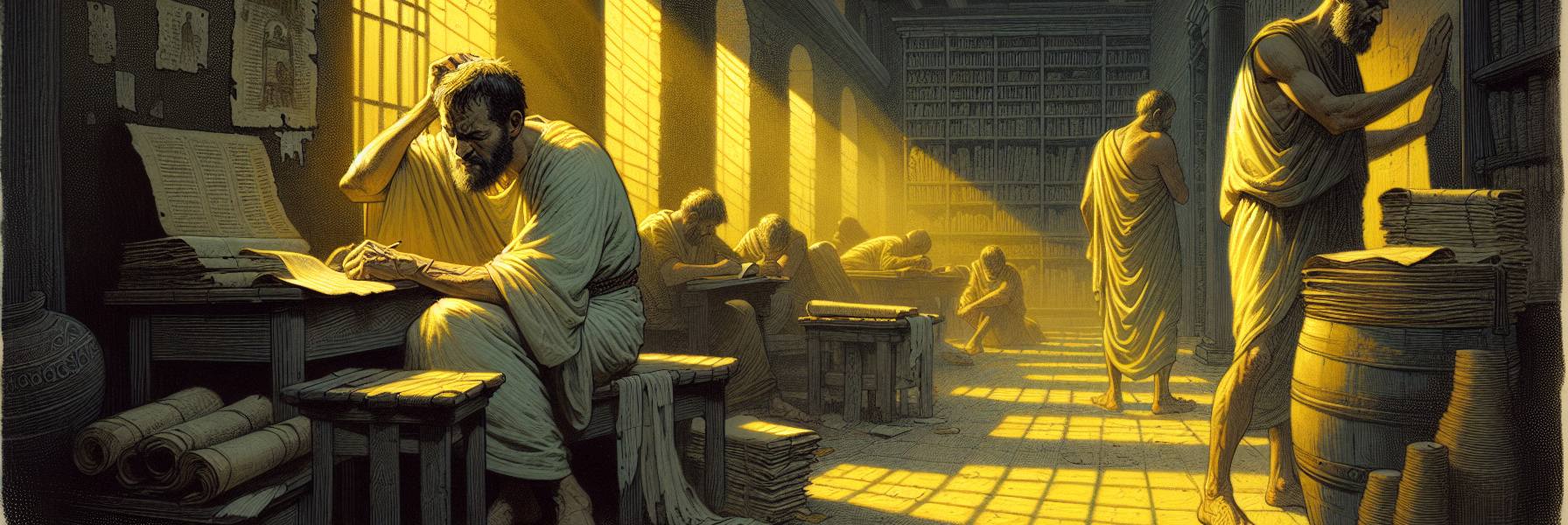

The lamplight in the small room was poor, a dull yellow pool that made the shadows in the corners seem to breathe. Silas rubbed a sore wrist, the ache a familiar companion after hours of scratching words onto papyrus. Across from him, Paul was not speaking now, but pacing—a slow, measured weariness in his steps that had nothing to do with the lateness of the hour. The air smelled of old scrolls, oil, and the distant, acrid hint of a city settling into night.
“They are afraid,” Paul said, his voice low, not to Silas but to the room itself, to the anxiety that had traveled hundreds of miles from Thessalonica to find them here in Corinth. “They fear the Day has come and they were left. A fine thing, to have taught them to long for the Lord’s return, only to have that longing twisted into terror by some liar’s letter or a spirit of deception.”
He stopped pacing and looked at Silas, his eyes reflecting the flicker of the lamp. “We must speak to this. Not just with comfort, but with clarity. The truth is a bulwark. Write.”
Silas dipped his stylus. The first words were a firm reassurance, a pleading command not to be shaken. But then Paul’s tone deepened, settling into a grave, prophetic rhythm that Silas had heard only a few times before. It was the voice he used when speaking of the deep, shadowy things, the undercurrents of history that flowed toward a predetermined cataract.
“Before that Day comes,” Paul said, staring now at the dark square of the window, “the rebellion must come first. The great falling away. It will not be a quiet forgetting, Silas. It will be an active, chosen apostasy. A turning *toward* something else.”
He spoke of a figure, not named but vividly described—a man of lawlessness, a son of destruction. This was not some future barbarian king from beyond the maps, Silas understood instinctively. This was something subtler, more insidious, rising from within the very context of faith. He would oppose every object of worship, would seat himself in the temple of God, proclaiming himself to be God.
“Remember,” Paul murmured, turning back, “when I was with them, I told them of this? How the mystery of lawlessness is already at work?”
Silas nodded, the hairs on his arms prickling. He did remember. It was the strange, cold feeling they had sometimes when confronting a particular kind of pride, a slippery deceit in the synagogue debates, a spirit that felt oddly organized and deeply personal. It was like a current, hidden beneath the surface of events, pulling toward a singular, awful estuary.
“But,” Paul continued, and here his voice gained a note of fierce, triumphant certainty, “there is a restraint. Something holds it back. For now.”
That was the phrase Silas carefully formed: *katecho*—to hold back, to restrain. Paul did not elaborate on its nature. Was it the binding order of Roman law? The ministry of the apostles? The presence of the Church itself as a sanctifying force? Or perhaps the restraining hand of the Holy Spirit? Paul was silent on the specifics, and Silas, in his wisdom, did not press. Some mysteries were to be acknowledged, not dissected. The crucial point was the *now*. The rebellion and the revealer of rebellion were being checked, contained by a divine mechanism.
Then Paul described the unveiling. The restraining force would be removed—‘taken out of the way’—and only then would the lawless one be fully revealed. The Lord Jesus would destroy him with the breath of his mouth, the sheer, effortless radiance of his coming. It would be a confrontation of absolute opposites: deception against truth, usurpation against true sovereignty, a crafted illusion against unbearable light.
“His coming,” Paul said, the word ‘*parousia*’ heavy in the air, “is in accordance with the work of Satan. All power, false signs, wonders. Every wicked deception for those who are perishing.”
Here, Silas’s hand slowed. This was the terrible hinge of it. The lawless one wouldn’t come with obvious evil, but with a dreadful parody of the good—miraculous signs that lied, a show of power that ensnared. He would prey on a fundamental deficit: a refusal to love the truth and so be saved. And because of that refusal, God would send a powerful delusion—a letting go, a giving over—so that they would believe the lie. The judgment was not merely external punishment, but the horrific culmination of a chosen path: believing what is false because truth was rejected.
Paul fell silent again, the weight of the prophecy sitting with them in the humble room. Finally, he walked over and placed a hand on Silas’s shoulder. The warmth was a sudden, human anchor.
“But not them, Silas. Not our brothers and sisters. Remind them. God chose them as firstfruits, saved them through sanctification by the Spirit and belief in the truth. He called them to this. So then, brothers and sisters, stand firm. Hold fast to the traditions you were taught, whether by our spoken word or by our letter.”
The dictation was over. The rest was a pastoral conclusion, a prayer for comfort and strength. But as Silas finished the final lines and sanded the ink, his mind lingered on the vision. It was not a detailed timetable, but a theological landscape. A map of spiritual conflict. It explained the present tension—the already of sin’s mystery and the not yet of its final, doomed incarnation. It transformed panic into sober vigilance. The Day had not come because certain things had not yet happened; the very presence of a restraining force was a sign of grace, a space for repentance and steadfastness.
He blew out the lamp. In the sudden dark, the city sounds seemed louder. Somewhere out there, the mystery of lawlessness was at work. But here, in this small room, now carried on a sheet of papyrus, was the counter-mystery: the love of the truth, a calling secured, and a command to stand firm. The story was not about figuring out the date, but about embodying the character to endure whatever came. The true narrative was the one they were to live, right up until the moment the breath of His mouth dissolved every shadow for good.