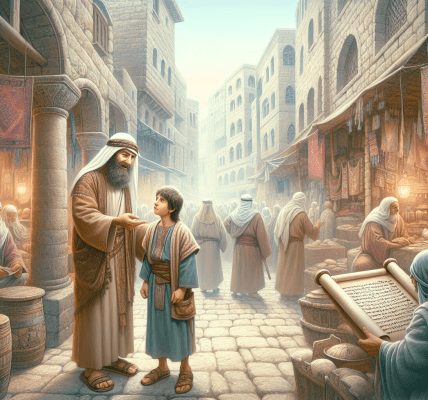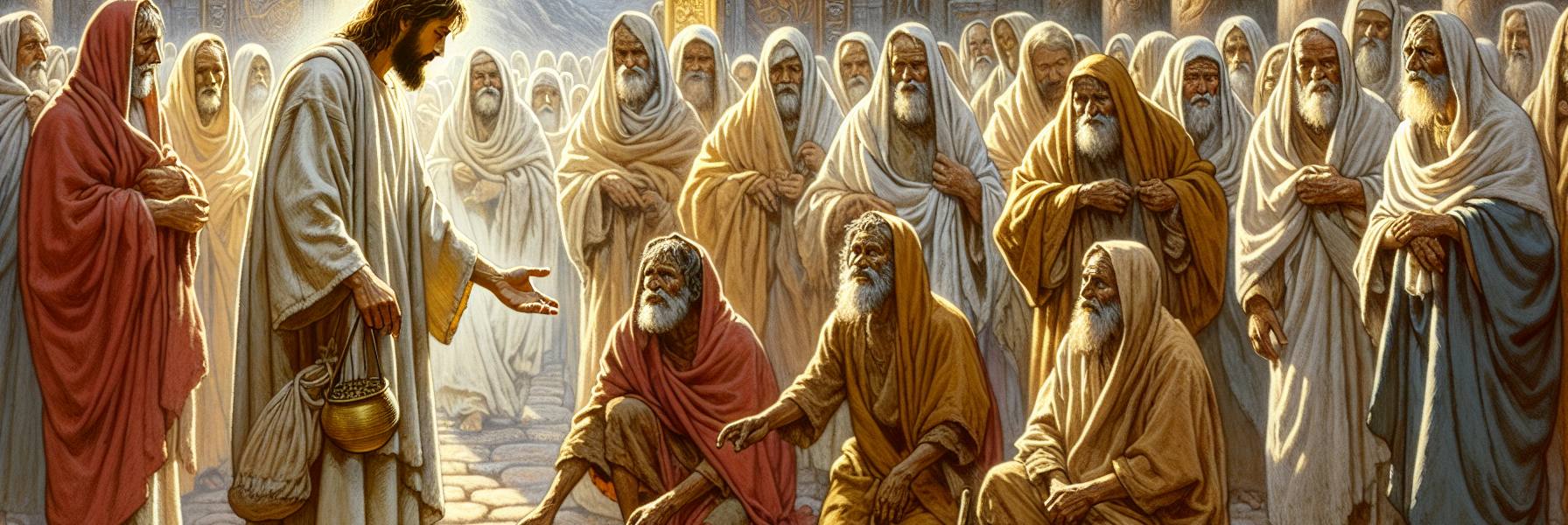

The morning light, thin and pale, was just washing the gold from the Temple’s eastern gate when they brought the man to them. He was a regular sight, that man, carried daily by friends whose faces were etched with a weary kind of hope. His legs, useless from birth, curled beneath him like dry roots. The alms he sought were copper coins, a small mercy to soften a hard life.
Peter, with John a half-step behind as was his way, stopped. The crowd flowed around them, a river of white robes and murmured prayers. Peter’s eyes, however, were fixed not on the man’s pleading hand, but on his face. “Look at us,” he said, his voice cutting through the Temple hum. The man did, expecting a coin. What he received was a command, solid and simple as a block of wood. “Silver or gold I do not have. But what I have, I give you. In the name of Jesus Christ of Nazareth, walk.”
The air tightened. Then Peter’s hand, calloused from nets and rope, closed around the man’s. He pulled him up. A sensation, foreign and fiery, shot through ankles that had never borne weight. Bones clicked into a purpose they’d never known. The man stood, wobbled, then took a step. Then another. Then he was leaping, a clumsy, glorious dance right there in Solomon’s Colonnade, shouting praises to a God who had just rewritten his body’s story. The crowd coagulated into a stunned, then jubilant, mass. This was the man who begged at the Beautiful Gate. Now he was clinging to Peter and John, his hands on their shoulders, his feet firm on the marble.
That’s when the temple guards arrived, their faces rigid with official concern. The priests, the captain of the temple guard, the Sadducees—they came like a cold front. The spectacle, the name of Jesus being shouted in the sacred precincts, it was a spark in dry tinder. By evening, Peter and John were in custody, the healed man a bewildered exhibit beside them.
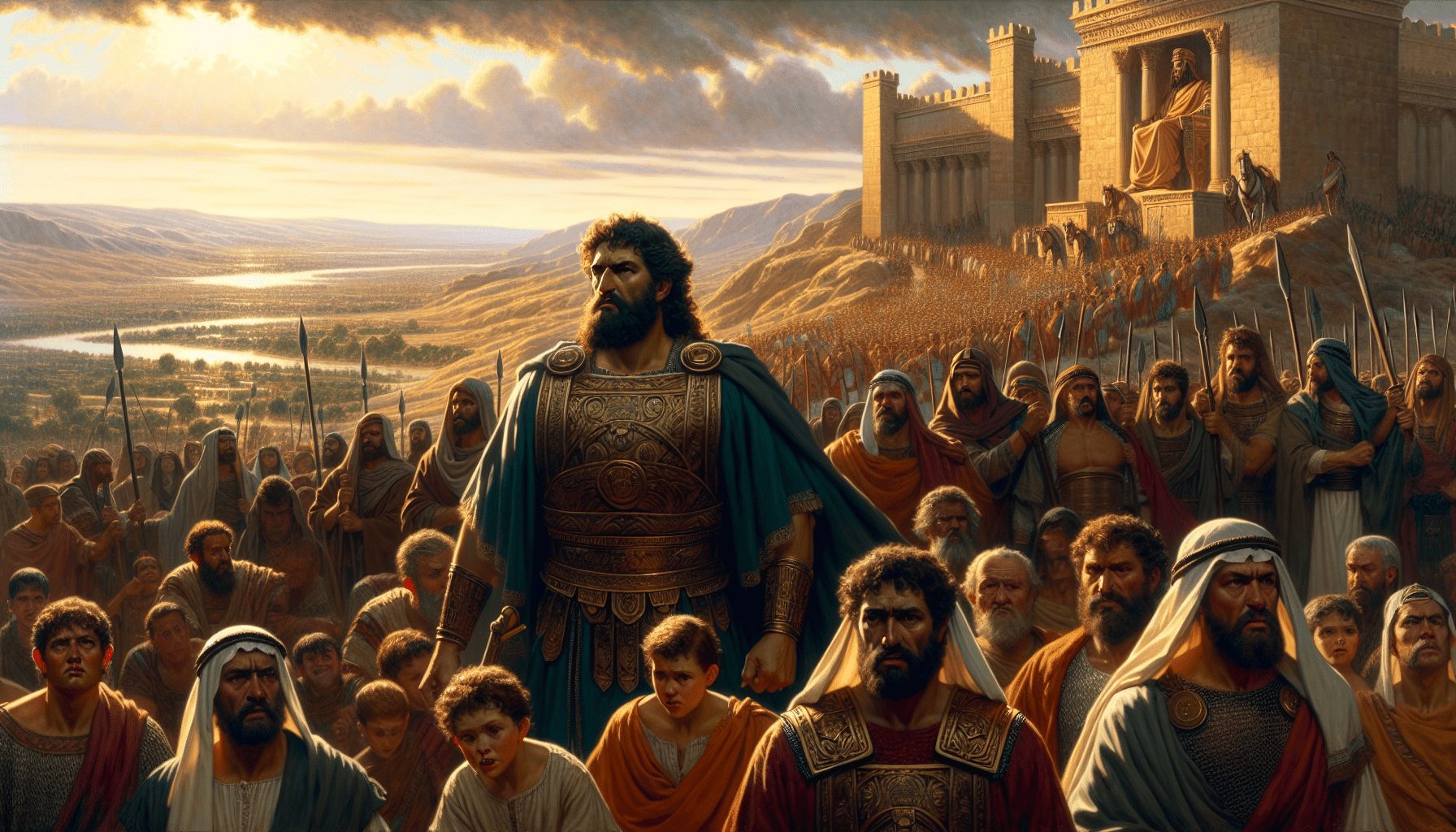
The next day, the assembly convened. Annas the high priest, Caiaphas, John, Alexander, and all the high-born families filled the chamber. The air smelled of polished stone and old power. They set the healed man in the middle, a living question they couldn’t answer. “By what power or what name did you do this?” The question was meant to trap, to find a thread of blasphemy to pull.
Peter stood. He was filled with the Holy Spirit, but it didn’t make him sound like an orator. It made him sound like a fisherman who had seen the bottom of the sea and the throne of God. “Rulers and elders of the people! If we are being called to account today for an act of kindness shown to a man who was lame, and are asked how he was healed, then know this, all of you and all the people of Israel: It is by the name of Jesus Christ of Nazareth, whom you crucified but whom God raised from the dead, that this man stands before you healed.”
He didn’t stop there. His words were plain, direct, without the careful footnotes of the scribes. “He is ‘the stone you builders rejected, which has become the cornerstone.’ Salvation is found in no one else, for there is no other name under heaven given to mankind by which we must be saved.”
The council exchanged glances. Here was the unlearned, ordinary man from Galilee, standing with a confidence that didn’t come from any school. And beside him stood the evidence, walking and weight-bearing. They could not deny the fact. So they ordered Peter and John out of the chamber and argued amongst themselves in hushed, urgent tones. “What are we going to do with these men? Everyone in Jerusalem knows they have performed a notable sign, and we cannot deny it. But to stop this thing from spreading any further…” The compromise was a threat. They called them back in and commanded them, with all the weight of their office, never again to speak or teach in the name of Jesus.
Peter’s reply was almost conversational, devoid of drama but absolute in its stance. “Which is right in God’s eyes: to listen to you, or to him? You be the judges. As for us, we cannot help speaking about what we have seen and heard.”
More threats followed, but with the people praising God for what had happened, the council had no lever to punish them. They released them, their authority subtly, profoundly, mocked by the simple obedience of two men.
Peter and John went back to their own people—a ragtag collection of believers, men and women, hiding in no grand house but a modest one in the city. They reported everything, not as a triumph, but as a fact: the threats, the commands, the silent fury of the powerful.
When the community heard it, they did not pray for protection or for the threats to vanish. They lifted their voices together, not in panic, but in a strange, fierce recognition. “Sovereign Lord,” they prayed, the words rising like a tide, “you made the heavens and the earth and the sea, and everything in them. You spoke by the Holy Spirit through the mouth of your servant, our father David: ‘Why do the nations rage and the peoples plot in vain? The kings of the earth rise up and the rulers band together against the Lord and against his anointed one.’”
They were connecting the dots. The crossed axes of Roman and religious power arrayed against a crucified carpenter was not a mistake; it was a pattern, foretold. And so they asked not for safety, but for boldness. “Now, Lord, consider their threats and enable your servants to speak your word with great boldness. Stretch out your hand to heal and perform signs and wonders through the name of your holy servant Jesus.”
The place where they were meeting shook. Not a earthquake of destruction, but a tremor of affirmation, as if the very foundations of the world acknowledged their prayer. They were all filled with the Holy Spirit afresh, and they spoke the word of God with a clarity that no threat could cloud.
And it showed. No one claimed any possession as their own. Those who owned lands or houses sold them, not under compulsion, but with a glad, painful generosity. The money was laid at the apostles’ feet—a tangible surrender. It was distributed to anyone who had need. A man named Joseph, a Levite from Cyprus, was one of them. The apostles called him Barnabas, which means “son of encouragement.” He sold a field and brought the money, a quiet, costly act of solidarity.
It was not a perfect utopia. Later, shadows would fall. But in those days after the healing, after the threats, there was a profound unity. A sharing not of ideology, but of life. They broke bread in their homes, their meals simple but saturated with a palpable, undefeatable joy. And every day, in the Temple courts and from house to house, they kept teaching and proclaiming the good news that Jesus, the rejected stone, was the cornerstone of everything. And the number of those who believed, quietly, stubbornly, kept growing.