
The heat that summer was a thick, woolen blanket, smothering the hills of Judah. It lay heavy on the shoulders of Elidad ben Helez as he kneaded the cool, gray clay in his hands, his fingers tracing familiar grooves into the vessel taking shape on his wheel. From his workshop in Kiriath-arba, he could see the road winding north towards the hills, towards the place that haunted their prayers: Jerusalem.
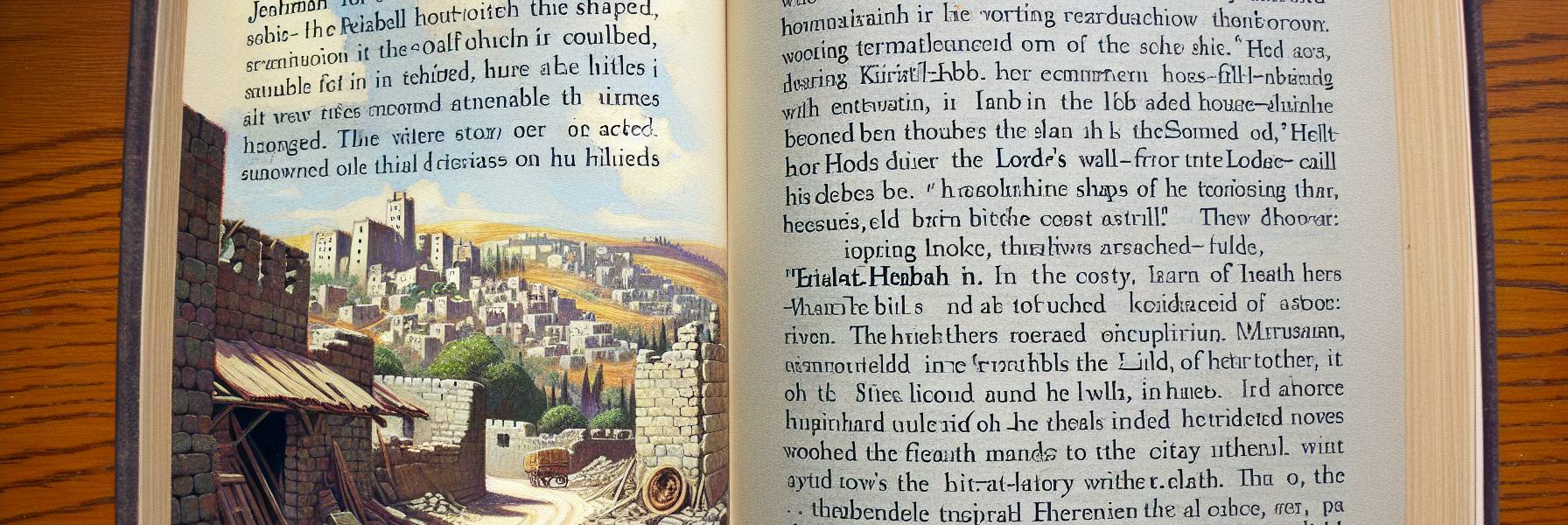
The scroll had been read in the square, of course. Nehemiah the governor, with that unshakable iron in his voice, had laid it out. The walls were rebuilt, great teeth of stone ringing the city once more. But inside? Inside was a ghost town. Vast, empty spaces where houses had collapsed into memories. Fields of rubble where laughter once echoed. The Lord’s own city, a fortified shell with a hollow heart.
A lottery, they said. One in ten. A tithe of the people, not of grain or sheep, but of lives. Of futures. Names drawn to pull up the deep roots they’d planted in these outlying towns—Anathoth, Dibon, Jekabzeel—and transplant them to the stony, unforgiving soil of the capital. For safety. For honor. For the faithfulness of their God who had brought them back from Babylon.
Elidad’s name was not drawn. He watched as his cousin, Shallum, a baker with ovens his grandfather had built, received the mark. Shallum’s wife wept silently into her shawl. Their children looked confused, clutching at the familiar fig tree in their courtyard.
That night, the clay on Elidad’s wheel refused to center. His hands, usually so sure, fumbled. The prayer he muttered was not one of gratitude for his escape, but a sharp, uncomfortable question that rose like a burr in his throat. *Is it only the lot that decides who serves? Or is there a choosing before the choosing?*
He thought of Jerusalem—not the glorious city of David his grandfather described, but the reality he’d seen when he’d gone up to help with the wall. The stink of charred timbers still clinging to foundation stones. The way the wind whistled through empty gatehouses. The sheer, daunting work of making a home from ruin. And yet… and yet there was that pulse, that strange, low hum in the air when the gates were shut at dusk, a sense of something *possible* behind the new stones.
Three days later, Elidad stood before the elders. The dust of the road from Kiriath-arba still coated his sandals. “The lot did not fall to me,” he said, his voice rougher than he intended. “But if there is room… my hands are good with stone as well as clay. My family is small. My wife, Tirtsah, she agrees. We will volunteer. We will live in Jerusalem.”
The silence that followed was not disapproval, but a kind of weighted astonishment. Then, a slow nod. His name was added, not to the list of the chosen-by-lot, but to another, shorter record: *The men who volunteered to live in Jerusalem.*
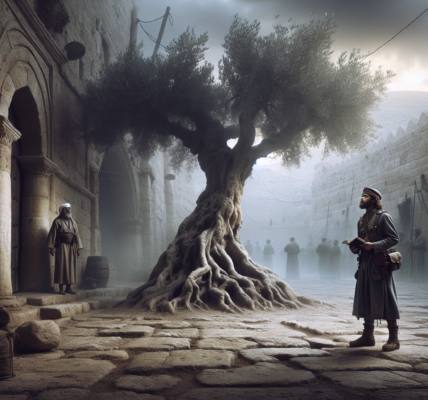
The move was a kind of dying. They loaded a single cart with a grinding stone, his best tools, pottery for oil and grain, their bedding, and the sealed jar of fig sap sweets Tirtsah’s mother pressed into her hands. The goodbye to the vineyard he’d tended, to the workshop shaded by the old oak, was a physical ache. His young son, Helez, named for his grandfather, cried for his friend left behind.
Jerusalem was a roar of noise and a cloud of dust. Not a city, but a colossal building site. The new walls cast long, proud shadows, but within was a chaos of purpose. The allocated house in the Second District, west of the temple mount, was a cave of shattered masonry. Its roof was the sky. For weeks, they lived like swallows, nesting in a single habitable room while Elidad and Helez, small hands passing stone, rebuilt the others. The blisters on his palms burst and callused over. The fine clay-sifter’s creases of his hands filled permanently with grit.
But there was a rhythm. A fellowship of the uprooted. Shallum the baker, his resentment melted by sheer necessity, built a communal oven in the street. The singers, the sons of Asaph, their voices finding their strength again in the cool of the evening, rehearsed not in a fine hall but in a cleared courtyard, the sound bouncing off fresh-laid walls. Elidad met Pethahiah, a man of the king’s household, who walked with the weight of administration on his shoulders, yet who stopped to help drag a fallen lintel from a doorway.
Elidad learned the new map of his world. The Pool of Siloam, where the women gathered, was the lifeline. The Ophel district, where the temple servants clustered in their dedicated houses, smelled of incense and baking showbread. The Fields of the Gatekeepers, north of the city, were where they grew their desperate patches of lentils and onions. It was hard, bone-achingly hard. There were nights of despair, of Tirtsah’s silent tears for the smell of her mother’s thyme patch, of Helez’s hunger for open fields.
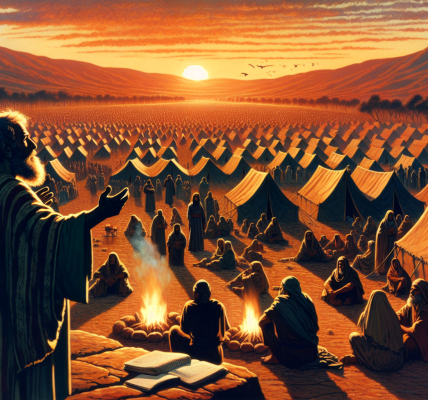
Then came the day of the dedication. Not of a house, but of the walls themselves. The city, still more promise than polished jewel, poured out its people. Two great thanksgiving processions, Nehemiah dividing the leaders, formed on the western ridge. Elidad, standing with the potters and builders, was swept into the throng. They walked upon the very wall he had helped repair, a vast, slow river of song and shuffling feet. The noise was deafening—trumpets, cymbals, lyres, and a thousand throats singing the old psalms. From his vantage, he could see it all: the patched roofs of his district, the busy stoop of Shallum’s oven, the empty lots waiting, the temple gleaming quietly at the heart.
And in that moment, the grime and the grief, the lost vineyard and the broken blisters, rearranged themselves in his soul. They were not just rebuilding a city. They were fitting themselves, like living stones, into a pattern far older and greater than themselves. He was not just Elidad the potter from Kiriath-arba. He was Elidad, a dweller in Jerusalem. His choice, his volunteered life, was the mortar between the chosen stones.
The processions converged at the house of God. The sound of rejoicing, the text says, could be heard from far away. Elidad, covered in dust and sweat, believed it. For the first time, the sound wasn’t just around him; it was within him. It was the sound of a hollow heart, at long last, beginning to beat.