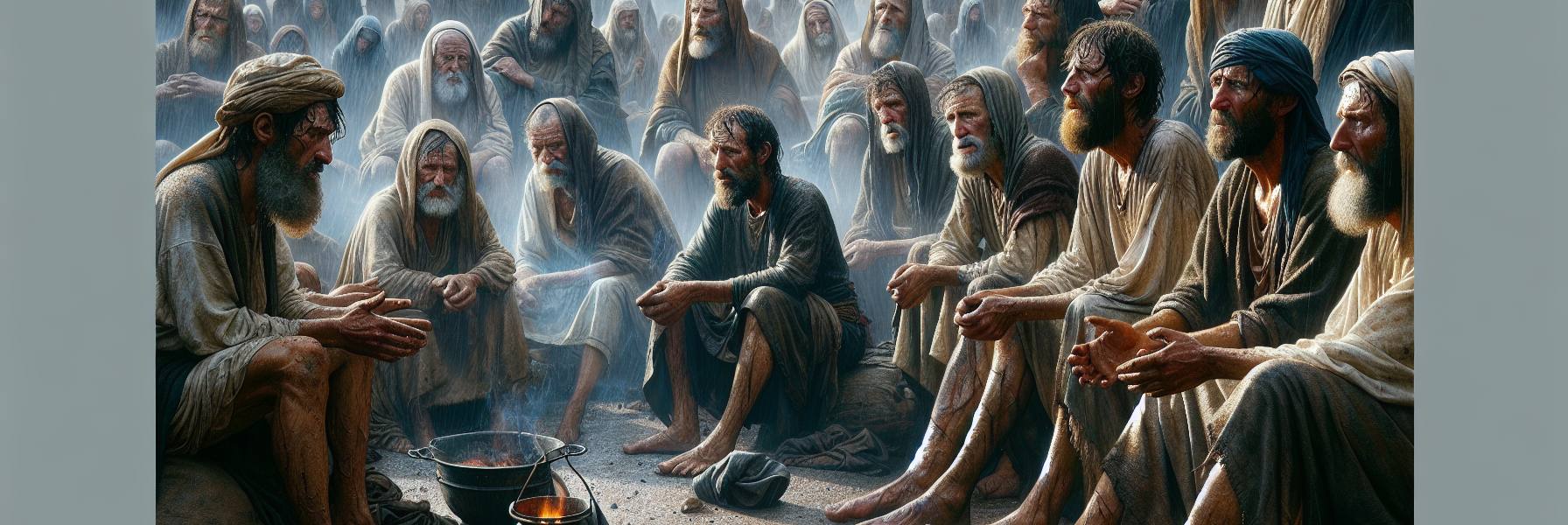

The rain had finally come, a soft, sighing drizzle that settled the dust of the roads and drew the scent of damp earth from the charred fields. It did little to wash the stain from our hearts. We sat in council at Mizpah, not as victors, but as men hollowed out by a terrible win. The smoke of the last Benjaminite town had long since dispersed, but it lingered in our clothes, in our memories. We had sworn an oath, you see, a fierce and foolish thing before the battle at Gibeah: that no man among us would ever give his daughter in marriage to a son of Benjamin.
A necessary oath, born of white-hot anger at the crime committed in that place. We meant it to be a wall, a final separation from such defilement. We never considered what lay on the other side of the wall. Now, we stared at it.
Benjamin was not destroyed. Six hundred men had fled, a ragged remnant hiding in the cleft of the rock of Rimmon for four months. And Israel had wept—great, shuddering sobs before the Lord at Bethel. “Why, O Lord, has this come to pass?” we cried. The answer was silence, and the grim reality of our own words. We had nearly wiped a tribe from Israel. Our oath threatened to finish the job.
It was Elidad of Zebulun, his voice gone rough from shouting in battle and now from disuse, who broke the quiet of the council. “We swore by the Lord. We cannot break it. Yet if these six hundred find no wives, Benjamin flickers out like a spent lamp. A tribe of Israel, gone. What have we done?”
The problem coiled around us, a constrictor of our own making. Then came the memory of Jabesh-gilead. They had not answered the summons to war, holding themselves aloof from the assembly of the Lord. A cold, practical thought emerged from our collective guilt. Here was a transgression we could address. A solution, brutal in its symmetry, presented itself.
We sent twelve thousand of our fiercest men across the Jordan with a hard command: put every living soul in Jabesh-gilead to the sword, save for the young women who had not known a man. The news of their return was a somber affair. They brought four hundred virgins, their faces pale with shock and grief, to the camp at Shiloh. They were silent girls, their eyes holding the shadows of the smoke that had consumed their fathers and brothers. We led them down to the camp at the rock of Rimmon and called out to the Benjaminites hiding there.
“Come out,” we shouted, our voices echoing strangely in the limestone cleft. “There is peace.”
They emerged slowly, like animals unsure of the light. Thin, hardened, their eyes wary. We gave them the girls from Jabesh-gilead. There was no feast, no music. Just a grim transaction under a leaden sky. The men took wives, and a kind of order was imposed. But four hundred wives for six hundred men. The arithmetic of our dilemma remained, a stark two hundred men short.
Again, we were stuck. The oath bound us. The assembly itself could not give its own daughters without becoming forsworn. The elders sat in a circle, passing a skin of watered wine, not for cheer but for something to do with their hands.
It was then that old Ira the Jebusite, who had lived among us since the taking of the city, spoke, not to the elders, but to the air, as if recalling a story. “Every year,” he murmured, “the young women of Shiloh go out to dance in the vineyards at the feast. They dance in the vineyards below the town, by the great oak.”
A look passed among us. Not a plan, not yet. But the ghost of one.
When the feast of the Lord came, we told the Benjaminite men who still lacked wives, “Go. Hide in the vineyards of Shiloh. Watch. When the daughters of Shiloh come out to dance, each of you seize one for a wife. Then, return to your land.”
We gave them this cover: “When their fathers or brothers come to us in protest, we will say, ‘Be gracious to them. You did not give them willingly, so you are guiltless of our oath.’” It was legalistic. It was a threadbare veil over a theft. But it was all we had.
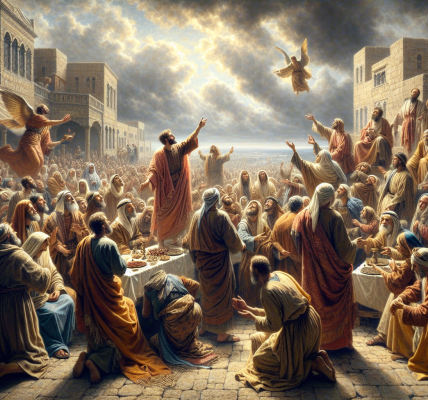
I was there. I saw it. The music was light, flutes and tambourines, a sound that usually speaks of autumn’s bounty. The girls wove their dances between the gnarled vines, their robes bright spots against the fading green. Then, from the terraces and thickets, the Benjaminite men emerged. Not as an army, but as desperate, lonely figures. There were shouts, not of anger at first, but of surprise, then alarm. The circle of dancers broke. Men from Shiloh ran forward, but slowly, as if their feet were heavy. The Benjaminites, each with a struggling, weeping girl in his grasp, melted back into the hills towards their own ravaged territory.
The protest came, as we knew it would. Fathers, brothers, their faces dark with outrage, stood before the assembly. We said the words we had prepared. We spoke of the preservation of a tribe, of the letter of the oath, of their own cleanness in the matter. Our arguments sounded hollow even to our own ears. The men of Shiloh shouted, but not for long. What could they do? Make war on all Israel? The fight had gone out of us all. Eventually, they turned away, their shoulders slumped. Some wept. It was done.
The Benjaminites rebuilt their towns. Life, stubborn and resilient, took root again in the ashes. Children were born to the women of Jabesh-gilead and the daughters of Shiloh. But a sourness remained, a taste in the mouth of the nation that the gentle rains could not cleanse.
We had kept our oath. We had saved a tribe. And in doing so, we had consecrated a season of theft and slaughter with our solemnity. We had no king in those days, it’s true. Every man did what was right in his own eyes. But sitting there, watching the drizzle mix with the mud, I wondered if a king would have made it any better, or if he would simply have given our desperation a grander, more terrible shape. The silence after the shouting was the loudest thing I had ever heard. It was the sound of a people saved, and utterly lost.