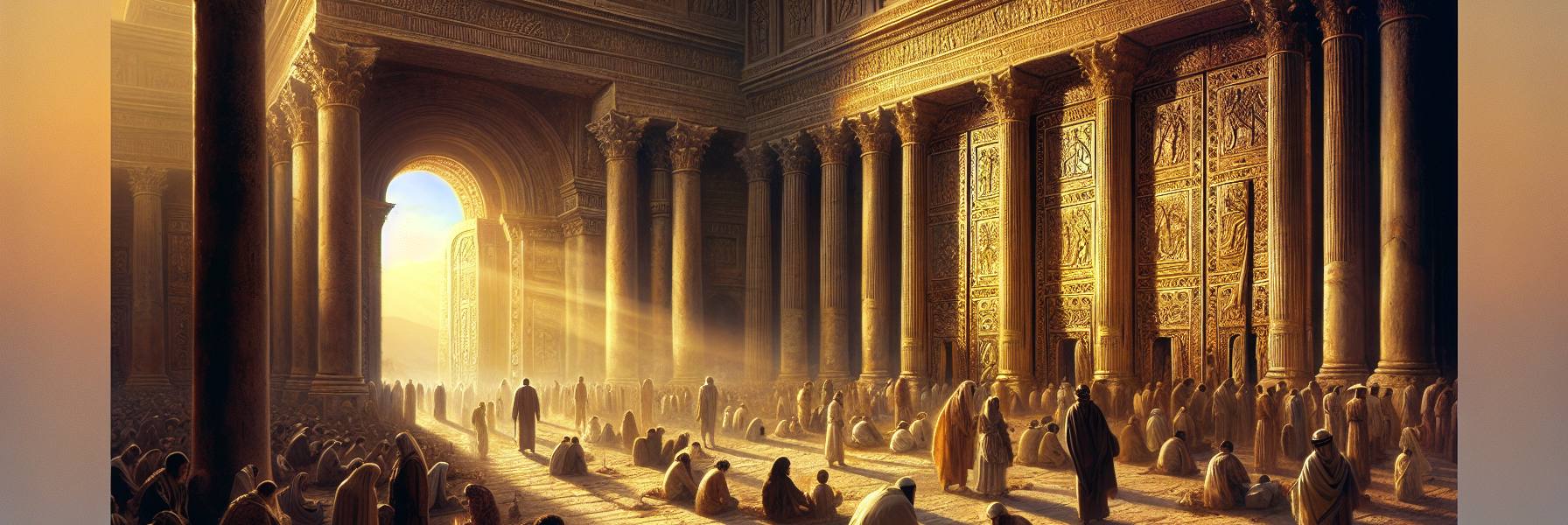

The afternoon sun, heavy and honey-gold, poured over the eastern wall of the Temple complex, pooling in the vast courtyard. It was the hour of prayer, the ninth hour, and a stream of people flowed toward the Beautiful Gate—a double doorway of Corinthian bronze that caught the dying light and seemed to burn with a quiet, cold fire. The air smelled of dust, sacrificed incense from the inner courts, and the faint, sour note of crowded humanity.
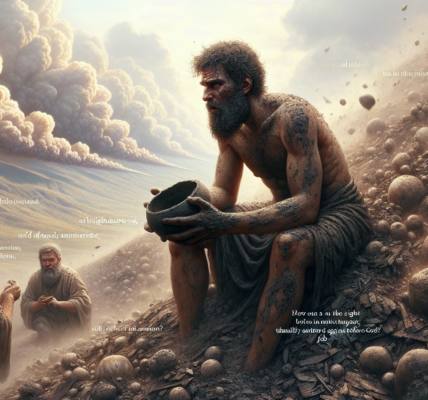
Among the shadows at the gate’s threshold, his back against the cool stone of the parapet, a man sat. His name was forgotten by most; he was simply ‘the lame man at the Beautiful Gate.’ His legs, withered and useless from birth, were tucked beneath him in a way that spoke of a lifetime of arranging limbs that would not obey. Each day, for more years than he cared to count, friends had carried him here and set him down. His world was this patch of stone, the passing hems of robes, the clink of coins in his clay pot. His voice had developed a practiced, rhythmic drone: “Alms. For a cripple. Alms.”
He saw them approach, two men among the many. Not priests, not wealthy patrons, just two Galileans by their accents, their clothing simple and road-worn. He lifted his pot, repeated his plea. “Alms. For the mercy of God.”
They stopped. Not a hurried pause, but a full stop, turning toward him. The lame man kept his eyes down, trained on the pot, but he felt their gaze. Then one of them, the one with the fiercer eyes and a fisherman’s broad shoulders, spoke. “Look at us.”
A flicker of hope, sharp and familiar. He raised his head, expecting to see a coin pinched between fingers. But the fisherman’s hand was empty. The man’s companion, quieter, with a thoughtful face, was watching him intently.
“Silver and gold I do not have,” said Peter, and the beggar’s hope curdled into a familiar, dull resignation. Another holy man with nothing but words. But then the words continued, and they were not a blessing or a pity. They were a command. “But what I do have I give to you. In the name of Jesus Christ of Nazareth, walk.”
Before the beggar could process the absurdity, before he could form a protest, Peter’s hand was on his right wrist, gripping it not with pity but with a startling, muscular authority. The other man, John, moved closer, a steadying presence. In one fluid, impossible motion, Peter pulled him upward.
A sensation, alien and volcanic, erupted in the man’s feet and ankles. It was not a tingling, but a sudden, shocking *solidity*. The bones, which had always been like dry reeds, felt as if molten iron were being poured into them, forging them anew. He gasped, a short, sharp intake of breath. The muscles in his calves, which had never known tension, pulled taut. His knees, which had never borne weight, locked.
Peter did not let go. He held him, his own strength a bridge, as the man’s legs, straight and strong, held him up. For a second, they stood there, locked in that strange tableau—the beggar suspended between a lifetime of sitting and a miracle.
Then Peter released his wrist.
The man did not crumple. He stood. He swayed, like a sailor on a deck for the first time, but he stood. He looked down at his own feet, clad in worn sandals, planted firmly on the Temple stone. He took a step. It was clumsy, a staggering lunge. Another. Then another. And then he was not just walking; he was leaping, a wild, uncoordinated series of hops and springs, each movement testing a new part of this incredible machinery of flesh and bone that had been given to him.
He didn’t head for home. He turned and followed Peter and John straight through the Beautiful Gate, into the Temple courts themselves—a place he had never entered, barred by his infirmity. He went with them, leaping and shouting, a torrent of incoherent praise to God. His voice, which had droned for alms, now cracked with a joy too big for it. He clung to Peter and John, not for support, but in sheer, overwhelming camaraderie of the miracle.
A crowd gathered, fast and murmuring. They knew him. They had passed him for decades. Their shock was a physical thing in the air. They pressed in, a confused mass, flowing into the colonnade called Solomon’s Portico, a long, shaded walkway with a roof supported by great stone columns.
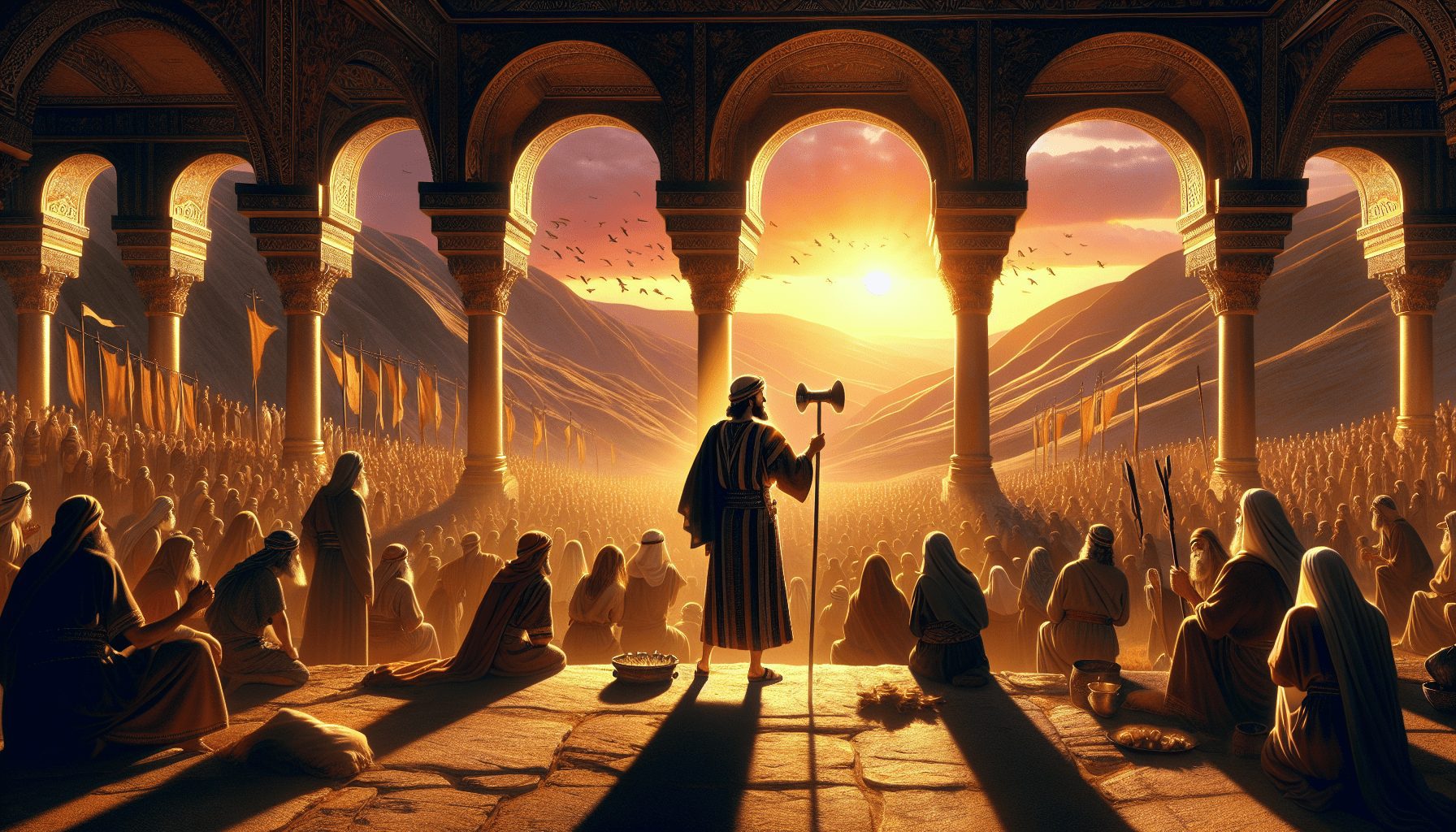
Peter saw their faces—the awe, the bewitchment, the questions poised on their lips. He raised his voice, not in the beggar’s drone, but in the ringing tone of one explaining a self-evident truth.
“Men of Israel,” he began, “why do you marvel at this? Or why do you stare at us, as though by our own power or piety we have made him walk?” He gestured to the healed man, who was now standing quietly beside John, tears carving clean lines through the dust on his cheeks, his chest still heaving.
“The God of Abraham, Isaac, and Jacob, the God of our fathers, glorified his servant Jesus, whom you delivered over and denied in the presence of Pilate, when he had decided to release him.”
The words were not gentle. They were direct, historical, accusatory. He spoke of the Holy and Righteous One, the Author of life. He named their rejection. He named the murderer they had chosen in His place. But then his voice shifted, from accusation to a proclamation of staggering hope.
“And what God foretold by the mouth of all the prophets, that his Christ would suffer, he thus fulfilled.” He looked out at them, his eyes holding theirs. “Repent therefore, and turn back, that your sins may be blotted out, that times of refreshing may come from the presence of the Lord.”
He spoke of the prophets, of the covenant to Abraham. He called them heirs of that promise. The miracle, he insisted, was not magic. It was a signature. The name of Jesus—the one they had killed, the one God had raised—that name, invoked in faith, had made the man strong. Faith through Him had given the man this perfect health in front of them all.
The sun was lower now, casting long shadows from the columns of Solomon’s Portico across the faces of the people. The initial shock had hardened into something else—a profound, unsettling conviction. They were not seeing a sorcerer’s trick. They were seeing a consequence. A door, which they had believed firmly shut and sealed, was standing wide open, and the lame man walking through it was the proof.
The man himself listened, but the words swam around him. He was listening to the feeling of his own heartbeat in his legs, to the solid pressure of the flagstones against his soles. He looked at his hands, which had only ever held a begging pot, and clenched them into fists, feeling the strength there. He was inside the Temple. He was standing. The world had become unbearably, wonderfully large. And as Peter spoke of repentance and refreshing, the man knew, in a way deeper than understanding, that the healing of his legs was the smallest part of the gift he had received at the gate where he once begged, in the name of the man from Nazareth.