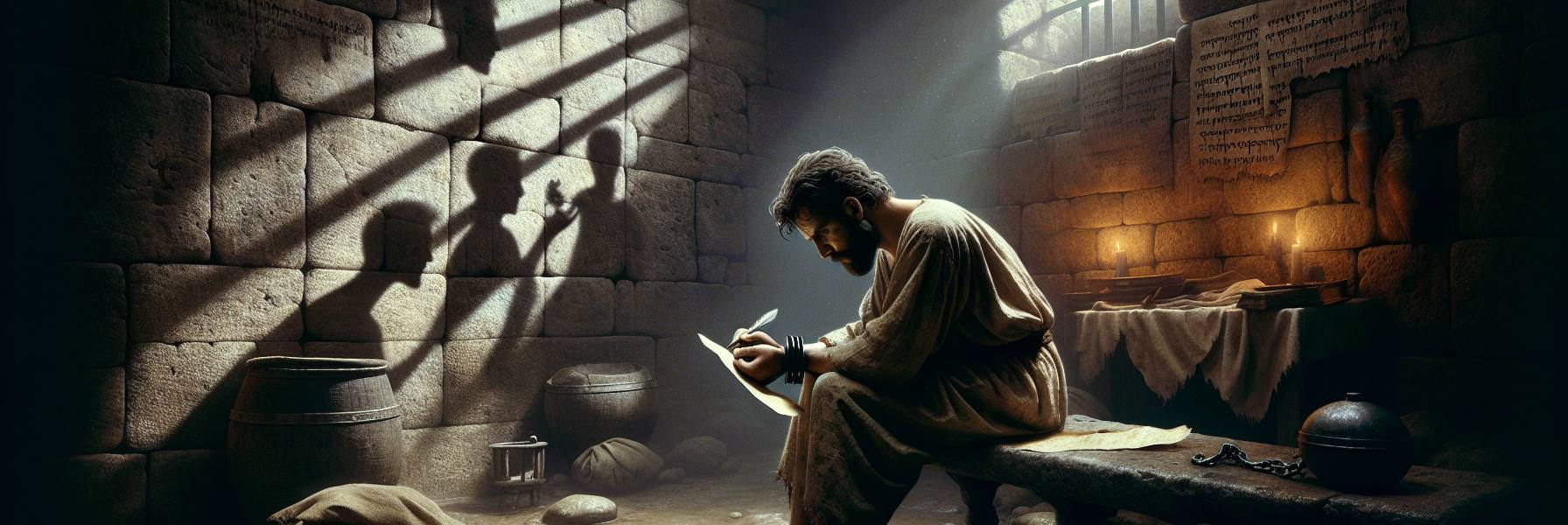

The air in the prison cell was thick, a close mixture of damp stone, stale straw, and the sour tang of human confinement. Paul’s wrist ached where the iron chafed, a persistent, dull companion to his thoughts. He shifted on the hard bench, the parchment on his knee catching a thin sliver of light from the high, barred window. He was writing to friends, to the community in Philippi that felt like a deep, fresh breath in his lungs after years of labor. But the words coming to him now were not soft. They were urgent, a clearing of the throat before a vital warning.
He saw their faces—Lydia by the river, the jailor washed clean of fear, so many others. He saw, too, the other faces, the persuasive ones with measured tones and impeccable pedigrees. They spoke of necessity, of completion, of a righteousness that could be measured and displayed. They wanted to add a weight to the shoulders of his believers, a weight he knew would crush the very life he’d preached to them.
The quill scratched, the ink dark and sure. *Finally, my brothers, rejoice in the Lord. To write the same things to you is no trouble to me and is safe for you.* Safety. That was the heart of it. Not the safety of walls, but the safety of the soul. He needed to make them see.
He did not often speak of it, that former life. It felt like a garment discarded, mildewed and useless. But for them, he would put it on again, if only to show them the stitching. He described it not with boastful pride, but with the detached clarity of an archaeologist examining a broken idol. *Circumcised on the eighth day, of the people of Israel, of the tribe of Benjamin…* The list was impeccable, a pedigree of purest lineage. A Hebrew of Hebrews. His zeal had been a fire that consumed everything in its path; his righteousness under the law, a statue he had polished daily until he could see his own fierce devotion in its surface. It was all gain, all profit, all advantage.
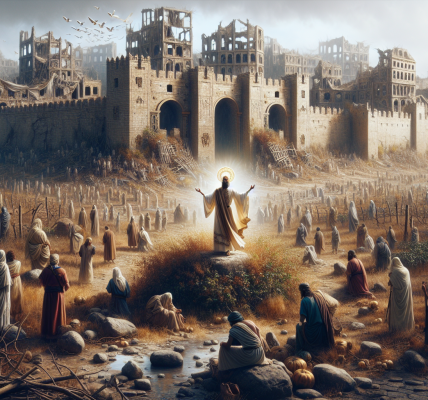
Then he told them of the road. Not in detail here, but the shadow of it fell across the parchment. The light that was sound, the voice that unmade him. Damascus. The scales. The terrible, wonderful unraveling of a world built on earned merit. The knowing, not of a doctrine, but of a person. Jesus the Messiah.
His writing slowed. The ache in his wrist faded before a greater ache—the yearning of his whole being. *But whatever gain I had, I counted as loss for the sake of Christ.* Loss. The word was a doorway. He pushed further. *I count everything as loss because of the surpassing worth of knowing Christ Jesus my Lord.* Knowing. Not knowing about. Knowing. As a man knows a friend, as a branch knows the vine.
The former righteousness, his own, from the law? He reached for the strongest language he could find. It was not just loss. It was *skubalon*. The quill dug into the parchment. The vulgar, street-level word for refuse, for the stuff scraped into the gutter. He let it stand. They needed to understand the utter reversal. All his trophies were trash now. Not because they were inherently evil, but because they stood as a barrier to the only prize.
And here his heart surged, and the rhythm of the sentences broke into something more like a prayer, a breathless confession. *…that I may gain Christ and be found in him, not having a righteousness of my own that comes from the law, but that which comes through faith in Christ…* To be found in him. Like a sheep found on the shoulders of the shepherd, like a coin recovered in the swept-clean house, like a son stumbled home to a waiting father. That was the place of safety.
He paused, looking at his chained ankle. The iron was real. The Roman sentence was real. The dying was real. *…that I may know him and the power of his resurrection, and the share of his sufferings, becoming like him in his death…* The knowing was not academic. It was participatory. It was the fellowship of his sufferings. The very chains became a kind of sacrament, a tangible sharing in the life—the crucified, resurrected life—of his Lord. This was the strange arithmetic of the kingdom: loss became gain, death became the pathway to life.
He was not there yet. Perfection, completion, the final resurrection—that lay ahead, a hope on the horizon. He used the language of a runner, muscles straining, eyes fixed. *But one thing I do: forgetting what lies behind and straining forward to what lies ahead, I press on toward the goal for the prize of the upward call of God in Christ Jesus.*
A faint smile touched his lips, worn and lined. He was not writing theory. He was writing from the race, from the dusty, painful, joyous middle of it. His life was a living arrow, shot toward that day. He urged them to think this way, to stand firm in this truth, to follow the pattern they had seen and heard.
The sliver of light from the window had moved, warming a patch on the opposite wall. He heard distant sounds of the city—a cart clattering, a vendor’s call. Life, ongoing and mundane. Yet shot through with a divine possibility. He finished the thought, his tone shifting from intense personal testimony to tender pastoral plea. *Brothers, join in imitating me, and keep your eyes on those who walk according to the example you have in us.*
He set down the quill, the letter nearly complete. The cell was just a cell. The chains were just iron. But in the economy of the gospel, they were the unlikely setting for a freedom no parchment pedigree could ever confer. He had traded a certificate of blamelessness for a fellowship of suffering, a list of accomplishments for a name whispered in faith. And he knew, with a certainty deeper than the prison’s foundations, that it was the only trade that mattered.