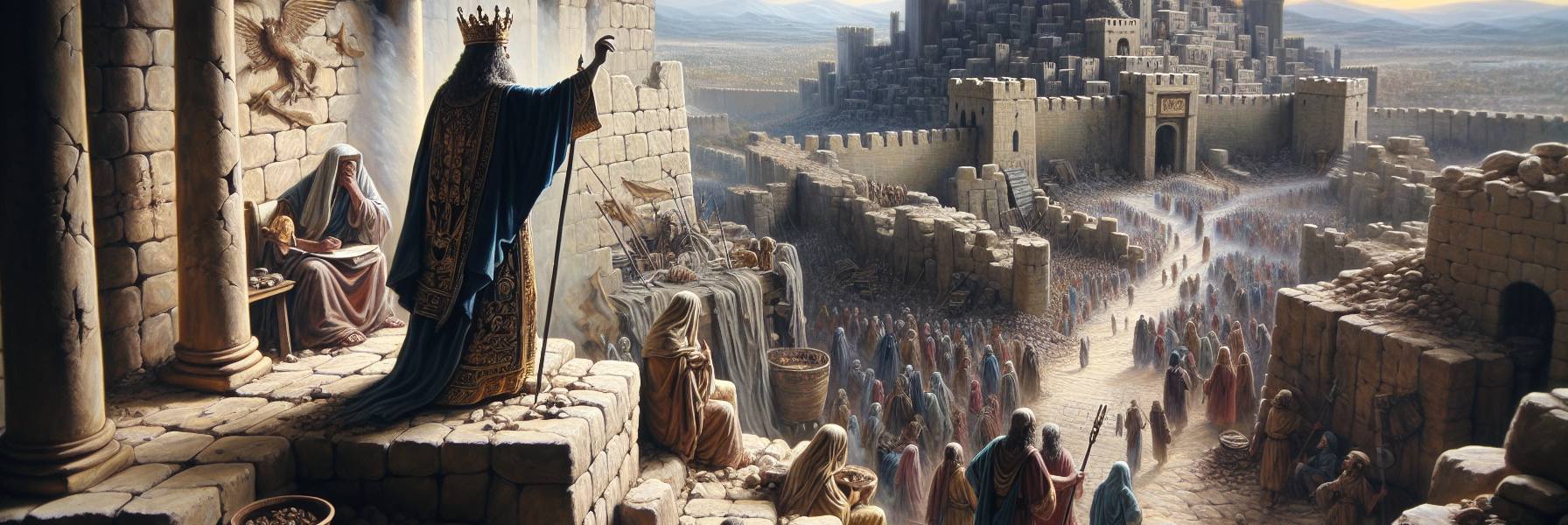

The air in Jerusalem had taken on a permanent taste: the chalk-dust of crumbling mortar, the sour tang of fear-sweat, and beneath it all, the low, sweet stench of decay. For eighteen months, the Babylonian army had been a tightening belt of iron around the city’s waist. The once-bustding streets of Zion were now gaunt corridors where whispers echoed louder than shouts. King Zedekiah, a man carved from soft wood trying to bear a crown of lead, paced the palace he could no longer truly rule. The prophecies of Jeremiah haunted the walls like damp, but the king’s pride was a thicker fortress than Jerusalem’s own stones.
It broke on the ninth day of the fourth month. The famine had done its work first; hollow cheeks and listless eyes were the true citizens of the city now. The walls, for all their famed strength, were manned by skeletons who could barely heave a stone. When the final breach came, it was not with a cataclysmic roar, but with a grinding, determined inevitability. A section of the northern wall near the Middle Gate gave way, and the bronze and iron of Nebuchadnezzar’s host poured into the city like floodwater finding a crack in a dam.
Zedekiah heard the cacophony shift—from the distant thud of siege engines to the closer, sharper music of sword on sword, the screams that were suddenly personal and immediate. In the dead of that night, with a handful of terrified royal guards, he fled. They slipped through a gate near the king’s garden, a place that once smelled of jasmine and now reeked of sewage and despair. The darkness was their only ally. They stumbled east, down the ravines toward the Jordan, hearts pounding a rhythm of sheer animal survival. The king’s vision, blurred by tears and exhaustion, barely registered the shapes of the olive trees.
They didn’t make it far. The Babylonian patrols, efficient and ruthless, had cordoned the plains of Jericho. Captured not in battle, but in a desperate, undignified scramble, Zedekiah was dragged before Nebuchadnezzar’s commander at Riblah. There, in the cold, administrative light of a foreign land, the last king of Judah saw his end. The Babylonian king pronounced sentence with the dispassion of a man balancing accounts. As punishment for his rebellion, Zedekiah was forced to watch his sons be put to the sword. The final sight imprinted on his eyes, before they were gouged out, was the extinguishing of his own line. Bound in bronze fetters, a blind man who had seen too much, he was led away to a Babylonian dungeon, where the darkness outside finally matched the darkness within.
A month later, the man entrusted with the king’s justice, Nebuzaradan the captain of the guard, arrived in Jerusalem. His work was not conquest, but erasure. He entered the temple of the Lord, a place so holy that its very stones seemed to whisper prayers. He showed no reverence. His men methodically stripped it. They broke up the bronze pillars—Jachin and Boaz—that had stood as silent witnesses to generations of faithfulness and failure. The great bronze sea, the ornate stands, the pots and shovels and snuffers, all the meticulously crafted articles of worship, were cut apart and hauled away as so much scrap metal. The gold and silver plating was pried from the walls and doors. It was a death not by fire, but by dismantling.
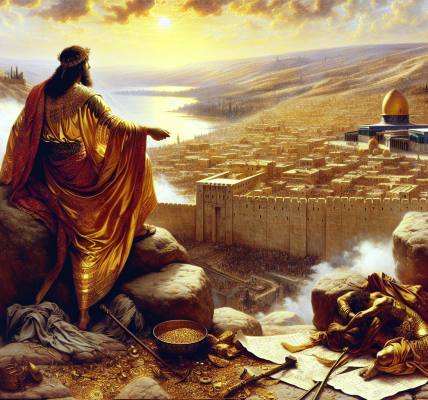
Then, they set the fires. The temple, the king’s palace, every great house in the city—they put the torch to them all. The flames climbed into the sky, a terrible, brilliant pyre for the dream of David’s kingdom. The soldiers, under orders, then set to the walls. They broke them down on every side, not just at the breach, until Jerusalem was no longer a city, but a field of smoking rubble, open to the wind and the scavengers.
The people who remained, those who had not been cut down by sword or famine, were gathered like scattered sheep. Nebuzaradan looked them over, a census of the defeated. The craftsmen, the smiths—anyone of use to the Babylonian empire—were marked for exile. The rest, the poorest of the land, were left behind to be vinedressers and ploughmen. It was a mercy that felt like a mockery. To tend the scorched earth of your own captivity.
But even a field of rubble has its shadows. The Babylonian administration appointed Gedaliah, a man from a good Judean family, as governor over the remnant in Mizpah. For a brief, trembling moment, it seemed a leaf might grow from the stump. Men who had fled to the hills and neighboring lands during the war—disbanded soldiers, desperate and armed—came to Gedaliah at Mizpah. He swore an oath to them, urging them to serve the Babylonians and live. “Do not be afraid,” he said. It was the gentlest voice heard in the land for years.
It did not last. The seed of violence, sown so liberally, had yet to finish its harvest. A prince of the royal line, Ishmael, came with ten men to Gedaliah’s table. They ate his bread, shared his salt, and then, in the quiet of the house, they rose and murdered him. The fragile peace shattered like a clay jar dropped on stone. Fear returned, swift and contagious. The people, terrified of Babylonian retribution for the murder of their appointed governor, gathered their few belongings and fled toward Egypt, leaving the land empty once more, a blank parchment awaiting a new, uncertain word.
And in Babylon, the exiled king Jehoiachin, who had been imprisoned for thirty-seven years, was one day brought before a new king, Evil-merodach. He spoke kindly to him, gave him a seat above the other captive kings, and changed his prison clothes. He ate at the king’s table for the rest of his days. It was a small kindness, a single, guttered candle flickering in the vast and enduring darkness of exile. A reminder that even in the breaking, the story was not yet fully told. But in Jerusalem, the jackals howled where the temple choirs had sung, and the wind through the ruins carried only dust, and the memory of glory.