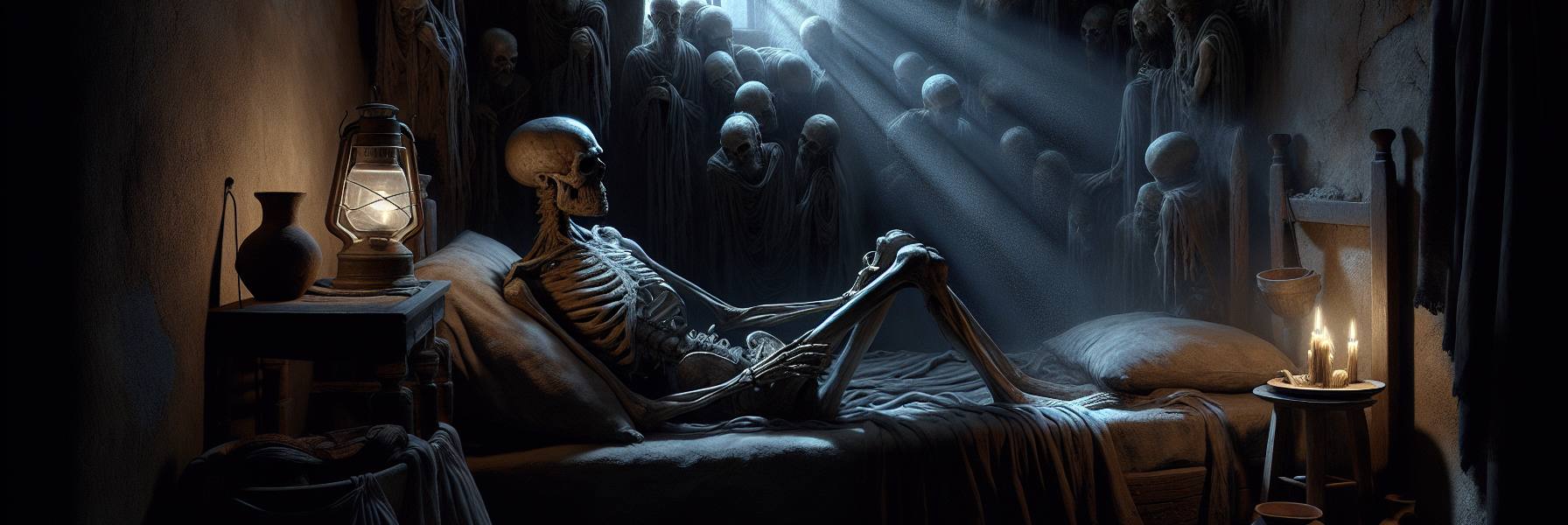

The lamp guttered, a tiny, desperate sun in the thick darkness of my room. That was the first thing I remembered clearly—the way the flame would claw at the air, throwing frantic shadows on the plaster wall. The smell was worse: stale sweat, the sharp tang of crushed herbs that did nothing, and underneath it all, the cold, dry scent of the dust of death. I could feel it settling on me.
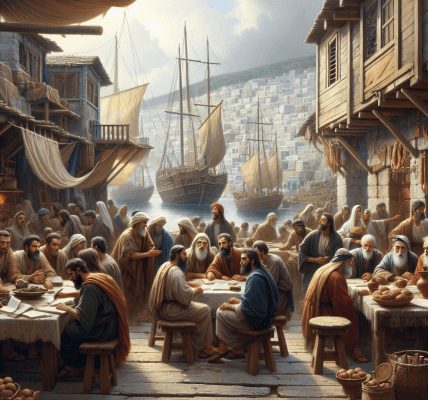
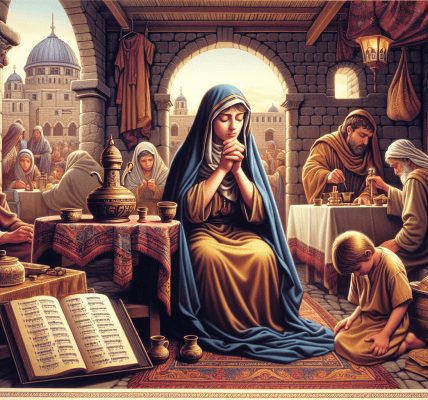
For days, or was it weeks? Time had lost its shape. My world had shrunk to the four walls of that room and the relentless, grinding pain in my bones. My wife, Miriam, would come in, her face pale as unbaked dough, to press a cool cloth to my forehead. Her prayers were whispers, swallowed by the silence. My friends from the lower city, men I’d traded wool with for twenty years, stopped coming. The silence they left behind was a different kind—a verdict. They had begun, I knew, to speak of me in the past tense. “He was a good man,” they’d say. “A faithful man.” To them, I was already a memory, a name to be mentioned with a sad shake of the head before moving on to the price of linens.
I remember lying there, listening to the sounds of life from the street: the potter’s wheel whirring, children shrieking in a game, a donkey’s indignant bray. It was a world from which I was utterly severed. In the deepest pit of that fever, a thought, cold and clear as a well stone, formed: *This is it. Sheol is not a place underground; it is this silence, this separation. God has hidden his face.*
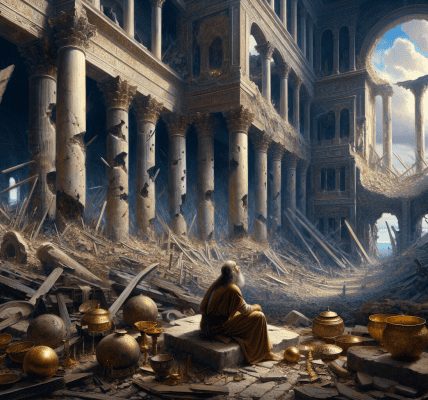
I had sung of his faithfulness in the assembly. I had lifted my voice, robust and sure, when the harvest was plentiful and my children’s laughter filled the courtyard. I had been, I thought, steadfast. But in that darkness, a more ancient truth whispered: *What profit is there in my blood, if I go down to the pit? Will the dust praise you? Will it declare your faithfulness?* It was not an argument, but a bleak, simple fact. A dead man makes no music.
The turning point was not dramatic. There was no angelic visitation, no thunderclap. One evening, as the last grey light faded from the small high window, the crushing weight on my chest… shifted. Just a fraction. The next time Miriam brought broth, a scent I had previously recoiled from, I caught a whisper of garlic and leek, and my stomach didn’t turn. It was a mundane miracle. The fever broke in the night, not with a shout, but with a sigh, leaving me drenched and trembling, but blessedly, unmistakably cold.
Strength returned as slowly as the dawn—first a faint grey hint, then a gradual lightening. I sat up by myself. I stood, legs wobbling like a newborn lamb’s, and took three steps to the door. I pushed it open.
The morning air hit me like a baptism. It was cool and carried the scent of dew on rosemary and the distant, earthy smell of the tanner’s vats. The sun was just clearing the eastern wall, painting the whitewashed stones of the opposite house a blush of gold. A woman across the way was drawing water, the rope groaning in the pulley. The sound was beautiful.
Miriam found me there, leaning against the doorframe, weeping silently. But these were not the tears of the pit. They were the hot, salt tears of a man pulled back from the edge of a great cliff he hadn’t even seen in the dark.
That evening, for the first time, I joined my family at the table. My son’s chatter, which I had once found wearisome, was a symphony. The coarse bread was sweet on my tongue. I was alive. The horror of those silent days began to recede, not forgotten, but transformed into the dark canvas against which this simple meal blazed with significance.
It took months to feel like myself again. But the man who emerged was different. I had known God’s favor in prosperity; I had built my life, quite literally, on it. Now I knew something else: his momentary anger. Not the anger of malice, but the terrible, refining anger of a physician who must lance a wound. I had clung to my health, my reputation, my *life*, as if I had built them with my own hands. He had to let me feel the abyss beneath my feet to show me the hand that had always been holding me up.
“Weeping may tarry for the night,” I found myself murmuring one day as I mended a loom, my hands remembering their old skill, “but joy comes with the morning.” It was a truth I had not just learned, but lived.
Last week, the men from the lower city came again, hesitant, bearing a skin of new wine. There was awkwardness at first, a gap between us filled by my ghost. But as we talked, of markets and marriages and the strange spring weather, the gap closed. Their presence was no longer a courtesy; it was a fellowship. My mourning, the genuine, gut-wrenching despair of the sickroom, had been turned into a dance. Not a frivolous dance, but a deliberate, grateful motion—a choosing to move in rhythm with a grace I did not earn and could not repay.
So now, when I ascend to the house of the Lord, my song is different. It is not the shout of a man who has never stumbled. It is the steady, deep-toned praise of a man who has been pulled from a miry bog, whose feet are now on rock. I sing of his holiness, his faithfulness that outlasts the longest night. I give thanks forever, not because my days are now easy, but because I have seen, in the guttering lamplight of a sickroom, the truth: his anger is but for a moment, and his favor is for a lifetime. The weeping did its work, and now it is gone. The joy remains. I will light the lamp tonight not as a fight against shadows, but as a quiet, enduring hymn.