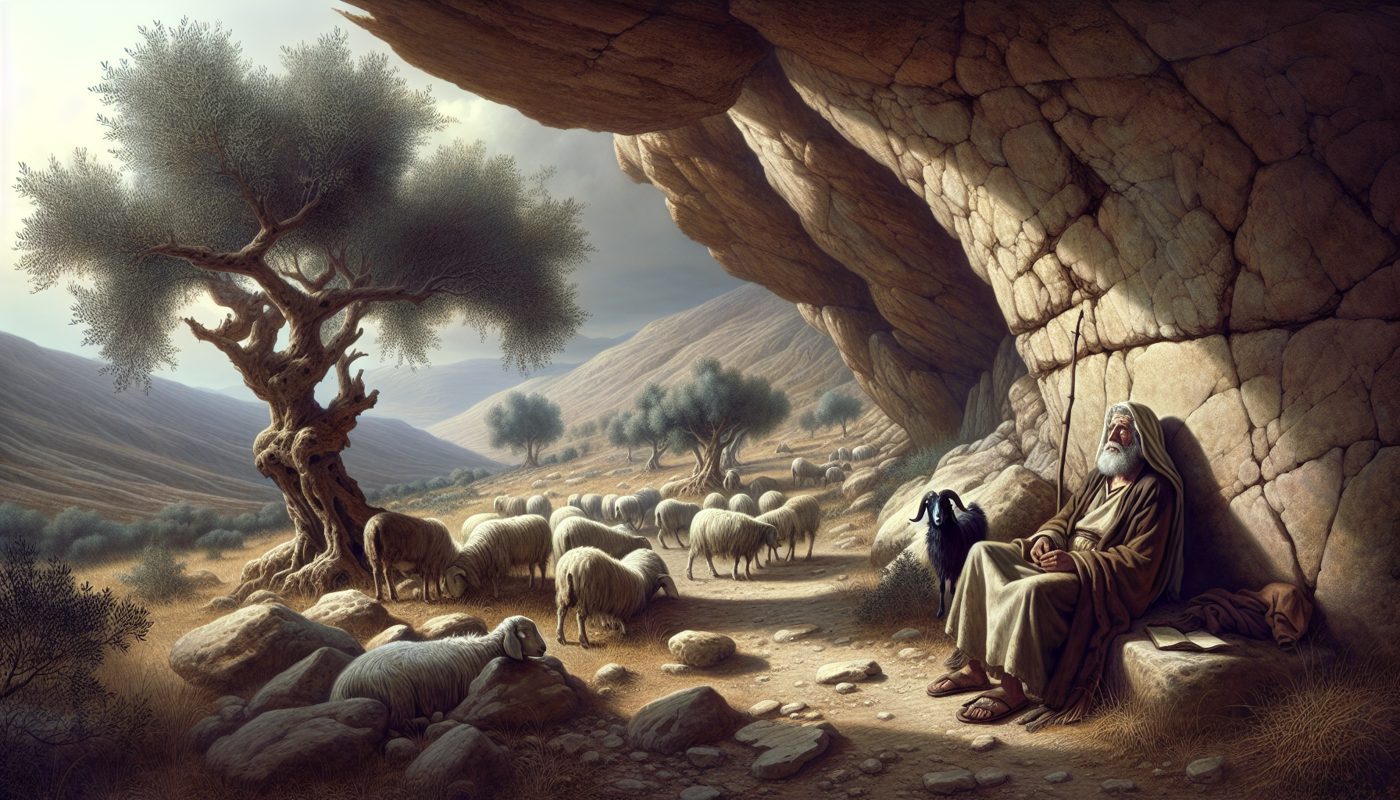
The psalm opens with a man waiting in silence. Not the silence of an empty room, but the silence of a held tongue, a stilled heart, a deliberate refusal to speak into the noise. The psalmist names God as his rock, his salvation, his high tower—but the words come after the waiting, not before. The structure matters. The soul waits for God only, and from that waiting, the confession follows.
The pressure in the psalm is not external threat alone. It is the specific cruelty of men who bless with their mouths and curse inwardly. They set upon a man, the psalmist says, as though he were a leaning wall or a tottering fence—something already unstable, already ready to fall. Their delight is in lies. They do not need to strike him down; they only need to push, and the weight of their false words will do the rest.
The psalmist does not answer them. He does not defend himself. He does not explain his innocence or argue against their accusations. Instead, he turns his attention inward and upward. He speaks to his own soul: wait in silence for God only. The command is not to the enemies, but to himself. The silence is not passivity. It is a posture of refusal—refusal to let the noise of the world dictate the condition of his heart.
The rock appears twice in the psalm, and the repetition is deliberate. In verse two, the psalmist says he shall not be greatly moved. In verse six, he drops the adverb: he shall not be moved. The shift is small but decisive. The waiting has done its work. The confidence has deepened. The rock has become more than a metaphor; it is the ground on which he stands, and that ground does not shift.
The psalm then opens outward. The psalmist calls to the people: trust in him at all times. Pour out your heart before him. The invitation is not to silence alone, but to the kind of honesty that silence makes possible. To pour out a heart is to empty it—of fear, of anger, of the need to be vindicated. The refuge is not in the pouring out, but in the God who receives it.
Then comes the assessment of human power. Men of low degree are vanity. Men of high degree are a lie. In the balances, they go up—lighter than vanity, both of them. The psalmist does not rank one above the other. He levels them. The powerful and the powerless alike are weightless when weighed against God. The warning is direct: trust not in oppression. Do not become vain in robbery. If riches increase, do not set your heart on them. The temptation is not wealth itself, but the placement of trust.
The psalm ends with a double hearing. God has spoken once, and the psalmist has heard it twice. The repetition is not confusion; it is certainty. Power belongs to God. Lovingkindness belongs to the Lord. And he renders to every man according to his work. The two truths stand together: God is strong, and God is just. The waiting soul does not wait in uncertainty. It waits on a God who has already spoken, and whose word holds both power and mercy.
The rock in this psalm is not a place of escape. It is a place of standing. The psalmist does not ask to be removed from the pressure. He asks to be steady within it. The silence is not the absence of conflict, but the refusal to let the conflict define him. He waits. He trusts. He pours out his heart. And he is not moved.
Comments
Comments 0
Read the discussion and add your voice.
Members only
Sign in to join the conversation
We keep comments tied to real accounts so the discussion stays clean and trustworthy.
No comments yet. Be the first to add one.