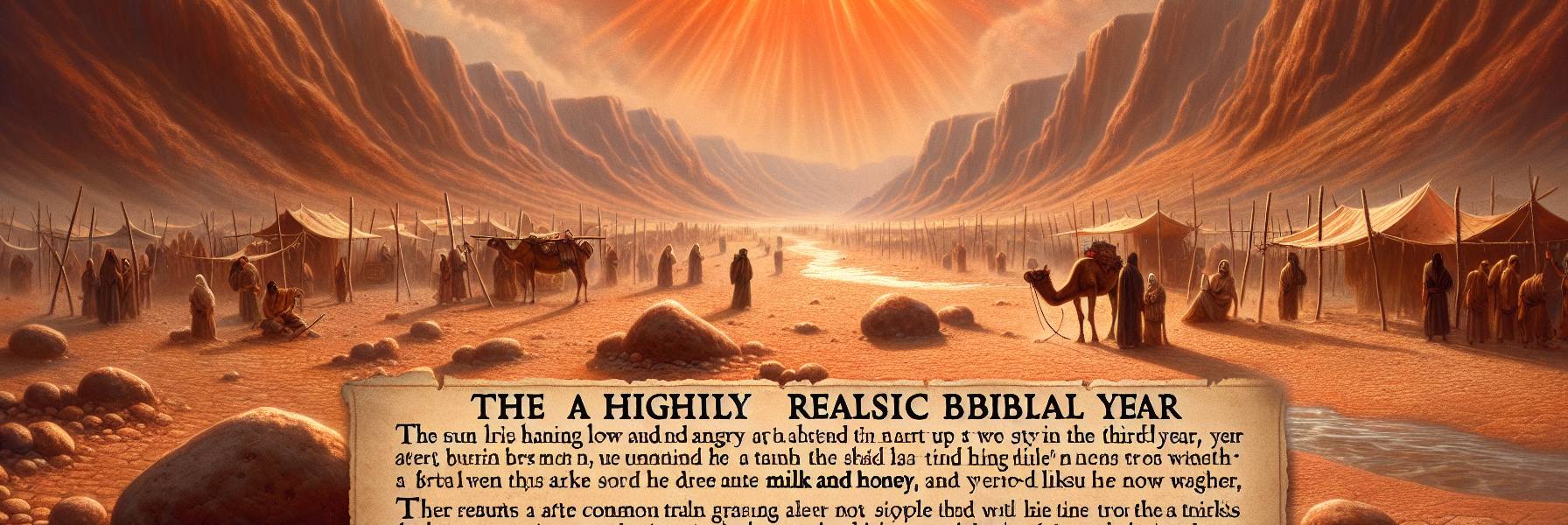

The sun hung low and angry over the valley, baking the stones until they shimmered. It was the third year of the drought, and the thirst had moved from the land into the souls of the people. We’d crossed the river, yes, and seen walls fall, but the milk and honey seemed a cruel rumour here, in this dust-choked basin. The promise felt thin, a worn parchment against the weight of a barren sky.
That was when Haggiah returned.
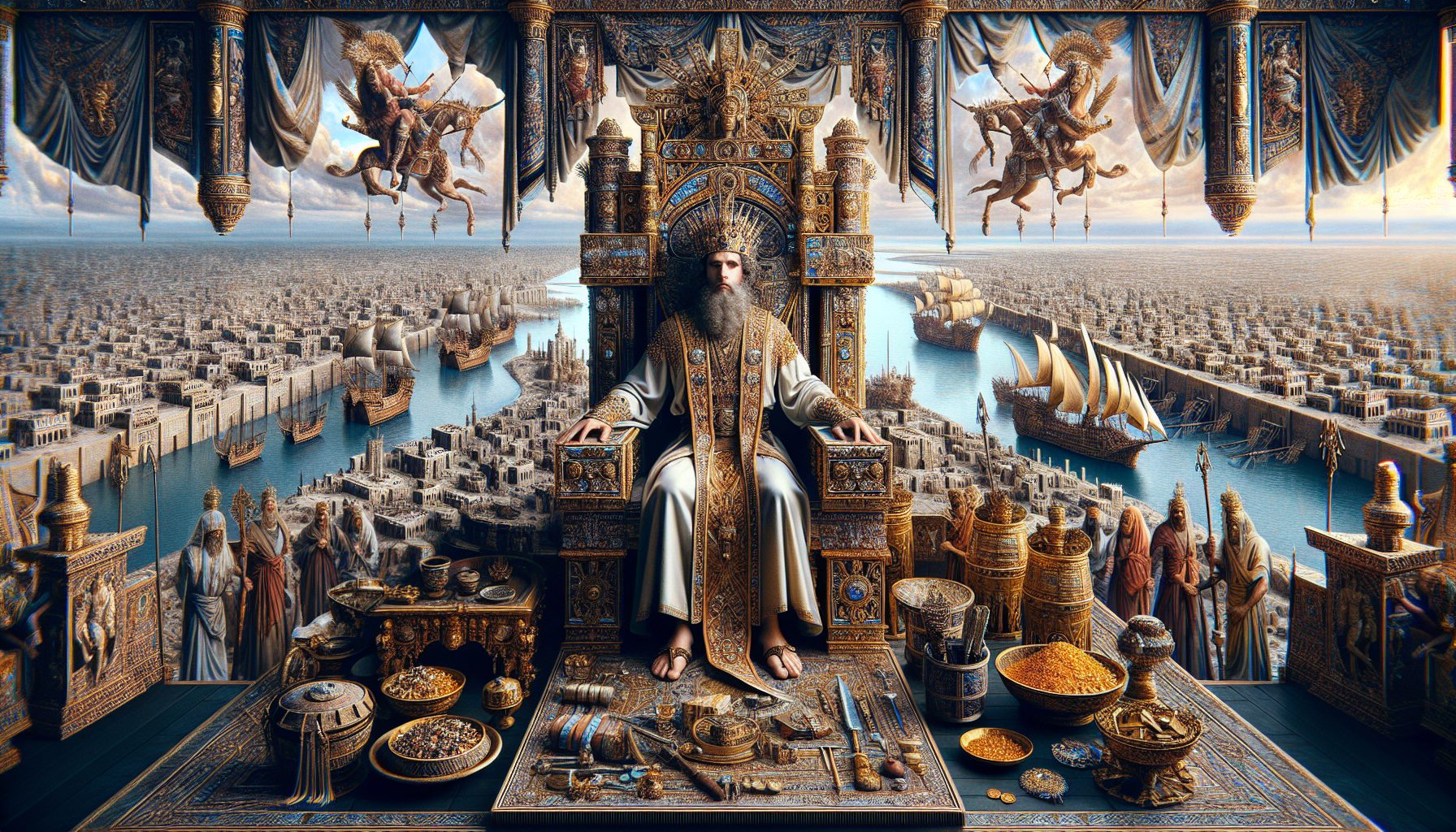
He’d been gone for two seasons, trading with a caravan heading north towards Sidon. He came back not with spices or silver, but with a new light in his eyes and words that fell like cool water. He gathered us at the threshing floor, not by the altar. That was the first thing I noticed. He spoke of the One who brought us out, but his speech had a different flavour. “He is not only a god of the wilderness,” Haggiah said, his voice a soothing balm. “He is also Ba’al-Shamem, the Lord of the Heavens who rides the clouds. And Astarte, the Queen of Heaven, is His consort. Why should He be alone? Why should we deny the fullness of divine love?”
A murmur, uneasy but intrigued, rippled through the crowd. My old bones ached with a cold that had nothing to do with the evening chill. I remembered the words Moses had seared into us, the warnings that felt abstract on the far side of the Jordan. Now they were here, clothed in the familiar face of my cousin’s son.
He was compelling. Haggiah had always had that gift. He spoke of abundant rains, of fertility for our stunted fields and our struggling flocks. He performed a sign—a trick, I thought, but done with such smooth grace. He predicted the flight of a specific hawk before it soared from the crag. It happened. The people gasped. “See?” he said, smiling gently. “The Lord of All confirms my words. He expands our understanding. In Sidon, they worship in groves of green, with music. Their altars smoke with plenty. Is our God lesser?”
The fracture began in homes. Micah, my neighbour, a good man, argued with his wife, Tirzah. “He speaks of the God of our fathers!” Micah insisted, his face lined with worry for his children and his empty storage jars. Tirzah, desperate, shot back, “Our fathers ate manna! We eat husks. Haggiah says the Queen of Heaven intercedes for mothers. Should I not listen?”
The most terrible thing was the secrecy. It started with small deviations. A figurine, a tiny Astarte, hidden in a trunk. A muttered prayer not to the Name, but to the “Cloud-Rider.” Then, Reuben the potter was seen slipping towards the western olive grove at dusk. My son, Eleazar, young and fierce in his faith, followed. He came back white-faced.
“They have built an altar,” he whispered, his voice trembling with rage and horror. “Not of uncut stones. A carved thing. And Haggiah was there, with… with a portion of his flock. He called it a ‘peace offering’ to the Lord and His Lady.”
The law was clear. It was a brutal, terrifying clarity. It spoke of a brother, a son, a dear friend. It spoke of enticement coming from the hand closest to your heart. The test was not from without, but from within the camp. I called the elders. We sat in a grim circle, the words of the Teaching heavy between us. There was no debate about the law. The debate was in our guts. This was Haggiah. This was Micah, who had helped raise my son. This was Tirzah, who had sung laments at my wife’s passing.
We confronted them at the city gate, in the harsh light of noon. Haggiah was serene. “You cling to a narrow path,” he said, almost pitying. “God is doing a new thing. I have seen it in the great cities.”
Micah was broken, ashamed. “I only wanted the rain,” he pleaded, tears cutting through the dust on his cheeks. Tirzah stood silent, defiant, clutching her shawl.
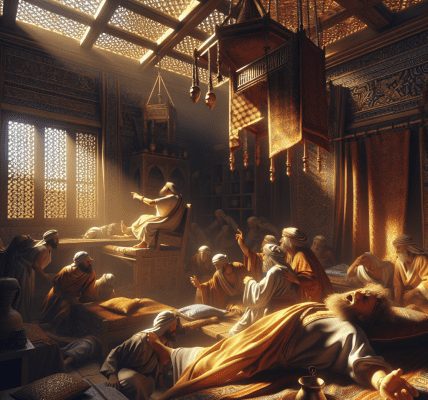
The proceeding was ugly, human, ragged with grief. Witnesses spoke, their voices cracking. Eleazar gave his account, staring not at Haggiah but at the ground, his fists clenched. The law required the hands of the witnesses to be first in the matter. I saw the tremor in my son’s arm as he lifted a stone. It was not a clean, swift justice of legend. It was a terrible, weeping, dusty business under that same merciless sun. The silence that followed was not peace. It was a hollow, deafening void.
We burned the grove, the carved altar, the hidden idols. The strange fire smelled of perfumed oil and cedar, not sanctity. The town was purged, but not clean. A sickly pall hung over us. We had been faithful to the covenant, and it had cost us pieces of our own soul.
That night, sitting outside my door, Eleazar spoke, his youthful certainty gone. “Why, Father? Why did He allow it? Why did the test have to come from Haggiah?”
I had no clean answer, only the memory of the words. *For the Lord your God is testing you, to know whether you love the Lord your God with all your heart and with all your soul.* The test was not for His knowledge, but for ours. To show us the idolatry that can grow in the soil of our own desperation, watered by the voice of someone we trust.
The rain did come, weeks later. A soft, quiet rain, not the storm Haggiah had promised. It fell on the scorched earth where the grove had been, and on the fresh-turned earth of the graves outside the camp. It brought no celebration, only a somber, costly relief. We had learned, in the most intimate way possible, that the covenant is a fire. It warms, it guides, it purifies. But it also consumes what is offered to other gods, even when that offering is wrapped in the familiar hands of kin. The love demanded is a jealous love. And its keeping is a burden heavier than stone, and the only burden that promises you will not, in the end, be crushed by the weight of every other fleeting thing.