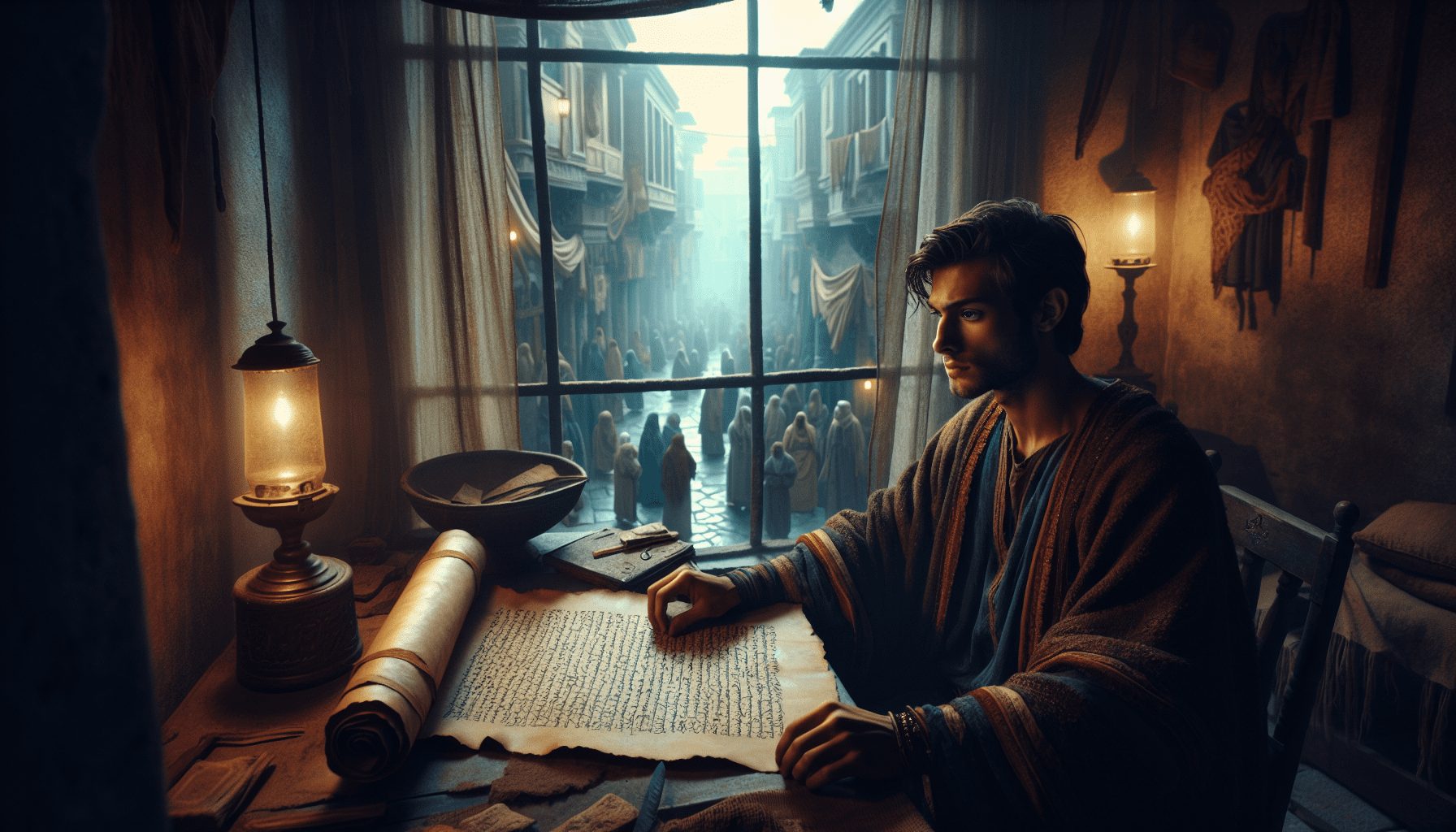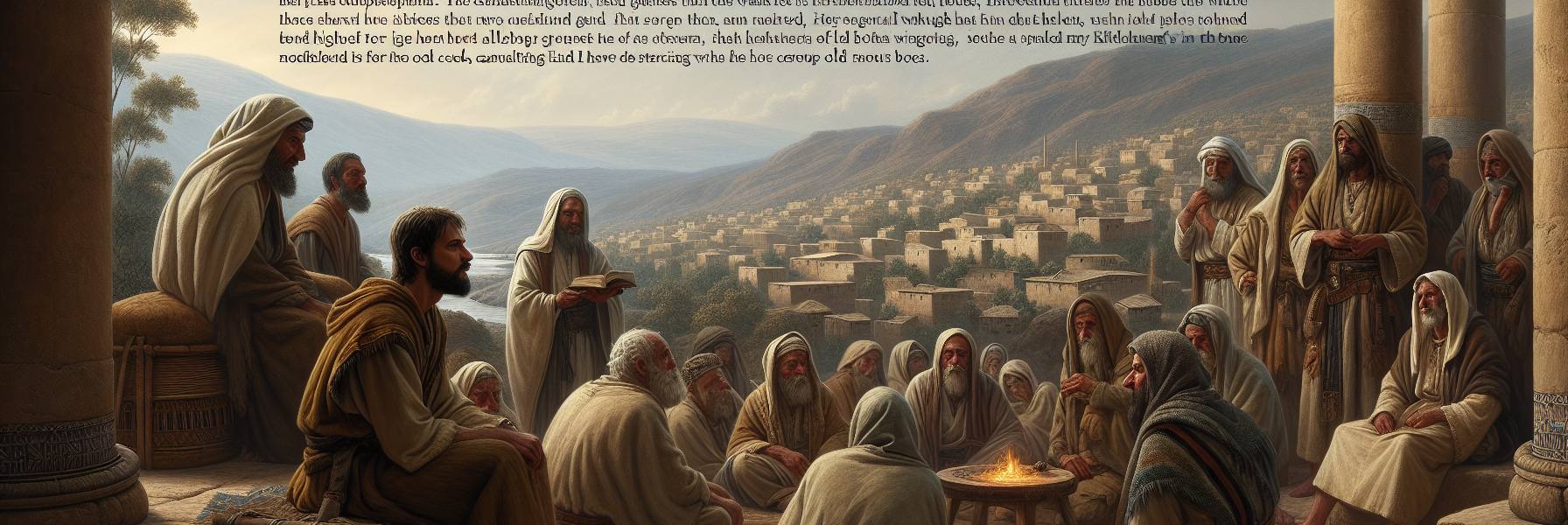

The air in the house by the Kebar River was still, thick with the scent of sun-baked clay and old parchment. Ezekiel sat, the weight of the silence pressing upon him, a different burden than the clamor of exile. The faces of the captives from Judah were etched with a hollow yearning, but his spirit was turned elsewhere—eastward, to the surrounding peoples, to the neighbors who watched Jerusalem’s fall not with pity, but with a cold, calculating glee. Then the word came, not as a whisper, but as a forge-fire in his bones, and he knew he was to speak against the encircling wolves.
First, the Ammonites. He saw their rocky highlands in his mind’s eye, the place they called Rabbah. He could almost hear the sharp, derisive laughter carried on the dry wind. “Aha!” they had said, over and over, like the cawing of crows over a fallen beast. “Aha!” over the desecration of the Temple, over the ruin of Judah’s fields, over the chains on her people. Their joy was not mere politics; it was a personal, malicious delight in holiness profaned. The word formed on his lips, heavy as stone. “Because you have clapped your hands and stamped your feet, rejoicing with all the malice of your heart against the land of Israel, therefore I will stretch out my hand against you.” The vision was stark: a desolate land for nomads to pen their sheep, Rabbah itself a fold for flocks. They would know, at last, that the God they mocked was the Lord.
Then, his gaze turned south, to Moab. They, with Ammon, had looked at Judah and sneered, “Behold, the house of Judah is like all the other nations.” That was the core of their sin—the reduction. They saw the catastrophe not as a chastisement of a covenant people by their God, but as proof that Yahweh was weak, no different from the idols of Sidon or the desert spirits. They erased the story, the promise, the unique, terrible relationship. So the judgment would be one of exposure. “I will open the flank of Moab,” the declaration came, a grim, surgical image. The towns on its frontier—Beth-jeshimoth, Baal-meon, Kiriathaim—would be opened like a gutted fish, given to the people of the east. The smug security of being “like all the others” would vanish, and Moab, too, would know.
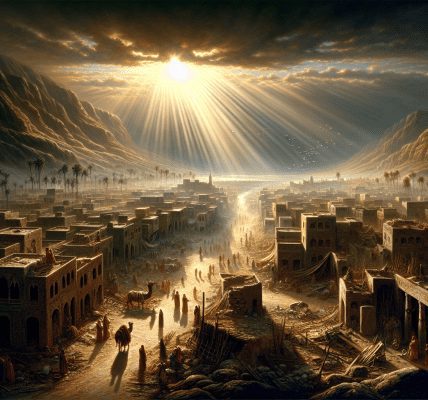
Next, Edom, the brother-nation, the descendants of Esau. Their offense cut deeper, a familial betrayal. They had acted with vengeful malice, taking up the sword against a bleeding brother, settling old, bitter scores when Judah was at her weakest. The memory of their ancestral hatred had curdled into a permanent fury. “Because Edom acted revengefully against the house of Judah and incurred grievous guilt by taking vengeance on them,” the prophet intoned. Therefore, from Teman to Dedan, the land would fall by the sword. Not just invasion, but a righteous reciprocity. The hand Edom lifted against Judah would be turned upon itself, until Edom was a wasterness, a monument to the danger of nursing ancient grudges into present violence.
Lastly, the Philistines, the ancient foes from the western coast, the people of the sea. Their sin was an old, relentless hatred, a vendetta carried out with perpetual malice. They had seized the moment of disaster to destroy with everlasting enmity. For the Kerethites in their cities, for Gaza and Ashkelon, there would be no more raids, no more border skirmishes. The word was final, absolute. “I will cut off the Kerethites and destroy those remaining along the seacoast.” The great wrath of the Lord would be executed upon them, and in their ruin, the last of the coastal predators would be stilled.
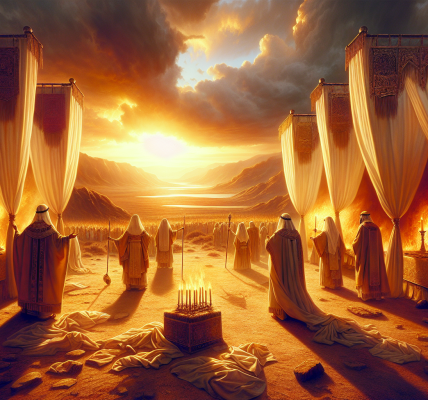
Ezekiel fell silent. The visions of judgment hung in the quiet room—not gleeful pictures of torment, but solemn, terrible affirmations. They were not about random divine cruelty, but a cosmos where actions had moral weight, where mocking the sacred, denying the story, harboring vengeful hate, and acting on ancient malice could not simply be shrugged off. The surrounding nations, in their jubilation over Judah’s fall, had unknowingly put themselves in the dock, not before Babylon, but before the throne that judged Babylon too. They would know. That was the refrain, the grim, hopeful thread. In the aftermath of their own calamities, in the stillness of their own desolations, a knowledge would dawn—slow, hard, and undeniable—of who the Lord is.
He laid his stylus down. The scroll was full. Outside, a donkey brayed, and a child cried for its mother—ordinary sounds in an ordinary exile. But the air felt different now, charged with a dreadful symmetry. Justice, he understood, was a circle wider than any of them had imagined. It was a lonely and awesome thing to see its edges.