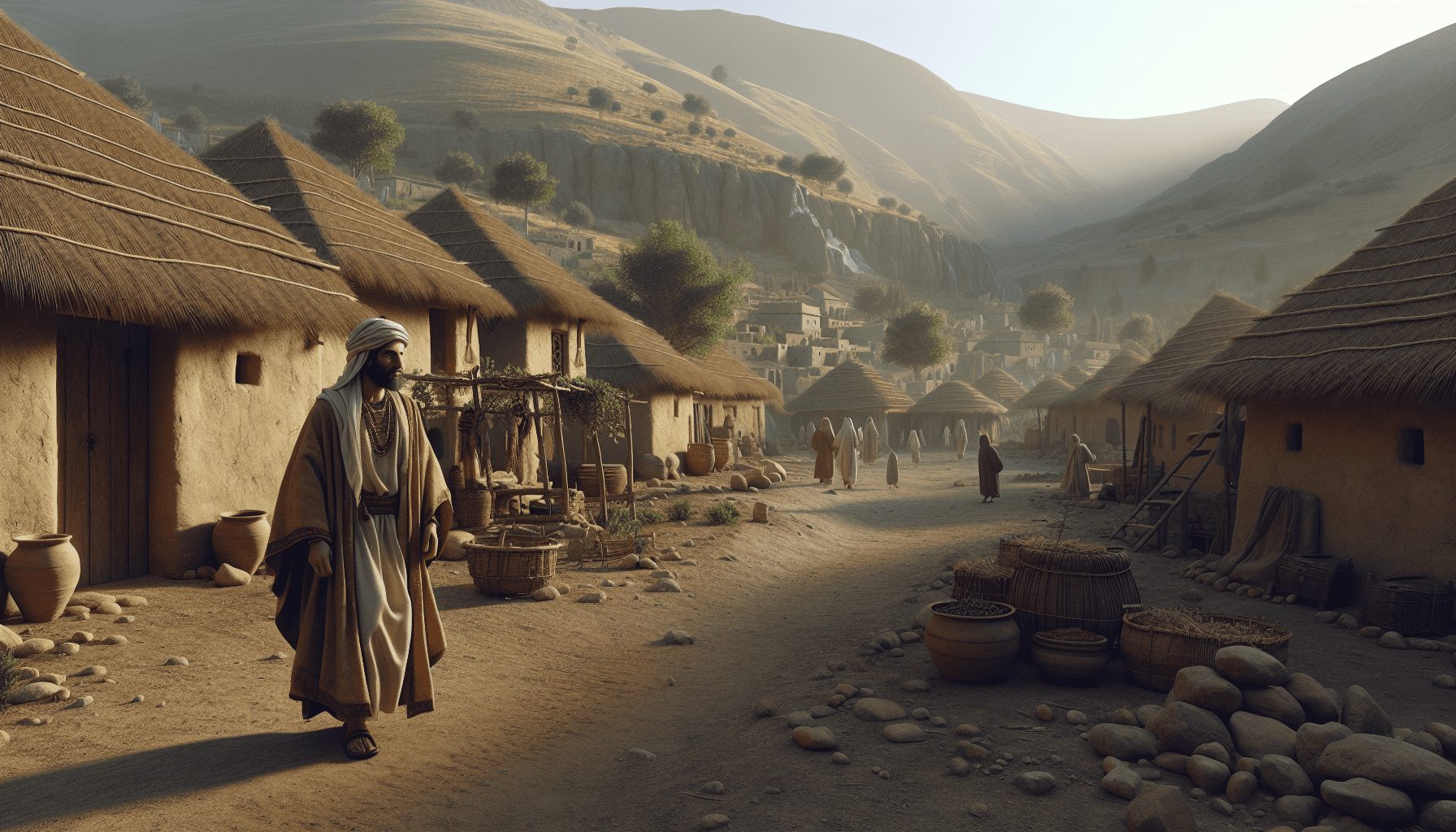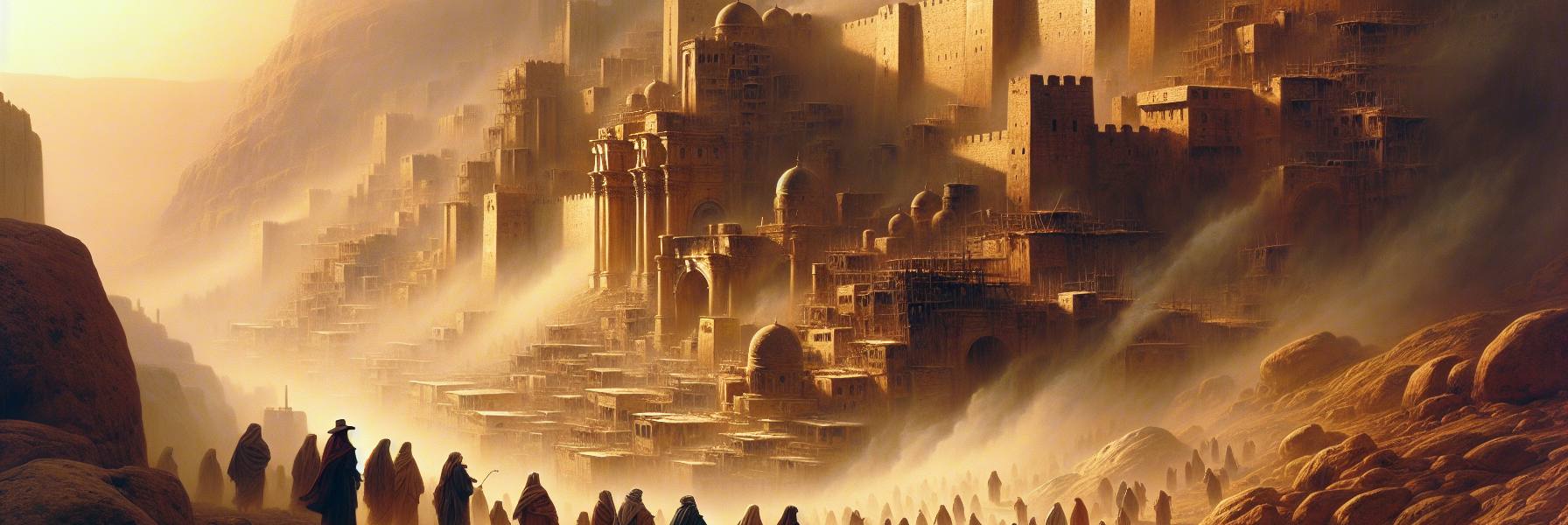

The dust never really settled in Jerusalem. It hung in the air, a fine, gritty pall over the stones of the city, stirred by the tread of foreign boots. It coated the robes of the few old men who still gathered at the remnant of the wall to pray, and it lined the creases of faces that had forgotten how to smile. The city wore silence like a shroud, a quiet so deep you could hear the scuttle of a lizard on the sun-baked stone, a quiet that was less peace than a held breath.
Elihu remembered the noise. The clash of the siege, yes, the terrible sounds of that final year, but before that, the good noise. The market’s cacophony, the pilgrims singing the Songs of Ascents as they came up the road, the laughter of children in the courtyards. Now, the only songs were the low, mournful chants of the elders, dirges for a glory that felt like a dream. He was a scribe, or had been. His hands, stained with ink, now spent their days mending nets for the garrison’s fishermen on the Kidron’s meager stream. The sacred scrolls were stored away, their words feeling like accusations from a distant, unheeding God.
It was on such a day, with the heat haze shimmering over the Mount of Olives, that the word came. Not with fanfare, but as a whisper that began in the bones of the earth itself. Elihu felt it first as a restlessness, a strange, quickening ache in his chest as he looked at the broken gates. It was as if a long-dormant root, deep beneath the temple mount, had suddenly stirred, seeking the sun.
Then, he heard it. Not with his ears, but in the center of his mind, a voice that was at once a thunderclap and a mother’s sigh.
*Awake, awake, O Zion. Clothe yourself with strength.*
He stumbled back from the wall, his heart a frantic drum. He looked around. Had the others heard? The old men continued their prayers, unbroken. A Roman soldier leaned on his spear, bored. But the stones… the stones seemed to listen. The very dust in the air seemed to hang, suspended, awaiting a command.
*Shake off your dust, rise up, sit enthroned, O Jerusalem. Loose the chains from your neck, O captive Daughter of Zion.*
The words unfolded within him, painting visions against the barren sky. He saw the city not as it was, but as it could be. Not a ruin, but a queen shaking off the sleep of decades, her garments of mourning falling away to reveal robes of dazzling righteousness. The chains he saw were not iron, but heavier—chains of despair, of forgotten identity, of a covenant seemingly abandoned. And they were snapping, one by one, with a sound like breaking ice in a deep river.
The voice continued, weaving a history of shame. *For this is what the Lord says: “You were sold for nothing, and without money you will be redeemed.”* Elihu’s throat tightened. Sold for nothing. Their own folly, their own pride, their chasing after empty winds. And yet, redemption would come not through a weight of silver, but as a gift. A costly gift, but not one they could purchase. The economy of heaven was a mystery.
Then, a shift. The voice turned sharp, pointed toward the south, toward the memory of Egypt. *My people went down at first into Egypt to reside there as foreigners, then Assyria oppressed them without cause.* It was a reminder of a longer story, a pattern of exile and a greater salvation. The deliverance from Pharaoh’s army would be dwarfed by what was to come. This wasn’t just about leaving Babylon; it was about leaving a deeper captivity.
*And now what do I have here?* the Lord declared. The question hung in the air, poignant. *For my people have been taken away for nothing, and their rulers wail, and my name is constantly blasphemed all day long.* Elihu wept then, silent tears cutting tracks through the dust on his cheeks. He heard the blasphemies daily. “Where is their God?” the legionaries would scoff. “What good are Zion’s laws now?” The mockery was a sharper sword than any Roman *gladius*.
But then, the voice swelled, not in anger, but in a fierce, protective promise. *Therefore my people will know my name; therefore in that day they will know that it is I who foretold it. Yes, it is I.*
How would they know? The answer came like the first drop of rain on parched earth.
*How beautiful on the mountains are the feet of those who bring good news, who proclaim peace, who bring good tidings, who proclaim salvation, who say to Zion, “Your God reigns!”*
Elihu’s mind’s eye raced to the eastern hills. He saw a runner, not a king, not an army, but a single, breathless messenger, his feet dusty and bleeding from the hard road, his chest heaving, but his face alight with a joy so profound it was like a beacon. And his message was not of a battle won, but of a reign established. *Your God reigns.* The empire of Rome, the shadow of Babylon, the tyranny of despair—they were all subject to a higher throne. The watchmen, the few prophets left, would lift their voices and *sing* together, for with their own eyes they would see the Lord’s return to Zion.
The vision crescendoed. *Depart, depart, go out from there! Touch no unclean thing; come out from it and be pure, you who carry the vessels of the Lord.* This was no frantic escape. This was a solemn, holy procession. They were to leave, not as fugitives, but as priests, bearing the sacred things of God, and they would not go in haste, not in a panicked flight. The God who went before them would also be their rear guard. The God of the Exodus was present, but his action was now one of majestic, deliberate salvation.
Elihu opened his eyes. The square was the same. The dust, the Romans, the silent walls. Yet everything was different. The air was charged, as if after a lightning strike. The silence was no longer a shroud, but the pregnant pause before a symphony.
He looked at his ink-stained hands. He would not mend nets today. He would go to the house where the scrolls were kept. He would unroll the great prophecy of Isaiah, and he would begin to copy again. For the word was not just a memory. It was a seed, planted deep in the ruined earth of Zion, and it had just split open, green and undeniable, reaching for a dawn that was already breaking on mountains far away, where a messenger was just beginning to run.