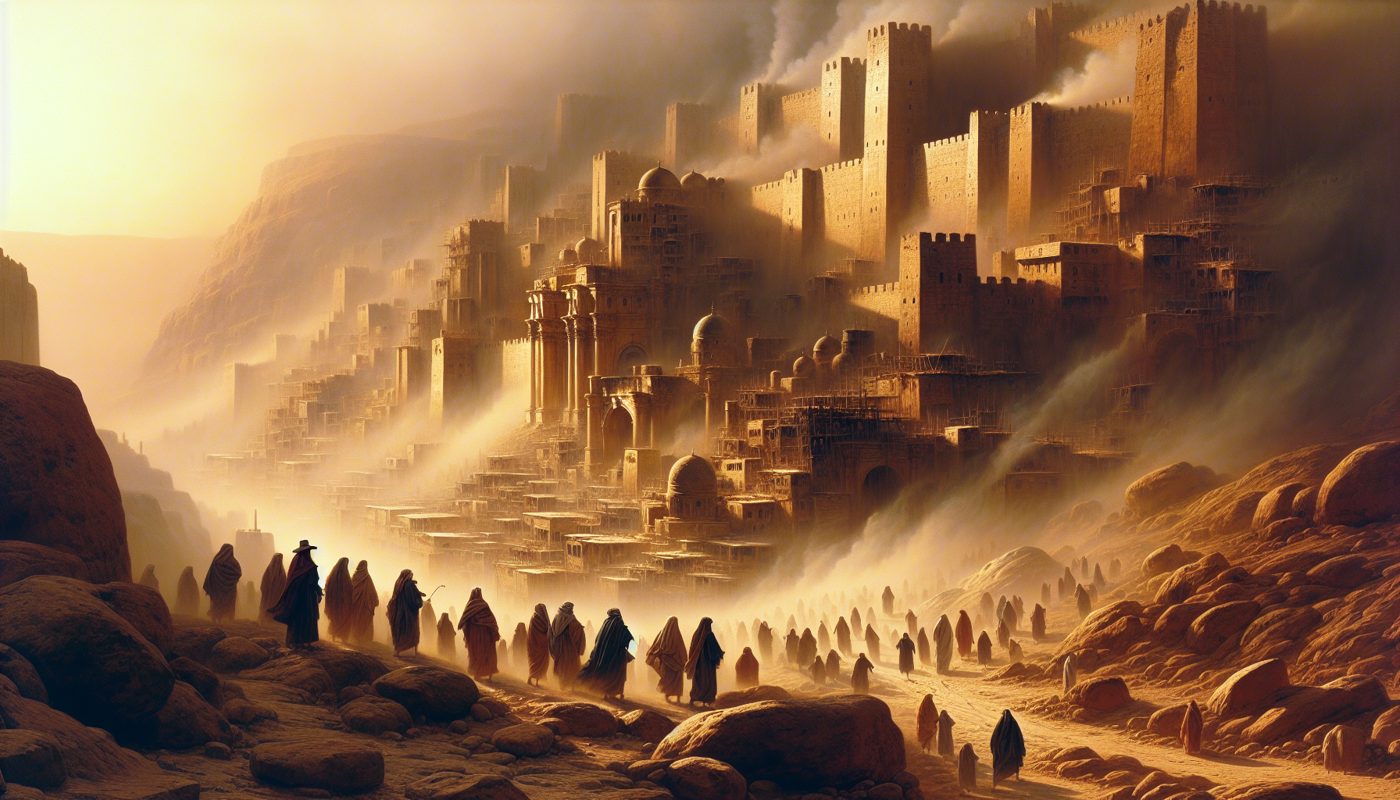
The chapter begins with a command to shake off the dust and sit upright. Jerusalem is told to loose the bonds from her neck, not because she has loosened them herself, but because the one who speaks is the one who owns the authority to declare her free. The city that has been treated as a captive is told to dress like a queen again, to put on strength as a garment and beauty as a crown. The uncircumcised and the unclean will no longer enter her gates, not because she has built higher walls, but because the Lord has changed the terms of her occupancy.
The logic of redemption is stated plainly. Israel was sold for nothing, and she will be redeemed without money. This is not a transaction between equals. It is a declaration that the sale was never valid. The Lord does not bargain for what already belongs to him. He simply announces that the price demanded by the oppressors is worthless, and he will reclaim his people on his own terms.
The chapter recalls the history of oppression. Egypt held them, and the Assyrian crushed them without cause. Now the rulers of Babylon howl over their spoil, and the Lord’s name is blasphemed continually. The question is not whether the Lord has power, but why he has waited. The answer comes in verse six: that his people may know his name, and know that he is the one who speaks. The silence is broken by the voice of the speaker himself.
Then the tone shifts. The mountains become the stage for a runner. The feet of the messenger are called beautiful, not because of their shape, but because of the news they carry. The message is peace, good, salvation, and the reign of God. The watchmen on the walls lift their voices together, and they sing because they see the Lord returning to Zion. The waste places of Jerusalem are told to break into joy, because the Lord has comforted his people and redeemed the city.
The redemption is not hidden. The Lord has bared his holy arm in the sight of all the nations. The ends of the earth have seen the salvation of God. This is not a private rescue. It is a public display, witnessed by the same nations who watched the city fall. The same eyes that saw the humiliation now see the restoration.
The command to depart is given twice. Leave the place of uncleanness, touch nothing unclean, and purify yourselves, especially those who carry the vessels of the Lord. The exile is over, but the holiness of the people must match the holiness of the objects they bear. The departure will not be a panicked flight. The Lord will go before them as a vanguard and behind them as a rear guard. There is no need to run.
The final section introduces a figure who is not named but described in stark terms. The servant will deal wisely, and he will be exalted and lifted up very high. But the exaltation is preceded by astonishment of a different kind. Many were shocked at his appearance, because his face was marred beyond human recognition and his form was disfigured beyond that of any man. The description is brutal and precise.
The result of this marring is that he will sprinkle many nations. Kings will shut their mouths in silence before him. What they have not been told, they will see. What they have not heard, they will understand. The chapter does not explain how the disfigurement leads to the sprinkling, or how the silence of kings becomes the recognition of truth. It simply states the sequence as a fact, leaving the reader to sit with the weight of the paradox.
The chapter ends with the kings seeing and understanding. The same nations who witnessed the bare arm of the Lord now witness the marred servant. The redemption of Jerusalem and the suffering of the servant are placed side by side, not explained, but displayed. The chapter does not resolve the tension. It leaves the reader with the image of a face so broken that it becomes the means by which nations are cleansed.
Comments
Comments 0
Read the discussion and add your voice.
Members only
Sign in to join the conversation
We keep comments tied to real accounts so the discussion stays clean and trustworthy.
No comments yet. Be the first to add one.