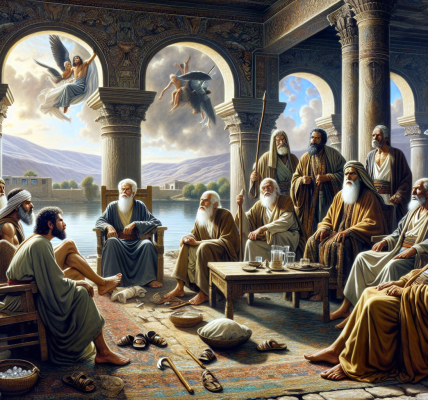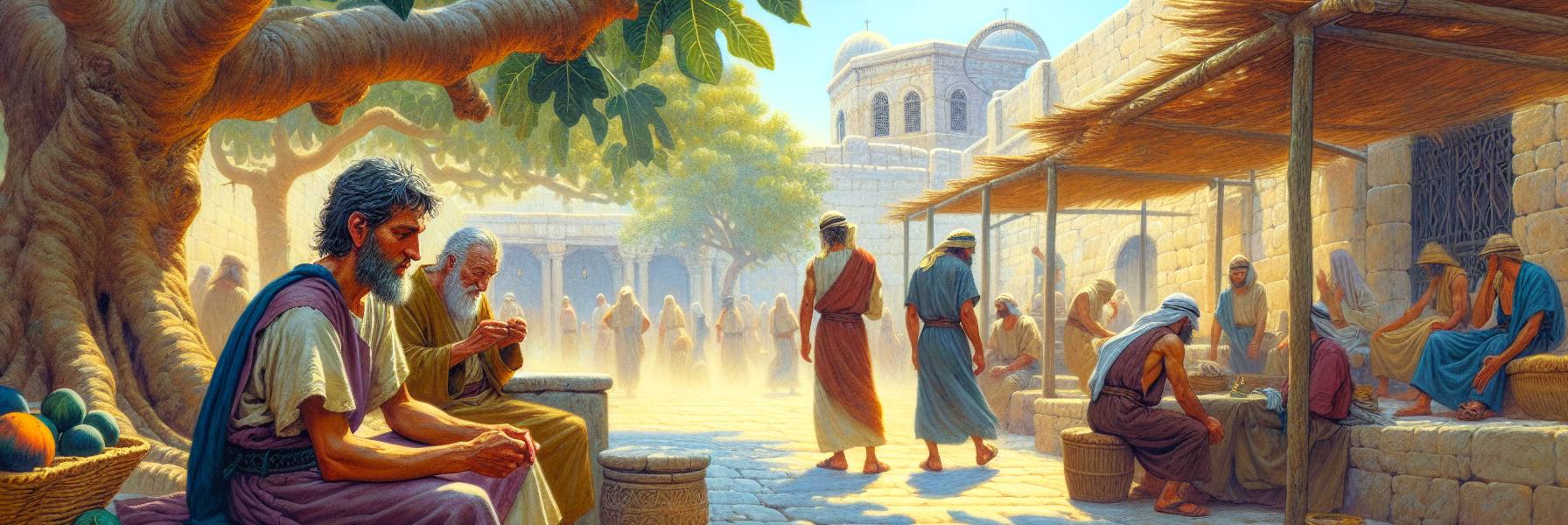

The heat in Jerusalem that summer had a weight to it, a kind of dusty, pressing silence that made even the merchants in the upper market speak in low tones. I found myself, more often than not, seeking the shaded corner of old Jared’s courtyard, where the fig tree’s leaves were thick and the stone bench held a memory of coolness from the night before. Jared was a shipmaster, retired now, his hands gnarled from ropes and salt. He’d seen every port from Tyre to Tarshish, and his eyes held the grey of distant weather.
One afternoon, as a hot wind sent spirals of dust dancing in the sun-striped yard, I was voicing a young man’s anxiety. The harvest looked uncertain, the markets volatile. I spoke of holding back, of waiting for clearer signs, for a safer bet. Jared listened, his gaze on a leaf spinning erratically in the air current. He took a slow drink of water, wiped his mouth with the back of his hand.
“You remind me,” he said, his voice a dry rasp, “of a green captain I once had. Terrified of clouds. He’d look at a sky the colour of a dove’s breast, see a smudge on the horizon, and refuse to leave port. His holds stayed empty, his sailors grew poor, and his timbers grew soft from sitting in still water. The sea rotted his ship, not a storm.”
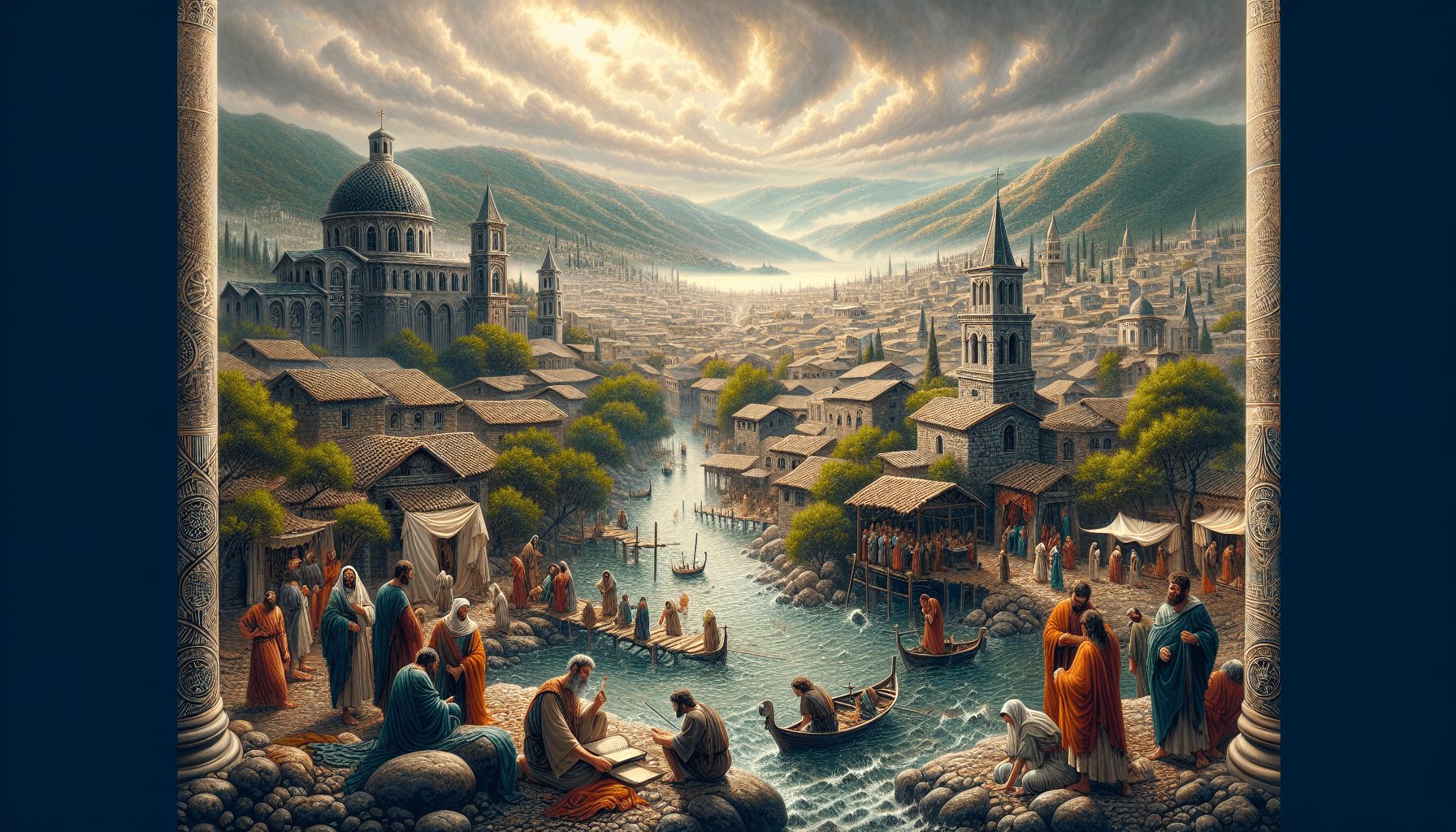
He leaned forward, elbows on his knees. “You know what the Teacher says. ‘Cast your bread upon the waters, for you will find it after many days.’ I’ve seen it. You load a vessel with grain—good, solid Egyptian wheat—and you send it out. You don’t know if a squall will take it, or pirates, or if the market in Piraeus will have collapsed when it arrives. You send it anyway. Because if you send nothing, you receive nothing. The return is in the sending, in the act of trusting the water and the wind and the timing you cannot control. Sometimes the ship returns laden with spices you never dreamed of. Sometimes it returns with just enough to send it out again. But it must go out.”
A gust of wind stirred the tree, and a few unripe figs thudded to the ground. He gestured to them. “And give a portion to seven, or even to eight. You don’t know what evil may happen on the earth. I used to think that meant just giving alms. It’s more than that. It’s spreading your care, your investment, your hope. Don’t put all your grain in one ship. Don’t pour all your kindness into one vessel. Life is a treacherous coast. A ship founders, a drought withers a field, a king’s cough can start a war. If your hand is open in seven directions, when trouble closes five, two remain open. You won’t be left utterly destitute.”
He fell silent for a long while, watching the sunlight crawl across the stones. “We are creatures who love to know,” he said finally. “But we live in a world that refuses to be fully known. Look at that.” He pointed to a bank of clouds building in the west, glowing at their edges with the afternoon sun. “If the clouds are full of rain, they empty themselves on the earth. Simple. A tree falls, south or north, and there it lies. Cause and effect. But you…” he turned his pale eyes on me, “you are not a cloud or a tree. You are a man with a spirit. You cannot know the path of the wind, or how the bones grow in the womb of a pregnant woman. The wind comes from somewhere you can’t see and goes to a place you can’t follow. The mystery of life is being formed in darkness. So you cannot know the work of God, who makes everything.”
He said it not with despair, but with a strange, weary relief. “That is why you must sow your seed in the morning, and not let your hands rest at evening. Don’t just sow one kind, and don’t just sow at the hour you think is perfect. The light is sweet; it’s pleasant for the eyes to see the sun. So live. Truly live. Get up in the dim morning and work while the dew is still on the grass. Work also in the afternoon heat. Who knows what will prosper, this or that, or if both alike will be good? The young barley shoot or the late-planted millet? You are not the judge of that. You are the sower.”
Jared pushed himself up with a groan, his joints cracking. The breeze had picked up, carrying a faint, promising dampness. “The darkness is coming,” he said, not looking at me, but at the lengthening shadows. “A time when you will say, ‘I have no pleasure in them.’ The sun, the light, the moon, the stars will all seem dim. The clouds will return after the rain. It will happen. So, while you have light and breath and strength, rejoice. Let your heart cheer you in the days of your youth. Walk in the ways of your heart and the sight of your eyes.”
He turned to go inside, then paused at the doorway, a dark silhouette against the cool gloom of his house. “But know this,” he added, his voice almost lost in the rustle of the fig tree. “For all these things, God will bring you into judgment. The rejoicing, the working, the sending of ships, the giving of portions—it is not meaningless. It is all a part of the mystery. So remove vexation from your heart, and put away pain from your body. The youth, the dawn… it is fleeting. The Teacher doesn’t say it to make you sad. He says it to make you brave. Send the ship. Sow the seed. The not-knowing is not your prison. It is the space in which your faith must sail.”
He went inside. I sat until the first drops of rain, heavy and warm, began to fall, spotting the dusty stones of the courtyard. They fell on the fallen, unripe figs, on the hard-baked earth, and on the leaves of the tree that would, in time, bear more fruit. I thought of bread, sinking beneath dark waters, and of seed, scattered from a hand open to a sky it could not understand. And for the first time that long, anxious summer, I felt a kind of peace, solid as the bench beneath me, and as restless as the coming rain.