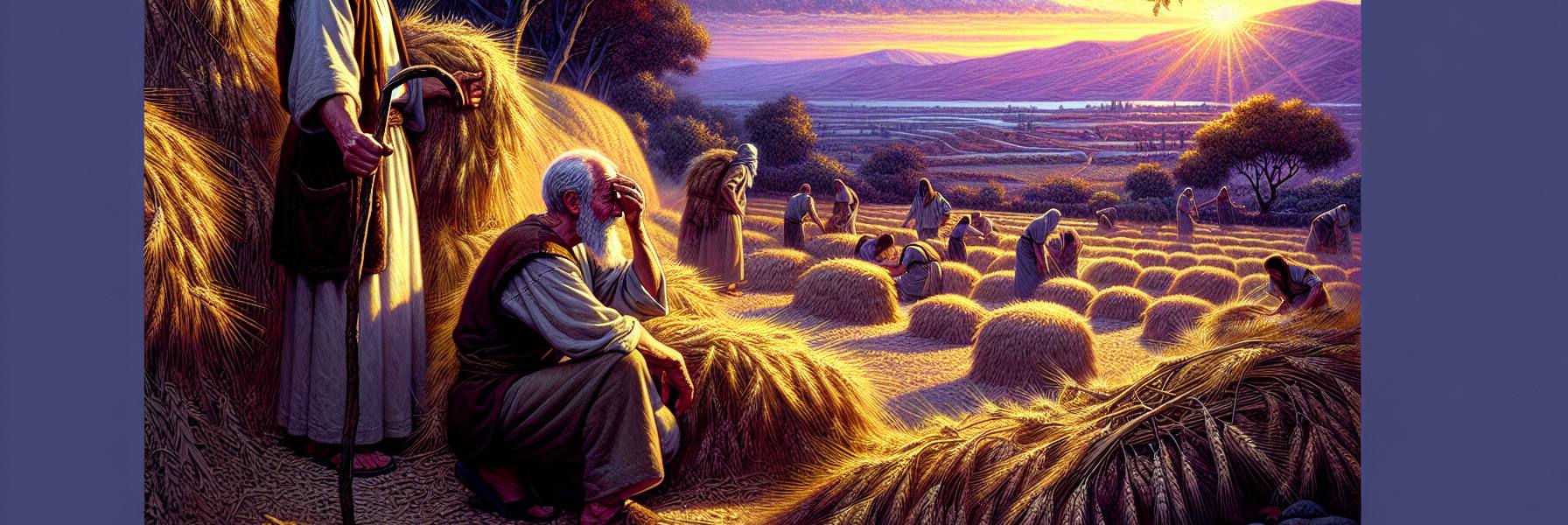

The air in the hills of Ephraim carried the first chill of late autumn, a sharp, clean smell of turned earth and decaying leaves. Old Micah felt it in his bones as he leaned on his staff, watching the last of the barley sheaves being gathered into the stone storehouse. His son, Jared, young and strong, wiped sweat from his brow with the back of his hand, leaving a dusty streak.
“It is a good yield, father,” Jared said, a note of pride in his voice.
Micah nodded, but his eyes were distant, fixed on the western ridge where the sun bled orange into the purple haze. “It is. The Lord has been good to this land.”
For seven years, he had worked this patch of earth, and for seven years it had given back. But the seventh year, the year of release, was breathing down their necks like this very wind. The thought of it was a stone in his gut. All through the wet spring planting and the long, dry summer of tending, the words from the scroll read at the last gathering had echoed in his mind: *At the end of every seven years you shall grant a release… every creditor shall release what he has lent to his neighbor.*
It was one thing to hear the priest’s son recite the words in the assembly. It was another to live them. Huldah, his neighbor’s widow, owed him. Not a vast sum, but a measure of seed lent two springs past when her own had spoiled, and the labour of Jared and their oxen to help break her stubborn field. The debt was recorded, a few careful marks on a clay shard kept in a niche by the door.
Jared followed his gaze. “You think of Huldah’s debt.”
“I think of many things,” Micah murmured. “I think of the winter. I think of your sister’s bride-price. I think of the olive press that needs mending.” He sighed, a long, weary sound. “The law is clear, my son. The release is coming.”
“But must it be a total release?” Jared’s voice was practical, edged with the frustration of youth. “She has two strong boys now. They could work it off in another season. The law says ‘you shall not harden your heart or close your hand against your poor brother.’ She is not our brother. And is she truly poor? She has her plot.”
Micah turned to him, the lines on his face deep in the fading light. “And what are we, if we start weighing the letter of the law on scales of our own making? We were slaves in Egypt. *Slaves*, Jared. With nothing. And the Lord released us. He did not say, ‘When you are somewhat more established, I will consider it.’ He heard our cry and released us. This…” he gestured vaguely toward Huldah’s smallholding, “…this is the memory we are to keep in our hands. Not a shard of clay with marks on it.”
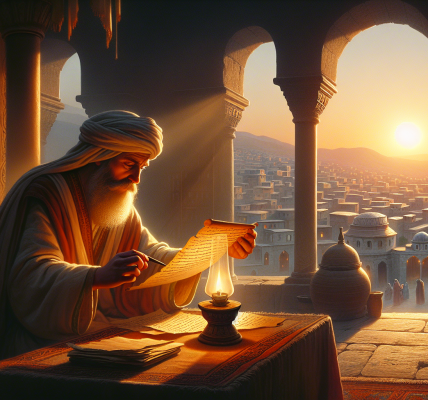
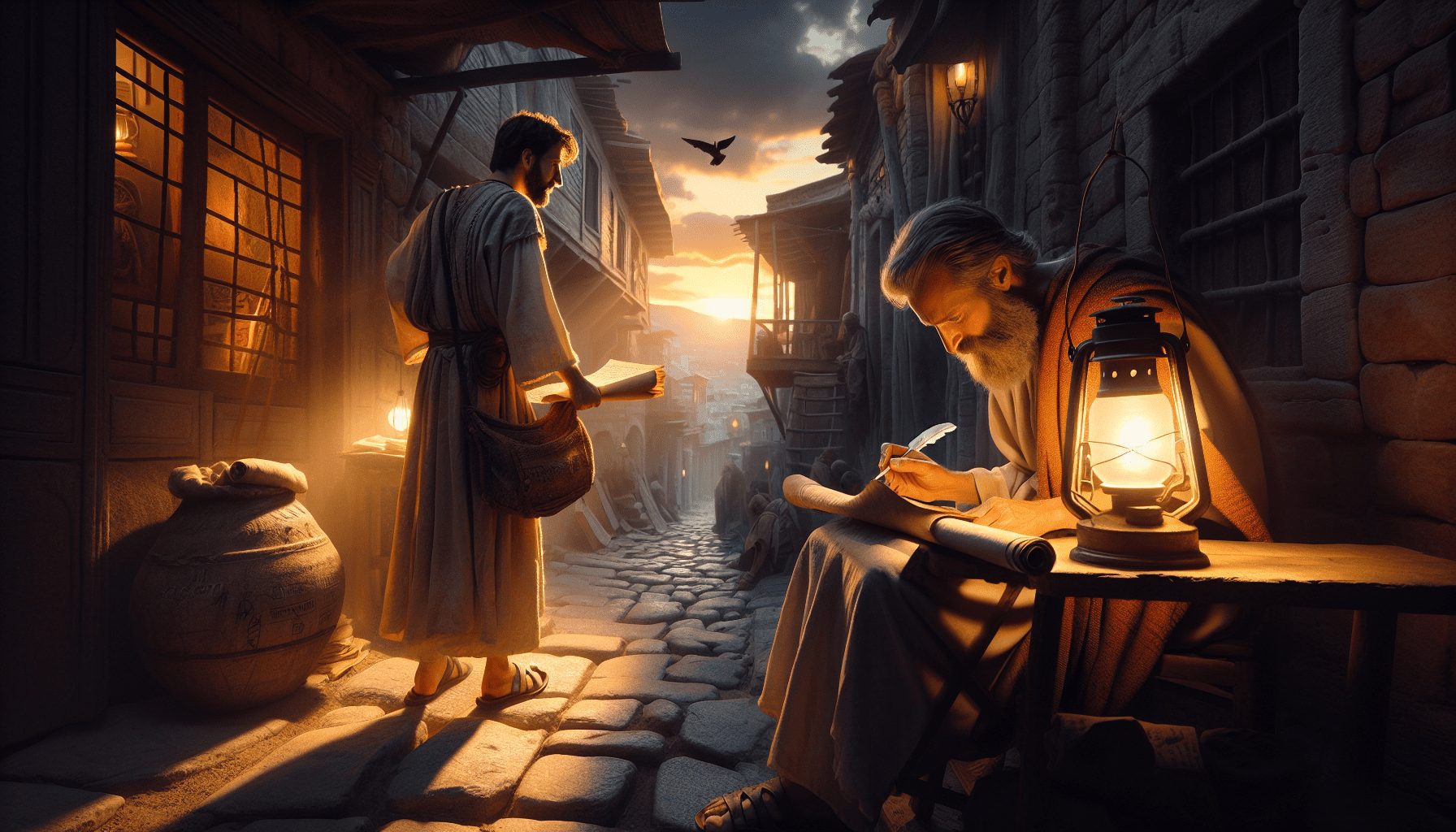
That night, by the sputtering light of a single oil lamp, Micah took the debt shard from its niche. He turned the cool clay over in his hands, feeling the grooves of his own handwriting. He thought of Huldah’s face, lined with a weariness that went beyond the physical, of the way her boys had begun to look at him—not with the easy familiarity of village kin, but with the wary deference owed to a creditor. The debt was a wall, subtle but real, and it impoverished them all.
The next morning, he walked to Huldah’s field. She was there, her skirts kirtled up, hacking at the tough roots of a fallen vine. She straightened as he approached, her body tense, expecting a question about payment, about another season’s interest.
Micah didn’t speak at first. He looked past her to the modest mud-brick home, the smoke struggling from the roof hole. He saw the patched cloak one of the boys wore.
“The year turns, Huldah,” he said finally, his voice rough.
“It does,” she replied, her eyes guarded.
He pulled the shard from the fold of his robe. He saw her breath catch. For a long moment, he held it, the weight of seven years of toil and worry in his palm. Then, with a movement that felt both terribly weak and supremely strong, he drew back his arm and flung the shard into the heart of her cooking fire, which smouldered in a ring of stones nearby.
It landed with a soft thud among the ashes. Huldah stared, uncomprehending.
“The Lord’s release,” Micah said simply. “The debt is gone. It is forgotten.”
For a heartbeat, there was only the sound of the wind in the terebinths. Then her rigid posture melted. She didn’t weep, but her shoulders slumped as if a physical yoke had been lifted from them. The wary look in her eyes dissolved into a confusion so profound it was close to pain. “But… the seed… the labour…”
“Was a gift,” Micah said, the words feeling strange and true on his tongue. “A gift I should have given freely then. Let us call it that now.”
He turned to go, the transaction—or the un-transaction—complete. But as he took a few steps, Huldah’s voice stopped him, clear now and strong. “Micah. When you plant your southern terrace next spring… my boys will be there. They are strong. They will be there.”
He nodded, not trusting his own voice. That was the other part of the law, wasn’t it? The part he’d barely dared to hope for: *Beware lest there be a base thought in your heart… and your eye look grudgingly on your poor brother, and you give him nothing… You shall give to him freely, and your heart shall not be grudging when you give to him, because for this the Lord your God will bless you in all your work.*
He walked home, the cold wind biting at his neck. The stone in his gut was gone. In its place was a hollow, anxious space—the space where his security had been. But as he walked, that space began to feel less like loss and more like room. Room to breathe. Room to trust. He had obeyed a difficult command, not out of fear, but out of a slowly dawning understanding: the economy of the covenant was not a ledger of loss and gain, but a cycle of release and reception. He had released a debt. And in return, he had received a neighbour back.
That evening, he explained it to Jared, who listened silently, his brow furrowed. “So we are poorer?” Jared finally asked.
Micah looked at the storehouse, at the full jars of oil, at the solid walls of his home. “Are we?” he said softly. “I feel tonight as if we have just brought in the richest harvest of all.” He put a hand on his son’s shoulder. “The land will rest soon. And so, for a little while, will our hearts.”