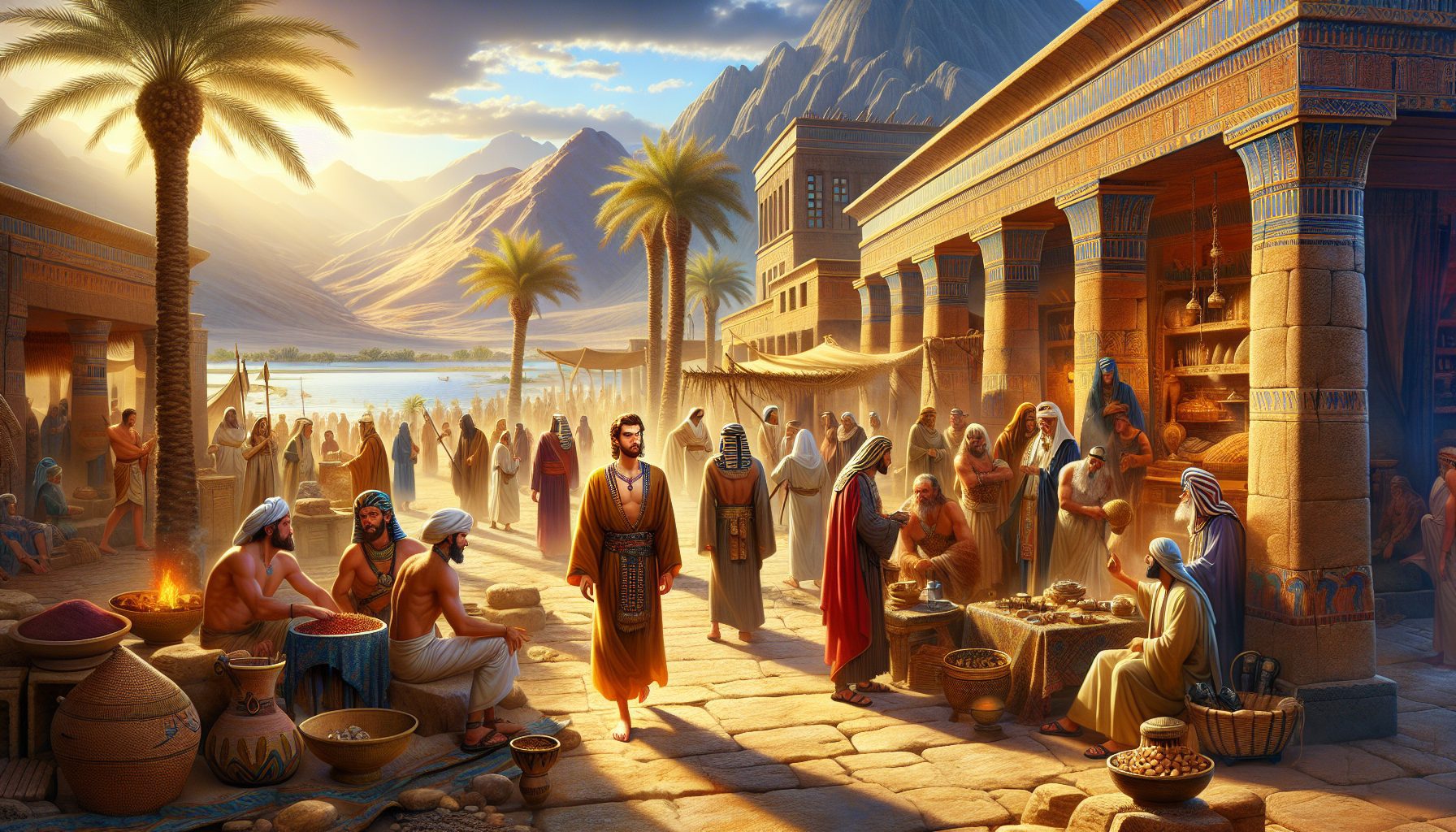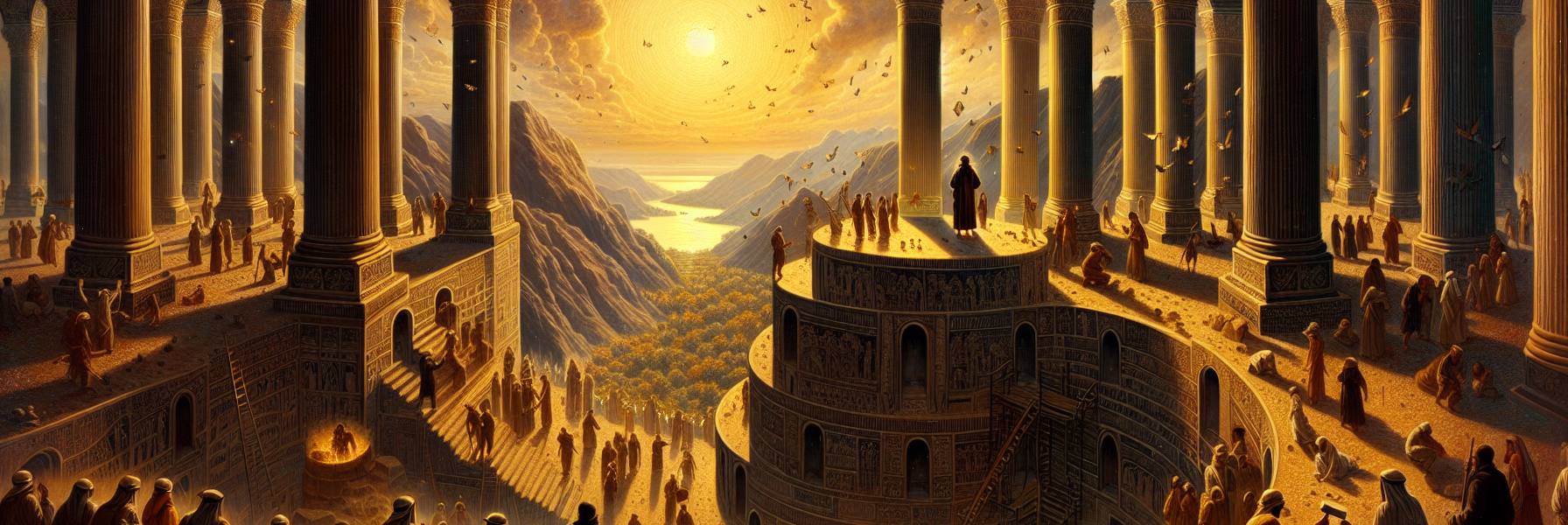

The air over Mount Moriah was thick with the scent of cedar dust and hot stone. It clung to the robes of the overseers and turned the afternoon light into a golden haze. Solomon, standing on a raised platform of rough-hewn rock, felt the vibration of the mountain itself—a deep, constant tremor from the chisels below, the drag of sledges, the calls of foremen in a dozen dialects. This was no mere construction site; it was the slow, painful stitching of a divine promise into the fabric of the earth.
His father’s dream was now his own burden, his own obsession. David had seen it in spirit, had gathered the gold of Ophir and the silver counted like common stone. But Solomon was tasked with giving the vision weight, and form, and doorways. The measurements, laid out in the old scrolls, were precise: sixty cubits long, twenty cubits wide. To the workers, it was a vast footprint in the dust. To Solomon, it was the dimensions of a container for the uncontainable.
The foundation was the first miracle. They had to level the great threshing floor of Ornan, that place of awful grace where the plague had been halted. The bedrock, when exposed, was unlike any other in Jerusalem—a massive, stubborn spine of mountain granite. The master builder, Hiram of Tyre, had run his hand over it and grunted in approval. “It will not shift,” he said, his Phoenician accent curling around the Hebrew words. “Your God will have a steady floor.” They dressed the stone there on the site, the *giblim* masons from Byblos cutting each block with a precision that left gaps no wider than a blade of grass. No hammer or axe was heard in that preliminary work; the silence of its assembly was a kind of reverence.
Then rose the walls. Cedar from Lebanon, hauled in groaning caravans down the coast and up the Judean hills. The trunks were colossal, their bark smelling of rain and distant, snowy peaks. As they were framed up, the site began to smell not of dust and sweat, but of a forest. Solomon would watch as craftsmen overlaid the cedar with pure gold. It wasn’t a thin leaf, but plate—heavy, burnished sheets that required teams of men to lift. They fastened it with gold nails, each one a small fortune. The sun, striking the eastern wall at dawn, was a blinding, unbearable glory. It forced you to look away, a lesson in itself.
Inside, the work grew more intimate, more terrifying. The Holy Place, forty cubits long, was panelled with cypress, then sealed with gold engraved with palms and chains. It was beauty with a purpose: the palm for life, the chain for binding, perhaps for the covenant itself. But it was the innermost room, the twenty-cubit cube of the Most Holy Place, that stole Solomon’s breath.
Here, the gold was not merely applied; it was the very substance of the room. Six hundred talents of it. The walls, the ceiling—all pure gold. The floor, too. He remembered the day they finished the plating. They had extinguished all lamps, sealed the temporary door, and then lit a single oil cruse within. The light had welled up, not as flame, but as a diffuse, liquid radiance, bouncing from surface to surface until the very air seemed gilded. It was a space devoid of shadow. A place where nothing of the earth, not even its darkness, could remain.
And then the cherubim. The craftsmen, the most gifted from the tribe of Dan and from Hiram’s own workshops, argued for days over the design. The Law forbade images, but here, God commanded them. It was a paradox carved in olive wood. The final forms emerged slowly from great blocks. Their wings were not dainty, but powerful, muscular sweeps of grain, each five cubits from tip to tip. They stood facing the empty centre of the room, their inner wings touching in a high arch, their outer wings brushing the walls, so that they filled the space with a silent, watchful presence. Their faces were not the gentle faces of children, but vast, solemn countenances—a lion, an ox, a man, an eagle—all in one, looking inward and outward at once. When they were overlaid with gold, they ceased to be wood. They became solidified light, guardians of a throne that was not there.
A veil was being woven for that threshold, blue and purple and crimson, with cherubim worked into the thread. Solomon saw a length of it on the loom, and the woman’s hands flying, in and out, creating the forms one knot at a time. It would be the final, fragile barrier. Behind it, the blinding gold room and the silent, winged giants. Before it, the altar of incense, the table, the lamps.
He walked out into the noisy yard, the din a shock after the silent intensity of the inner shrine. The two pillars, Jachin and Boaz, were being raised at the portico. Their bronze capitals, seven cubits high, were a maze of pomegranates and lotus blossoms, a burst of fertile life cast in unforgiving metal. He placed his hand on the warm bronze of Boaz. “In Him is strength,” he whispered. The pillar stood firm.
The temple was not yet finished. The courts, the altars, the sea of cast metal—all were still to come. But the house, the core of it, now stood on the mountain. It was a paradox of mathematics and mystery, of measured cubits and unbearable glory. It was built to precise specifications, yet its purpose was to host the One who could not be contained. Solomon looked at his hands, calloused not from labour but from the scrolls and plans. He felt the profound inadequacy of the thing, even in its splendour. It was just a house. But it was also a prayer, made of stone and cedar and gold, waiting for the fire of the presence to fall.