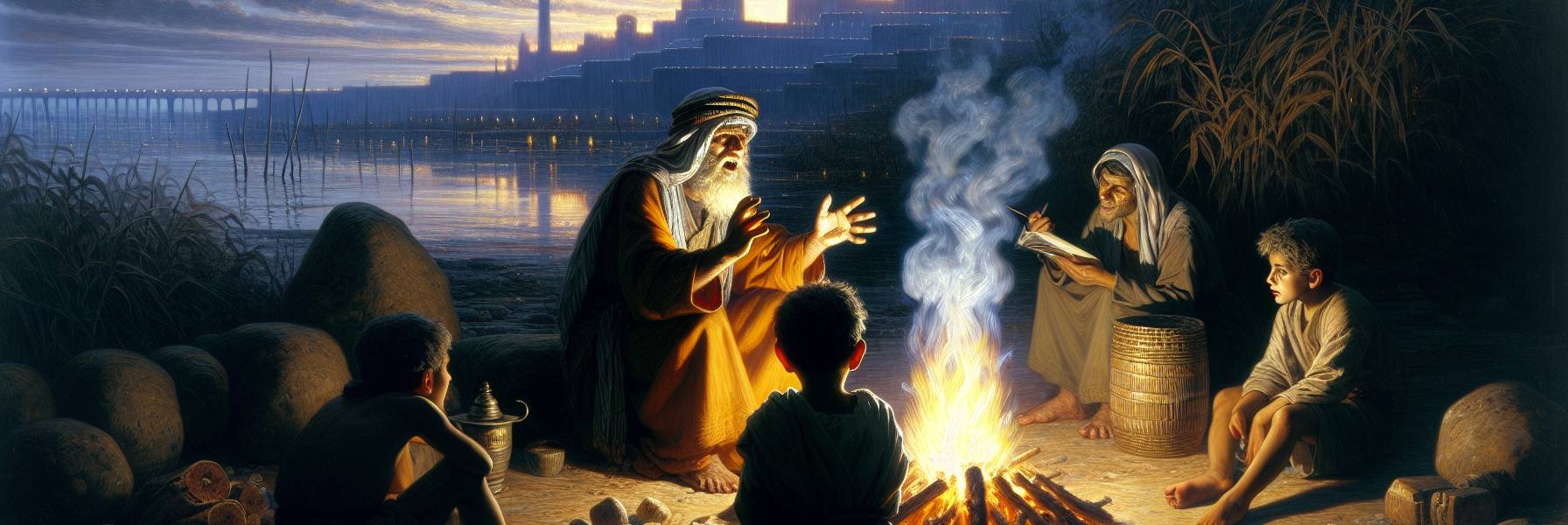

The damp of this Babylonian earth seeps into my bones in a way the dust of Jerusalem never did. It’s a cold that has little to do with the weather. We light our fires, but they seem to give more smoke than warmth, more sting to the eyes than comfort to the hands. My grandson, little Ezra, asks for the story of the Temple again. He knows no other home but this flat, reedy land, these alien stars. And as I begin, the words of the prophet, old and aching in my spirit, rise like a fever-dream.
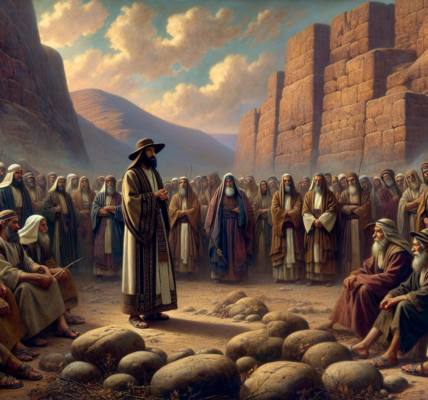
I tell him of the Presence. Not as a doctrine, but as a memory that cracks my voice. “Once,” I say, my eyes not on his face but on the hazy, indifferent sky, “the Holy One was not a memory. He was… a fire. A quaking. Do you know what it is to wait, child? We wait for rain, for harvest. But then… we waited for *Him*.”
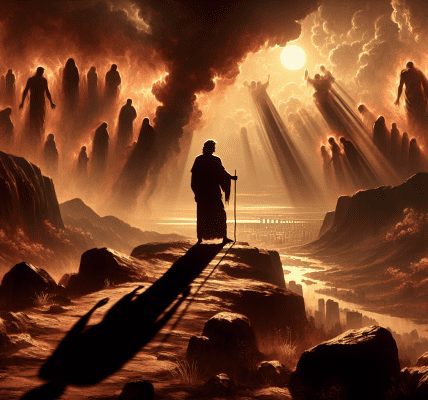
And I remember the yearning, a collective groan that became prayer. *Oh, that you would rend the heavens and come down!* It wasn’t a polite plea. It was born of the taste of ashes, the sound of our songs dying in a foreign air. We longed for the mountains to tremble at His descent, as they did at Sinai—not in legend, but in reality. For His name to be known not just to us, broken and scattered, but to every nation that now scoffs at our chains.
Ezra’s small hand rests on my knee. “Like thunder, Grandfather?”
“Like nothing of this world,” I murmur. “A fire that kindles wet wood. A Presence that makes the waters boil at His touch. So the nations, all these proud empires, would know. They would *fear*.” I say it not with vengeance, but with a weary longing for a world set right, where the name of our God is not a joke told in taverns.
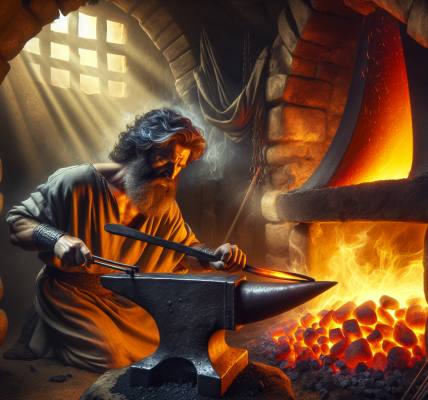
Then my mind turns to what was, and the telling grows harder. “He met those who waited for Him,” I say, the words thick. “He met them in joy, in justice. You see this clay?” I point to a broken shard of a pot by the doorway. “We were like that in His hand. But we forgot the Potter. We grew proud, brittle. We thought the shape was our own.”
The silence between us now is filled with the ghosts of our failings. I think of our prayers in those last, fat years of Jerusalem—how they felt like transactions, like bargaining in the market. The holy days were polished performances. The righteousness we wore was not a garment woven by Him, but a costume we stitched ourselves, now unraveled and foul. *All our righteous acts are like filthy rags.* The truth of it is a taste more bitter than the bile of hunger. Our piety was a leaf, shriveled and carried away by the wind of His judgment. And no one called on His name. No one stirred themselves to take hold of Him. He hid His face, and we—we dissolved into the mire of our own making.
“Are we forgotten?” Ezra whispers, his faith a fragile, naked thing.
I pull him closer. The prophet’s lament is now my own, a raw scrape in the throat. “Yet, Adonai, you are our Father. We are the clay. You are the Potter. We are all the work of your hand.” It is a truth that condemns and saves in the same breath. Our formlessness is our hope. Only the hand that broke can remake.
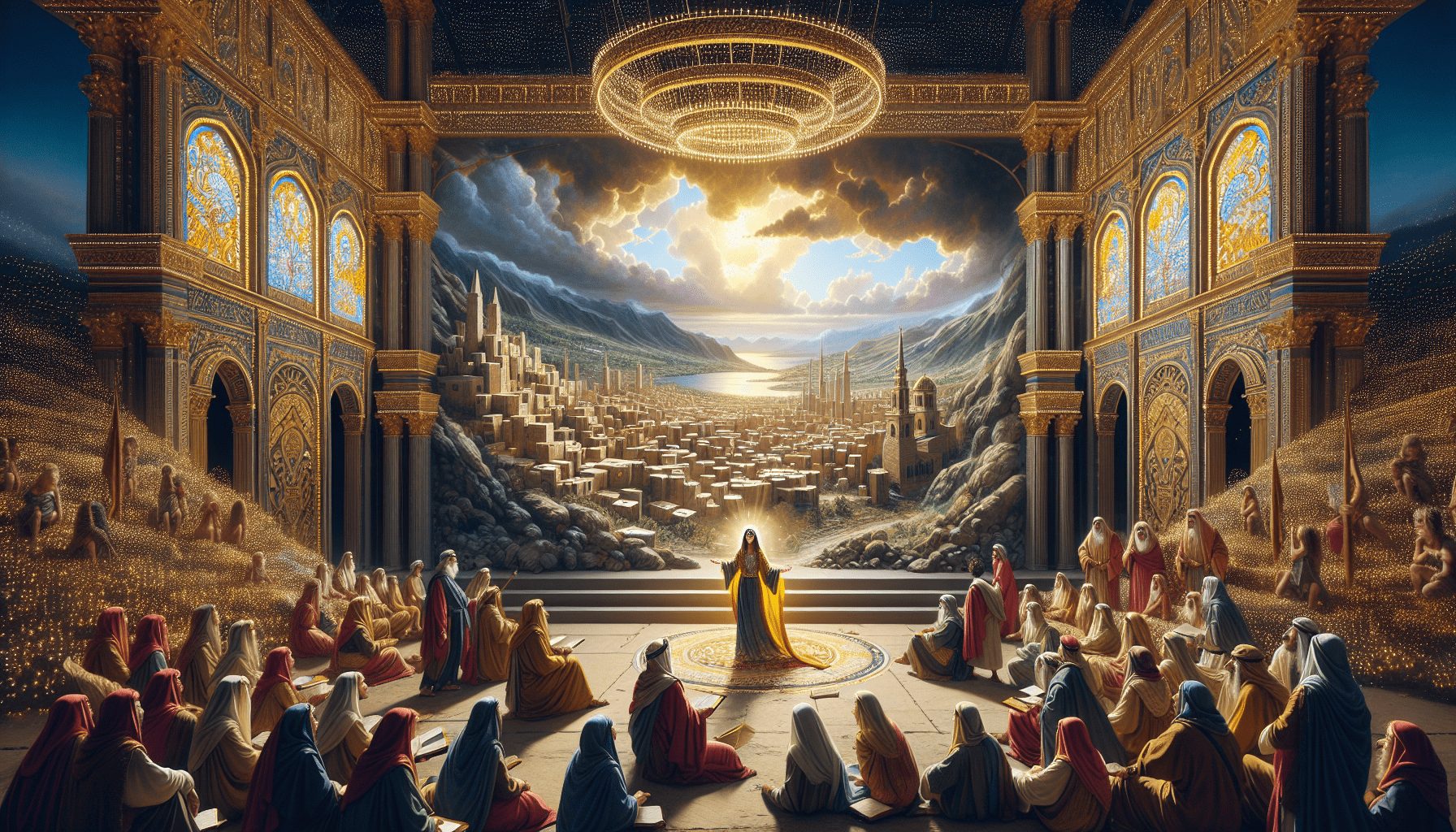
“Do not be angry beyond measure,” I whisper to the darkness, the ancient prayer becoming my own. “Do not remember our sins forever. Look down, we beg. See your people. Your holy cities are a wilderness. Zion is a desert. Jerusalem, a desolation.” I see it in my mind’s eye: the carved cedar burned to charcoal, the gold looted, the beautiful house where our fathers praised You—trampled underfoot.
Can a heart break anew each day? It can. To hold these things together: the fury that shattered us, and the fidelity that promises not to cast us off forever. The tension is the very fiber of our existence now. We are a people suspended between the “because” of our sin and the “nevertheless” of His covenant.
I look at Ezra, his head now heavy against my side in sleep. He is the future, shaped in exile. And I understand then that the story is not finished. The prayer of Isaiah is not a relic, but a living breath in us. We are the plea for the heavens to be rent. We are the confession of the filthy rags. We are the handful of clay, waiting in the Potter’s shadow, hoping for the pressure of His hands once more.
The fire has died to embers. The Babylonian night is vast and cold. But in the echo of the prayer—*Oh, that you would rend the heavens and come down*—there is a strange, stubborn warmth. Not of resolution, but of a waiting that is itself a kind of fidelity. We are not answered. But we are heard. And for now, in the silence before the dawn, that must be enough.