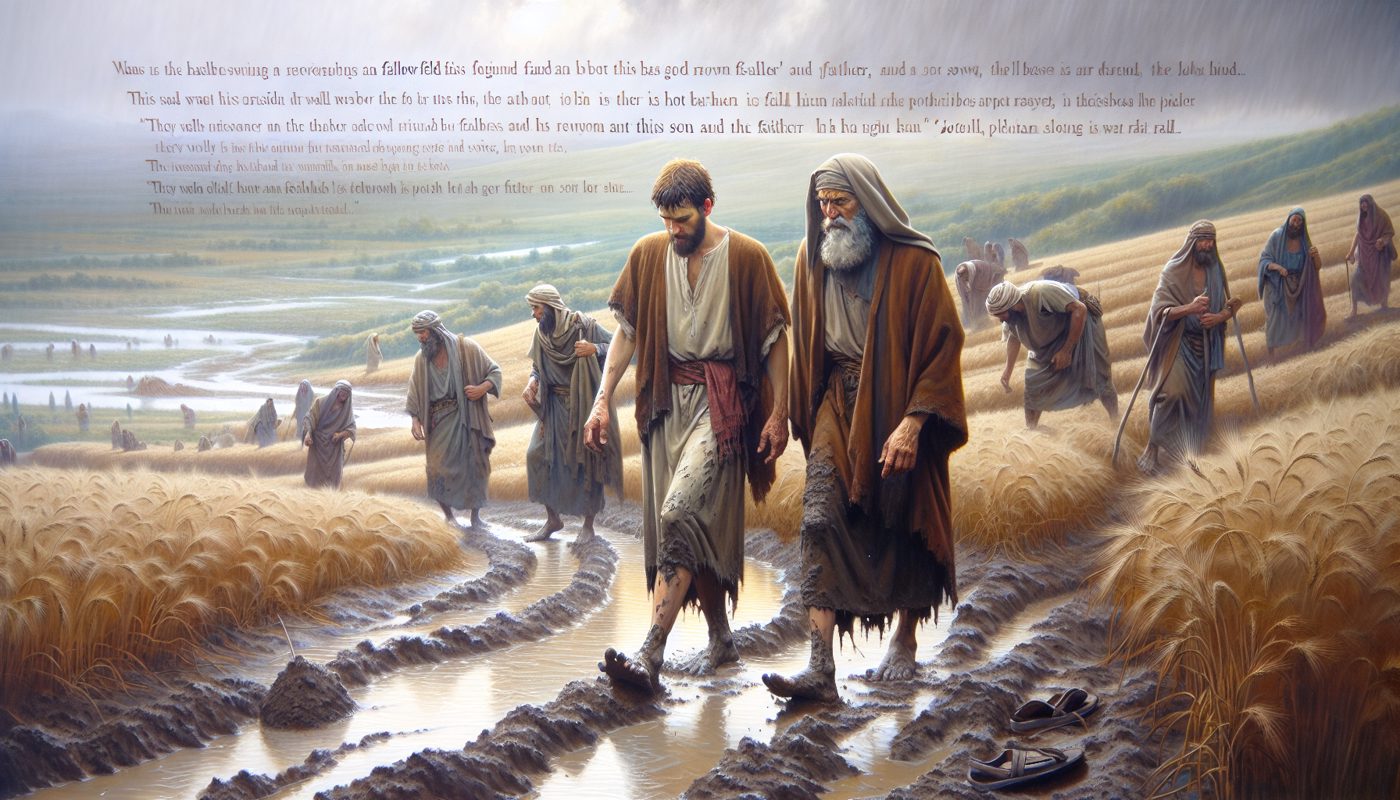
Proverbs 19 opens with a direct claim that runs against the grain of every instinct the world teaches: a poor man who walks in his integrity is better than a fool with perverse lips. The verse does not romanticize poverty. It does not pretend that poverty is easy or that the poor man has no struggles. It simply states that integrity outweighs the alternative. The fool, for all his clever talk, has already lost the comparison.
The second verse sharpens the point. A soul without knowledge is not good, and the man who hurries with his feet misses his way. The chapter does not celebrate ignorance or slowness. It warns against haste that outruns understanding. The fool does not fail because he lacks intelligence. He fails because he acts before he knows, and he speaks before he thinks.
The third verse cuts deeper. A man's own foolishness subverts his way, and then his heart frets against the Lord. The pattern is unmistakable. The fool blames God for the mess he made himself. He does not see that the path was ruined by his own choices. The chapter refuses to let him shift the responsibility.
Wealth, the fourth verse observes, attracts friends, but the poor man is separated from his friend. The chapter does not moralize about this. It simply reports what happens. Money draws people. Poverty drives them away. The fifth and ninth verses repeat the same warning: a false witness will not go unpunished. Lying has consequences. The chapter does not offer exceptions or loopholes.
The sixth verse notes that many seek the favor of a generous man, and everyone is a friend to a gift-giver. The seventh verse completes the picture: even a poor man's own brothers hate him, and his friends keep their distance. He pursues them with words, but they are gone. The chapter does not pretend that the world is fair. It describes the world as it is, and then it points to a better way.
The eighth verse turns the corner. Whoever gets wisdom loves his own soul. Whoever keeps understanding finds good. The chapter does not say that wisdom guarantees wealth or popularity. It says that wisdom is good for the soul itself. The tenth verse adds that delicate living does not suit a fool, and it is even worse when a servant rules over princes. The chapter has no patience for role reversal that rewards folly.
The eleventh verse gives one of the chapter's most practical observations: a man's discretion makes him slow to anger, and it is his glory to overlook an offense. The chapter does not call this weakness. It calls it glory. The twelfth verse compares a king's wrath to a lion's roar and his favor to dew on grass. Power is dangerous, but it can also be gentle.
The thirteenth verse returns to the family. A foolish son is a calamity to his father, and a quarrelsome wife is like a constant dripping. The fourteenth verse contrasts this: houses and wealth are inherited from fathers, but a prudent wife comes from the Lord. The chapter values what cannot be bought or earned. The fifteenth verse warns that laziness leads to deep sleep and hunger. The idle soul will not be fed.
The sixteenth verse ties obedience to life. Whoever keeps the commandment keeps his soul. Whoever is careless about his ways will die. The seventeenth verse extends the logic: whoever is kind to the poor lends to the Lord, and the Lord will repay him. The chapter does not say that the poor will repay. It says the Lord will. That changes the calculation entirely.
The eighteenth verse commands discipline. Chasten your son while there is hope. Do not set your heart on his destruction. The nineteenth verse warns that a man of great wrath will pay the penalty, and if you rescue him once, you will have to do it again. The twentieth verse urges the reader to hear counsel and receive instruction, so that he may be wise in the end. The twenty-first verse states the final reality: many plans are in a man's heart, but the Lord's purpose will stand.
The twenty-second verse returns to the opening theme. What makes a man desirable is his kindness, and a poor man is better than a liar. The twenty-third verse promises that the fear of the Lord leads to life, satisfaction, and safety from harm. The twenty-fourth verse offers a comic image of the sluggard who buries his hand in the dish and will not even bring it to his mouth. The chapter does not let laziness hide behind excuses.
The twenty-fifth verse gives a final lesson on correction. Strike a scoffer, and the simple will learn prudence. Reprove a man of understanding, and he will gain knowledge. The twenty-sixth verse condemns the son who robs his father or drives away his mother. The twenty-seventh verse warns against listening to instruction only to stray from knowledge. The twenty-eighth and twenty-ninth verses close with judgment: a worthless witness mocks justice, and the wicked swallow iniquity, but judgments are prepared for scoffers and stripes for the backs of fools.
Comments
Comments 0
Read the discussion and add your voice.
Members only
Sign in to join the conversation
We keep comments tied to real accounts so the discussion stays clean and trustworthy.
No comments yet. Be the first to add one.