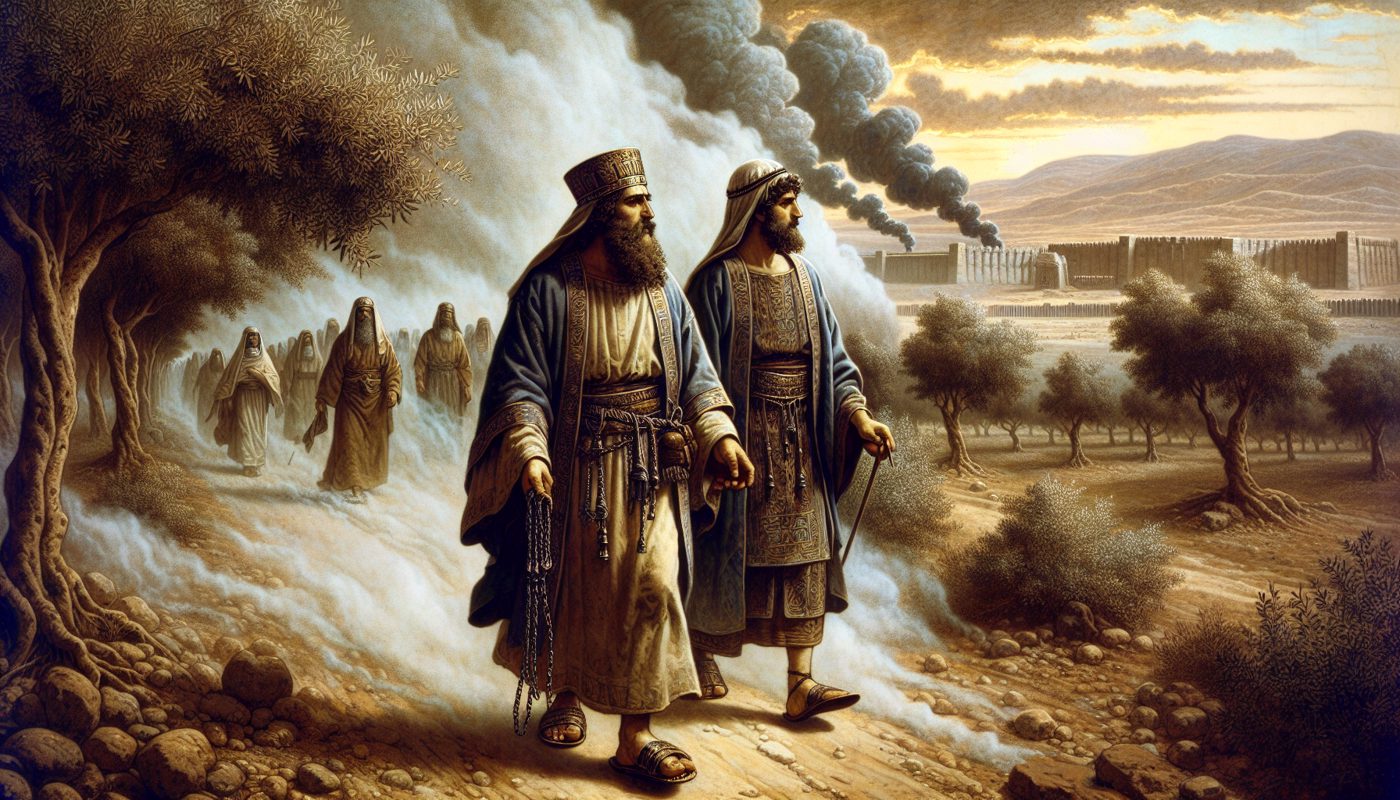
The chapter opens not with a vision or a sermon, but with a man still wearing chains. Jeremiah had been bound among the captives of Jerusalem and Judah at Ramah, a staging ground for the long road to Babylon. Nebuzaradan, the captain of the guard, pulled him from the line. The captain spoke plainly: the Lord your God pronounced this disaster upon this place, and he has done just as he said. There was no mockery in the words. The conqueror recited the theology of the conquered as a simple fact.
Then Nebuzaradan loosed the chains. He offered Jeremiah a choice: come to Babylon and receive his care, or stay in the land. The captain gave him freedom to go wherever seemed good and right. Before Jeremiah could answer, the captain added a specific suggestion: go to Gedaliah son of Ahikam, whom the king of Babylon had appointed governor over the cities of Judah. The captain gave Jeremiah provisions and a gift, and let him go.
Jeremiah went to Gedaliah at Mizpah and stayed with him among the people left in the land. The prophet who had been a prisoner became a guest of the governor. The chapter does not record his words. It records only his presence. He dwelt among the remnant, the poorest of the land, those not carried away to Babylon.
News spread quickly. The captains of the forces still in the fields heard that Gedaliah had been made governor. They came to Mizpah: Ishmael son of Nethaniah, Johanan and Jonathan sons of Kareah, Seraiah son of Tanhumeth, the sons of Ephai the Netophathite, and Jezaniah son of the Maacathite, each with their men. They were military leaders who had survived the collapse, still armed, still dangerous.
Gedaliah swore to them. He told them not to fear serving the Chaldeans. Dwell in the land, serve the king of Babylon, and it will be well with you. He positioned himself at Mizpah to stand before the Chaldeans who would come. He told the captains to gather wine, summer fruits, and oil, put them in their vessels, and live in the cities they had taken. It was a practical plan for survival under occupation.
The Jews who had fled to Moab, Ammon, Edom, and other countries heard the news. They returned from every place they had been driven. They came to Gedaliah at Mizpah and gathered wine and summer fruits in abundance. The chapter presents this as a moment of fragile restoration. The remnant was regathering. The land was producing again. The governor had a plan.
But Johanan son of Kareah and the other captains came to Gedaliah with a warning. They asked if he knew that Baalis, king of the Ammonites, had sent Ishmael son of Nethaniah to take his life. Gedaliah did not believe them. The chapter does not explain why he refused the report. It only records his disbelief.
Johanan pressed the matter privately. He offered to kill Ishmael secretly, arguing that if Ishmael succeeded, all the Jews gathered to Gedaliah would be scattered and the remnant of Judah would perish. The logic was cold and strategic. Johanan saw a clear threat and proposed a preemptive strike.
Gedaliah refused. He told Johanan, You shall not do this thing, for you speak falsely of Ishmael. The governor chose trust over suspicion. He dismissed the warning as a lie. The chapter ends there, with the threat unaddressed and the governor's confidence intact. The reader knows what Gedaliah did not: the report was true. The guest of the governor was a man sent to kill him.
Comments
Comments 0
Read the discussion and add your voice.
Members only
Sign in to join the conversation
We keep comments tied to real accounts so the discussion stays clean and trustworthy.
No comments yet. Be the first to add one.