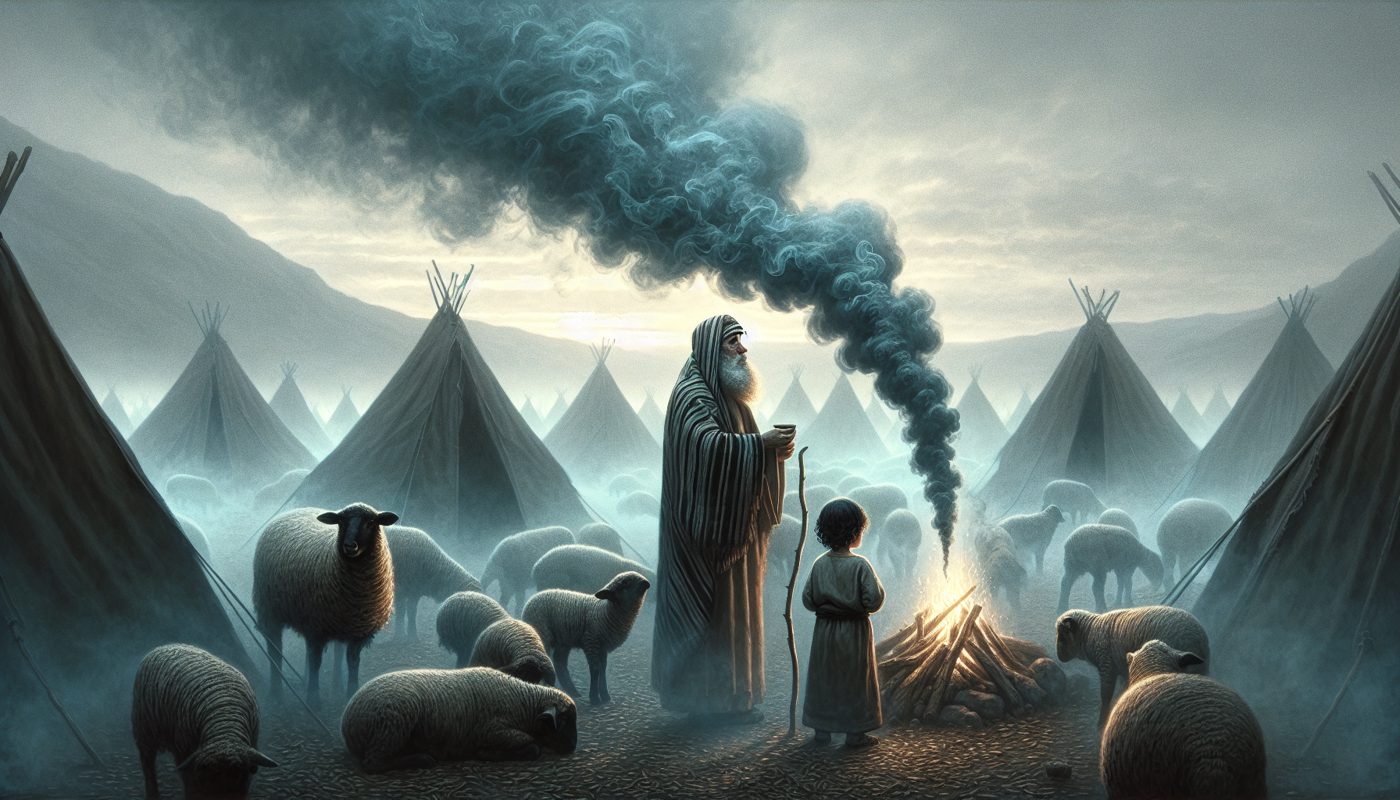
The Lord spoke to Moses with a command, not a suggestion. The people were to observe the offerings in their due season, a phrase that carries the weight of obligation. This was not spontaneous worship or a response to crisis. It was a schedule, a rhythm set by divine decree, and it began with the daily burnt offering: two lambs a year old without blemish, one in the morning and one at twilight.
The daily offering was the foundation. Each lamb came with a grain offering of fine flour mixed with oil and a drink offering of strong drink poured out in the holy place. The Lord called it his food, his offering made by fire, a sweet savor. The language is deliberate, almost domestic, but it carries no hint of need. The Lord does not hunger. The offering is a sign of covenant, a continual acknowledgment that every day belongs to him.
On the Sabbath, the offering doubled. Two lambs instead of one, with their grain and drink offerings, added to the continual burnt offering. The Sabbath was not a day of rest from worship but a day of increased worship. The rhythm did not pause; it intensified, marking the seventh day as holy by the measure of sacrifice.
The new moon brought a larger offering: two young bulls, one ram, and seven male lambs, all without blemish. The grain offerings scaled with the animals—three tenths of an ephah for each bull, two tenths for the ram, one tenth for each lamb. The drink offerings followed the same proportion: half a hin of wine for a bull, a third for a ram, a quarter for a lamb. And with it all, a single goat for a sin offering, to make atonement. The monthly offering was a reset, a fresh start that acknowledged the ongoing need for cleansing.
The calendar moved to Passover, on the fourteenth day of the first month. The fifteenth day began the Feast of Unleavened Bread, a seven-day festival. The first day was a holy convocation, a day of no ordinary work. Each day of the feast required the same burnt offering as the new moon: two bulls, one ram, seven lambs, with their grain and drink offerings, and a goat for sin. The daily burnt offering continued alongside it. The feast did not replace the rhythm; it layered upon it.
The seventh day of the feast was another holy convocation, another day of rest. The pattern held: the offerings did not diminish as the feast ended. The same animals, the same grain, the same wine, the same goat for atonement. The feast was not a climax that exhausted itself but a sustained period of intensified worship.
The Feast of Weeks, the day of firstfruits, followed the same pattern. A new grain offering, a holy convocation, no ordinary work. The burnt offering was identical to the other feasts: two bulls, one ram, seven lambs, with their grain and drink offerings, and a goat for sin. The Lord did not vary the recipe. The same proportions, the same animals, the same requirement of without blemish.
The chapter is a list, but it is a list with a point. The offerings are not arbitrary. They are measured, repeated, and tied to the calendar. The daily, the weekly, the monthly, the yearly—each has its place, its portion, its purpose. The Lord does not leave worship to human impulse. He structures it, because the people need structure to remember who he is and what he has done.
The goat for sin appears at every festival. The burnt offerings are sweet savor, but the sin offering is a necessity. The people cannot approach the Lord without atonement, and the atonement is not a one-time event. It is built into the rhythm, a regular acknowledgment that the people are not clean on their own. The feasts are celebrations, but they are also confrontations with the reality of sin.
The continual burnt offering is the heartbeat of the system. Everything else is added to it, not substituted for it. The morning and evening lambs frame every day, every Sabbath, every new moon, every feast. The rhythm does not stop. The smoke rises without ceasing, a constant sign that the Lord is present and the people are his.
Comments
Comments 0
Read the discussion and add your voice.
Members only
Sign in to join the conversation
We keep comments tied to real accounts so the discussion stays clean and trustworthy.
No comments yet. Be the first to add one.