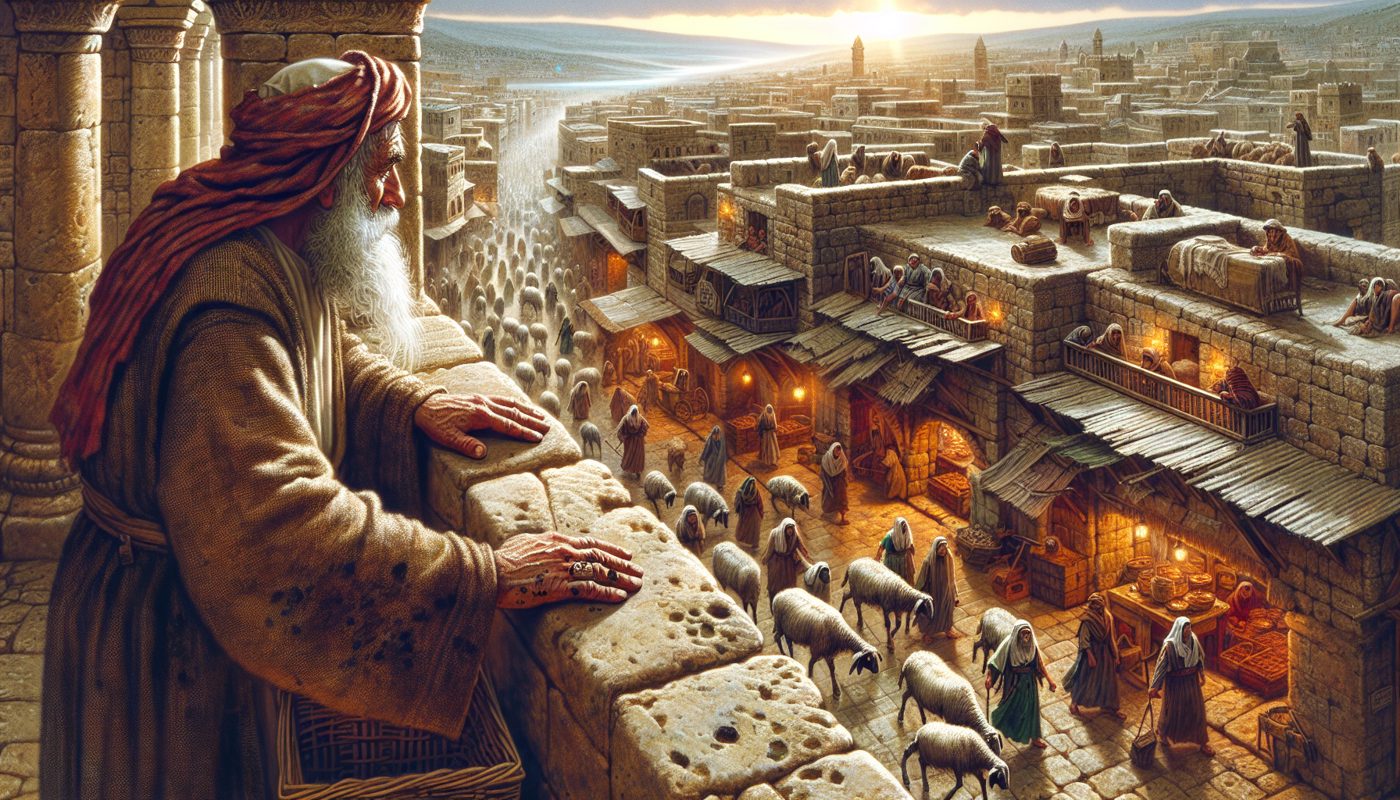
The Preacher begins with a question that hangs over the entire chapter: who is like the wise man, and who knows the interpretation of a thing? Wisdom, he says, makes a man's face shine and changes its hardness. But the chapter does not offer a simple answer to the question. Instead, it moves directly into the pressure of living under authority, under a king whose word has power and who cannot be questioned.
The command to keep the king's command is grounded in the oath of God. This is not a political theory. It is a practical recognition that the king's word carries weight, and that hasty departure from his presence or persistence in an evil thing brings trouble. The wise man's heart discerns time and judgment, but the Preacher immediately adds that the misery of man is great upon him, and that no one knows what shall be or how it shall be.
This is the core tension of the chapter. Authority exists, and wisdom requires submission to it. But the future is hidden, and no man has power over the spirit to retain it, nor over the day of death. There is no discharge in war, and wickedness does not deliver those who are given to it. The king's power is real, but it is bounded by the same limits that bind every man: death, time, and the unknown.
The Preacher then turns to what he has seen under the sun. He has applied his heart to every work, and he has seen a time when one man has power over another to his hurt. This is not an abstraction. It is the raw fact of human rule: power is often used to harm. And yet the wicked are buried, and those who did right go away from the holy place and are forgotten in the city. This too is vanity.
The delay of justice is a profound problem. Because sentence against an evil work is not executed speedily, the heart of the sons of men is fully set to do evil. The Preacher does not explain why God delays. He simply states the fact and its consequence. The wicked do evil a hundred times and prolong their days, but the Preacher insists that it shall be well with those who fear God, and that the wicked will not prolong their days, which are as a shadow, because they do not fear before God.
Yet even this certainty does not resolve the vanity. There are righteous men to whom it happens according to the work of the wicked, and wicked men to whom it happens according to the work of the righteous. This is a flat contradiction of the moral order that the wise expect. The Preacher calls it vanity, and he does not explain it away.
In the face of this, the Preacher commends mirth. He says that a man has no better thing under the sun than to eat, to drink, and to be joyful, for that shall abide with him in his labor all the days of his life which God has given him under the sun. This is not hedonism. It is a sober recognition that joy is a gift from God, and that the hiddenness of the future does not cancel the present good of a meal shared in the fear of the Lord.
The chapter ends with a return to the limits of wisdom. The Preacher applied his heart to know wisdom and to see the business done on the earth, even to the point of sleeplessness. But he beheld all the work of God and concluded that man cannot find out the work that is done under the sun. However much a man labors to seek it out, he shall not find it. Even if a wise man thinks to know it, he shall not be able to find it.
The chapter leaves the reader with the weight of authority, the delay of justice, the hiddenness of the future, and the gift of present joy. The Preacher does not resolve the tension. He names it, and he lets it stand. The wise man's face may shine, but the work of God remains beyond his reach.
Comments
Comments 0
Read the discussion and add your voice.
Members only
Sign in to join the conversation
We keep comments tied to real accounts so the discussion stays clean and trustworthy.
No comments yet. Be the first to add one.