The opening of Proverbs 27 does not ease the reader in. It strikes directly: do not boast about tomorrow, because you do not know what a day may bring. The verse is not a suggestion. It is a command against the kind of confidence that assumes the future belongs to the speaker. The chapter does not explain why this is dangerous. It simply states the fact and moves on, leaving the reader to feel the weight of human ignorance.
From there the text turns to praise and rebuke. Let another man praise you, not your own mouth. This is not modesty for its own sake. It is a practical recognition that self-praise carries no weight. A stranger's word is worth more than a man's own lips. The chapter does not soften this: a fool's vexation is heavier than stone or sand, and wrath and anger are cruel, but jealousy is worse still. The proverbs are stacked without transition, each one landing like a blow.
Then comes a cluster about friendship. Open rebuke is better than hidden love. Faithful are the wounds of a friend, but the kisses of an enemy are profuse. The text does not romanticize friendship. It values the friend who speaks hard truth over the one who flatters. The wounds are faithful precisely because they come from someone who will not let the other remain in error. The profuse kisses of an enemy are not affection; they are a trap.
The chapter uses sharp, physical images. A bird wandering from its nest is like a man wandering from his place. Oil and perfume rejoice the heart, and so does the sweetness of a friend's hearty counsel. The friend is not a decoration. His counsel is sweet because it comes from a place of genuine care. The chapter commands: do not forsake your own friend or your father's friend, and do not run to your brother's house in trouble. A neighbor who is near is better than a brother who is far off. This is not sentimental. It is a cold recognition of proximity and reliability.
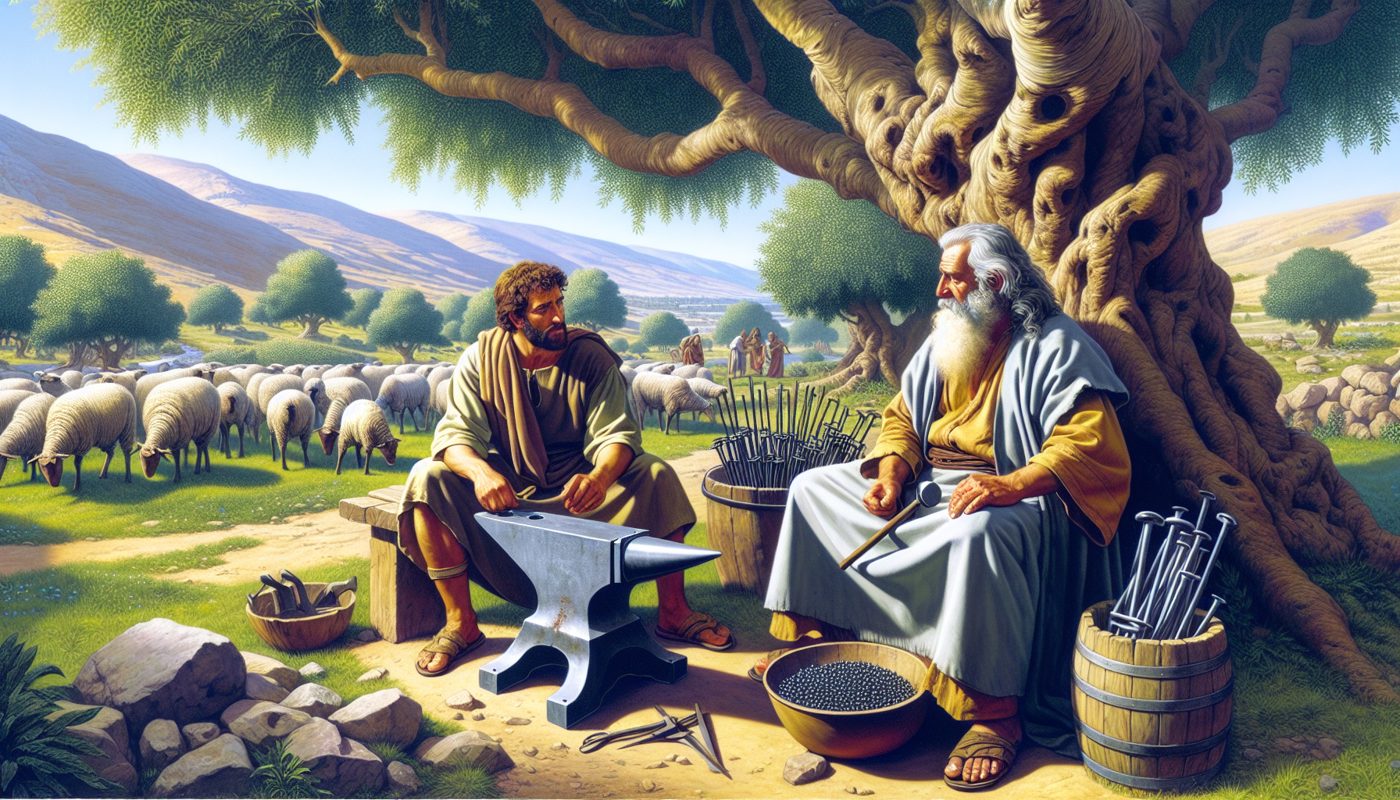
Then comes the line that has become famous: iron sharpens iron, so a man sharpens the countenance of his friend. The image is not gentle. Iron on iron produces sparks and friction. The sharpening is not comfortable. It is the kind of contact that grinds away dullness and leaves a keen edge. The chapter does not explain what this means in practice, but the context of the surrounding verses makes it clear: the sharpening comes through honest rebuke, through counsel that does not flatter, through the faithful wounds of a friend.
The text moves to other matters. A prudent man sees evil and hides himself; the simple pass on and suffer. This is not cowardice. It is wisdom that recognizes danger and does not walk into it blindly. Then a warning about surety: take the garment of a man who guarantees a stranger's debt. The chapter does not explain the legal details. It simply gives the instruction, as if the reader already knows the danger of standing surety for someone unknown.
The proverbs about a contentious woman are blunt. A continual dripping on a rainy day and a contentious woman are alike. Restraining her is like restraining the wind or grasping oil. The image is not flattering, and the chapter does not apologize for it. It is a practical observation about the kind of conflict that wears a person down over time.
The chapter turns to practical labor. Know the state of your flocks and look well to your herds. Riches do not last forever, and a crown does not endure to all generations. The hay is carried, the tender grass shows itself, the herbs of the mountains are gathered. The lambs are for clothing, the goats for the price of a field, and there will be goats' milk enough for food for the household and maintenance for the maidens. The text does not spiritualize this. It is a command to attend to the actual work of sustaining a household. The wisdom of the chapter is not abstract. It is grounded in the daily rhythms of shepherding and farming.
Throughout the chapter, the Lord is present but not named directly. The wisdom is assumed to come from the fear of the Lord, but the proverbs themselves are delivered as observations about how the world works. The reader is left to draw the connection between the practical wisdom and the God who orders the world. The chapter does not preach. It observes, commands, and warns. The praise of a man is a test, like the refining pot for silver and the furnace for gold. And the eyes of man are never satisfied, like Sheol and Abaddon. The final verses return to the theme of work: diligence with the flocks, attention to the herds, the steady provision that comes from faithful labor. The chapter ends not with a flourish but with milk and clothing and food for the household. That is the point. Wisdom is not for show. It is for living.
Comments
Comments 0
Read the discussion and add your voice.
Members only
Sign in to join the conversation
We keep comments tied to real accounts so the discussion stays clean and trustworthy.
No comments yet. Be the first to add one.