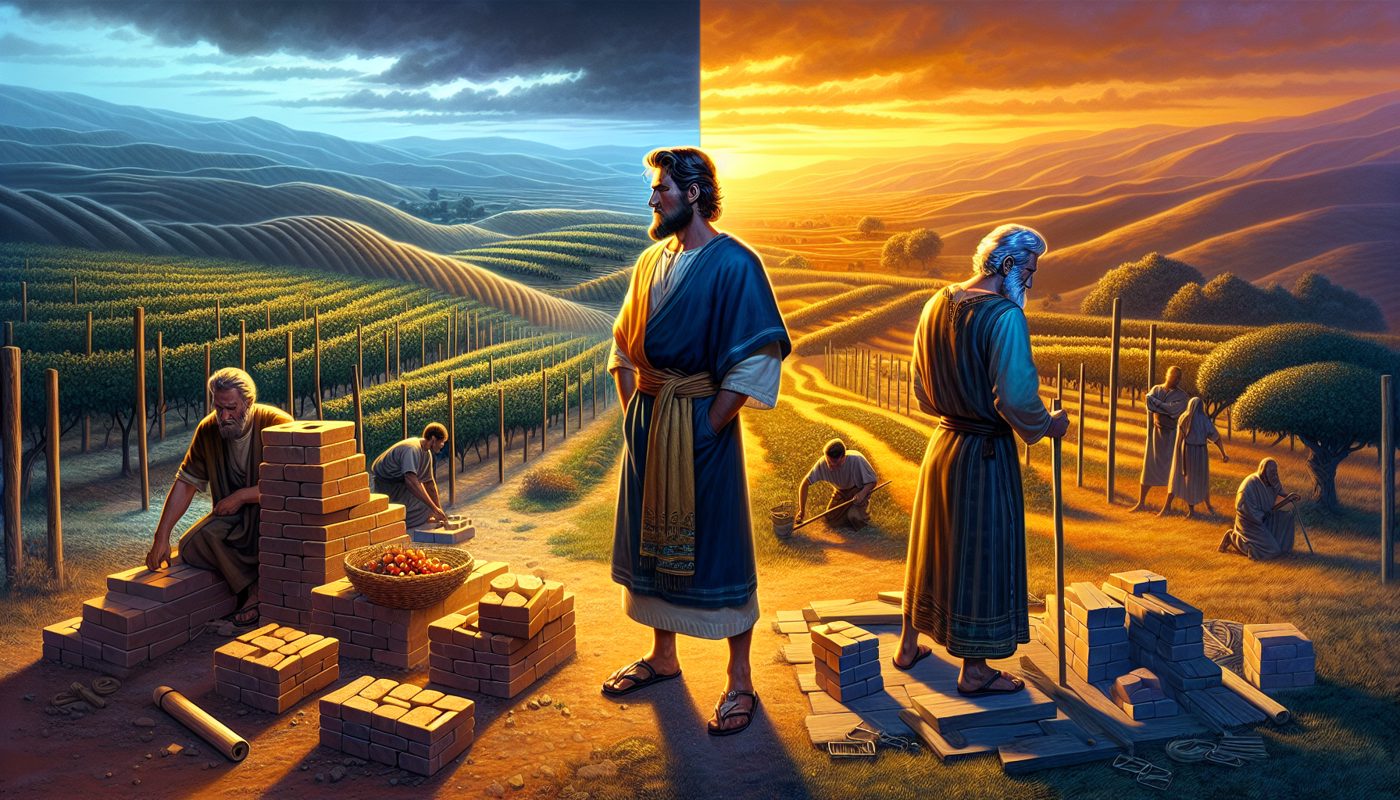
The opening verses of Proverbs 24 do not invite the reader to admire the wicked. They issue a blunt warning: do not envy them, do not desire their company. The reason is not that they prosper, but that their hearts study oppression and their lips talk of mischief. The chapter wastes no time on moral ambiguity. The wicked are not a puzzle to solve; they are a danger to avoid.
Then the text pivots sharply. Through wisdom a house is built, through understanding it is established, and through knowledge its chambers are filled with precious and pleasant riches. This is not a metaphor about architecture. The house is a life, a household, a legacy. The builder is not the one who works fast, but the one who works with discernment. The riches are not gold and silver, but the durable goods of a life ordered by the fear of the Lord.
The chapter insists that wisdom is not passive. A wise man is strong, and a man of knowledge increases might. War is made by wise guidance, and safety comes in a multitude of counselors. This is not the strength of brute force, but the strength of knowing when to fight, whom to consult, and how to hold the line. The fool, by contrast, is silent in the gate—the place of judgment and public decision—because wisdom is too high for him. He has nothing to say that is worth hearing.
Verses 10 through 12 press the reader on a different front. If you faint in the day of adversity, your strength is small. And if you see someone being carried away to death, you are not permitted to plead ignorance. The Lord weighs the heart, knows the soul, and renders to every man according to his work. The command is direct: deliver those who are ready to be slain. Do not hold back. This is not a suggestion for the especially virtuous; it is the baseline of a life that fears God.
The chapter then turns to the sweetness of wisdom. Honey is good, and the drippings of the honeycomb are sweet to the taste. So is wisdom to the soul. If you have found it, there is a reward, and your hope will not be cut off. This is not a promise of ease, but of endurance. The wise do not merely survive; they have a future that is not severed by calamity.
The wicked, however, are told plainly: do not lay wait against the habitation of the righteous, and do not destroy his resting place. The reason is striking. A righteous man falls seven times and rises again, but the wicked are overthrown by calamity. The righteous are not immune to failure. They fall repeatedly. But they get up. The wicked, when they fall, stay down. The difference is not perfection; it is resilience rooted in the Lord.
The chapter also forbids rejoicing when an enemy falls. If the Lord sees that you are glad at another's disaster, He may turn away His wrath from that enemy. The warning is not about sparing the wicked; it is about the condition of your own heart. Do not fret over evildoers, and do not envy them. Their lamp will be put out. There is no reward for them in the end.
Verses 21 and 22 command the reader to fear the Lord and the king, and to avoid those who are given to change—that is, those who are restless, rebellious, or seditious. Their calamity will rise suddenly, and no one knows the destruction that comes from both. This is not a political statement. It is a practical warning about the company you keep and the authorities you respect.
The sayings of the wise that follow address judgment, speech, and work. Partiality in judgment is not good. To call the wicked righteous brings a curse from the peoples and abhorrence from the nations. But those who rebuke the wicked will find delight and a good blessing. A right answer is like a kiss on the lips—intimate, truthful, and fitting. And before you build your house, prepare your work in the field. Order your priorities. Do not build on credit you do not have.
The chapter closes with a scene of a sluggard's field. The narrator walked by it and saw thorns, nettles, and a broken stone wall. He looked, considered, and received instruction. The lesson is not complicated: a little sleep, a little slumber, a little folding of the hands to rest, and poverty comes like a robber. Want arrives like an armed man. The field is not a parable; it is evidence. The ruin of the lazy is visible to anyone who bothers to look.
Proverbs 24 does not offer a story about two men named Jotham and Shemer. It offers a set of pressures that press on every reader. Will you envy the wicked or avoid them? Will you build with wisdom or let the field go to thorns? Will you faint in adversity or rise seven times? The chapter does not ask for admiration of wisdom. It demands the hard work of living it.
Comments
Comments 0
Read the discussion and add your voice.
Members only
Sign in to join the conversation
We keep comments tied to real accounts so the discussion stays clean and trustworthy.
No comments yet. Be the first to add one.