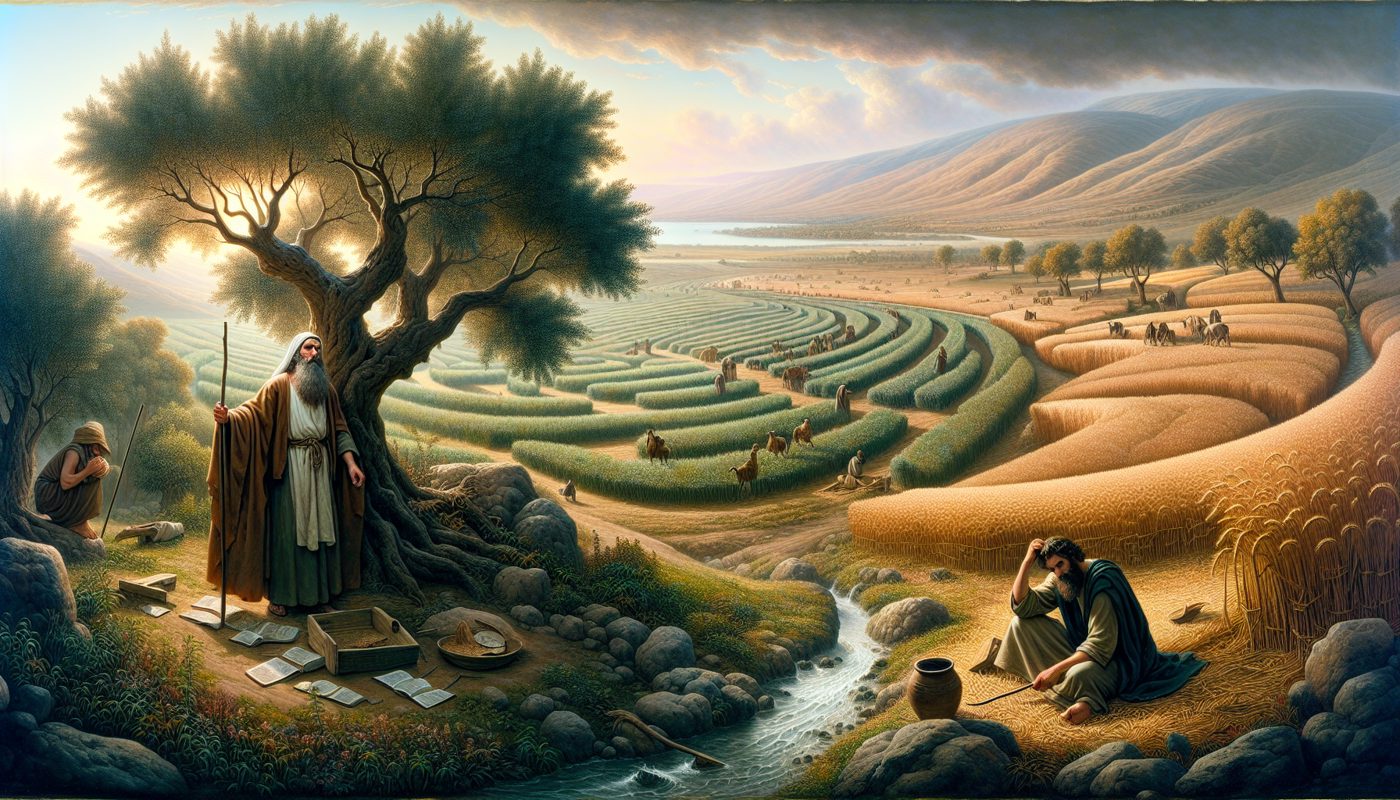
Proverbs 12 does not tell a story about two farmers named Abijah and Nadab. It does not mention plowing seasons, village elders, or a wife named Miriam. The chapter is a collection of compressed contrasts, each line pressing a single difference between the righteous and the wicked, the wise and the foolish, the diligent and the slothful. The existing post invented a narrative that the text itself never supplies, and that invention weakens the editorial discipline the chapter demands.
The chapter opens with a blunt test: whoever loves correction loves knowledge, but whoever hates reproof is brutish. That is not a gentle observation. The word translated as brutish carries the weight of an animal—stupid, unreachable, grazing on its own stubbornness. The proverb does not offer a story about a farmer who prays at dawn. It offers a diagnosis of the heart, and the diagnosis is stark.
From there the contrasts multiply. A good man obtains favor from the Lord, but a man of wicked devices the Lord condemns. The root of the righteous cannot be moved, but wickedness cannot establish a man. These are not descriptions of two adjacent fields. They are statements about what holds and what collapses, what stands and what is overthrown.
The chapter also speaks directly about speech. The words of the wicked lie in wait for blood, but the mouth of the upright delivers. A man is satisfied with good by the fruit of his mouth, and the doings of his hands are rendered to him. The tongue of the wise is health, but rash speech pierces like a sword. Lying lips are an abomination to the Lord, but those who deal truly are his delight. The chapter does not illustrate these claims with a character who snaps at elders. It simply states them as the architecture of moral reality.
There is also a striking line about animals: a righteous man regards the life of his beast, but the tender mercies of the wicked are cruel. That is not a detail about a farmer who sharpens his tools. It is a measure of character that extends to how a man treats what is under his care. The chapter does not name the beast or the man. It draws the line and moves on.
The diligent hand will rule, but the slothful will be put under taskwork. The slothful man does not even roast what he catches in hunting; the precious substance of men belongs to the diligent. The chapter does not contrast a careful farmer with a careless one. It contrasts two kinds of human action—one that finishes what it starts, one that lets the kill rot.
Heaviness in the heart makes it stoop, but a good word makes it glad. That is not a scene of a wife bringing water and bread. It is a proverb about the power of speech to lift or crush. The chapter does not need a narrative to make that point. The point is the narrative.
The righteous is a guide to his neighbor, but the way of the wicked causes them to err. The chapter ends with a promise: in the way of righteousness is life, and in that pathway there is no death. That is not a conclusion about two fields. It is a claim about the only road that does not end in ruin.
The existing post replaced the chapter's own structure with invented characters and invented scenes. The chapter does not need that help. Its contrasts are already sharp, its stakes already clear. The task of the editor is not to make the chapter more vivid by adding what is not there. The task is to let the chapter's own pressure stand without decoration.
Comments
Comments 0
Read the discussion and add your voice.
Members only
Sign in to join the conversation
We keep comments tied to real accounts so the discussion stays clean and trustworthy.
No comments yet. Be the first to add one.