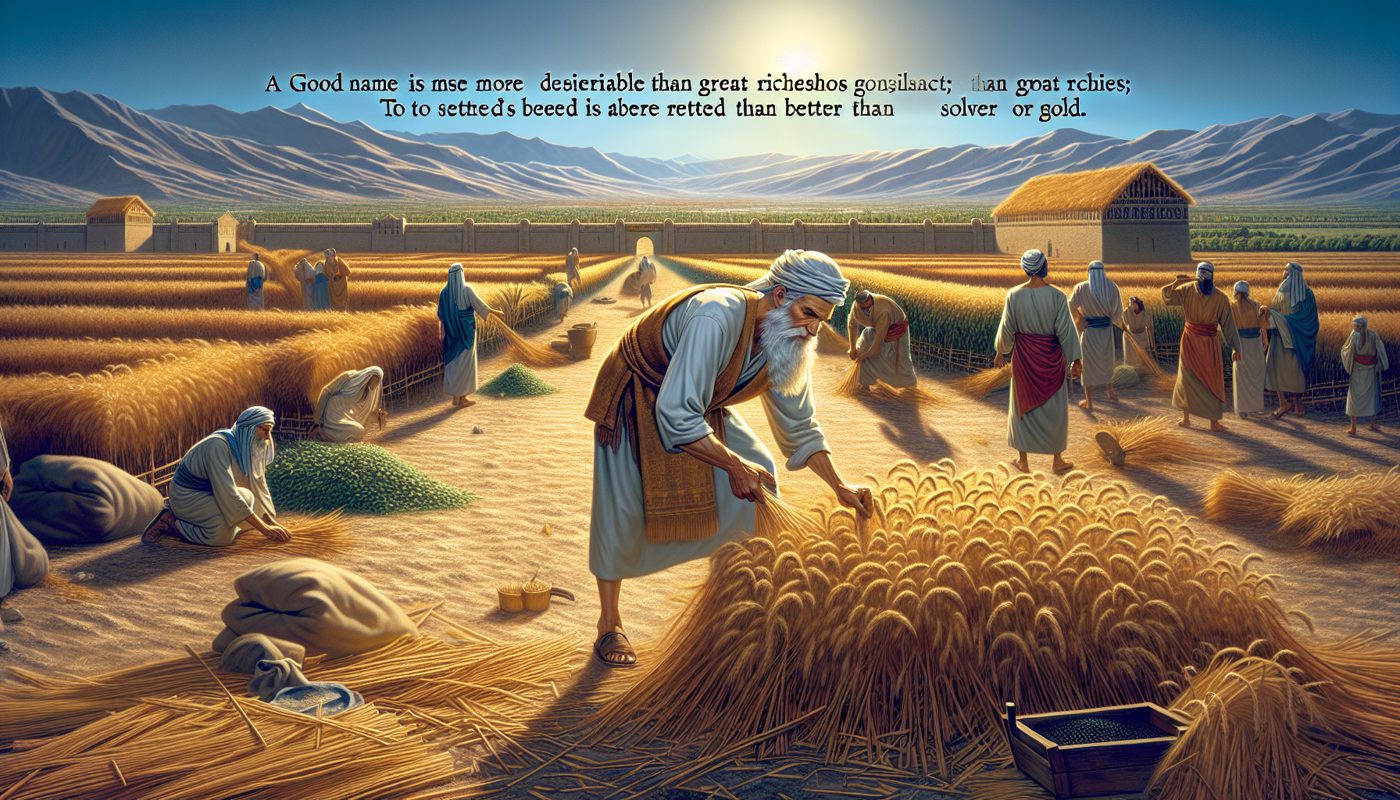
The first verse of Proverbs 22 draws a sharp line: a good name is more desirable than great riches, and loving favor is better than silver and gold. The chapter does not argue that wealth is evil, but it insists that reputation and goodwill carry a weight that money cannot buy. The rest of the chapter builds on this premise, showing what kind of life actually produces that kind of name.
Verse 2 states a fact that cuts across social divisions: the rich and the poor meet together, and the Lord is the maker of them all. This is not a call to economic leveling, but a reminder that both the wealthy and the impoverished share a common origin. No one can claim inherent superiority based on wealth, because the same God formed both. The practical implication is that the poor are not to be despised, and the rich are not to be idolized.
The prudent man sees evil and hides himself, while the simple pass on and suffer for it. This is not cowardice; it is discernment. The chapter does not romanticize suffering or naivety. It presents wisdom as the ability to recognize danger before it arrives and to take cover. The simple, by contrast, walk straight into trouble because they lack the foresight to avoid it.
Humility and the fear of the Lord are linked directly to reward: riches, honor, and life. This is not a prosperity formula in the modern sense, but a statement of how the world works under God's order. The humble person does not grasp for status, and the one who fears the Lord does not trust in his own schemes. The result is a life that holds real value, not just material accumulation.
Verse 6 is one of the most quoted lines in the book: train up a child in the way he should go, and even when he is old he will not depart from it. The context of the chapter suggests that this training includes instruction in humility, honesty, and the fear of the Lord. It is not a guarantee of perfect outcomes, but a principle about the lasting influence of early formation.
The chapter then turns to economic ethics. The rich rule over the poor, and the borrower is servant to the lender. This is a description of how power works, not an endorsement of it. The verses that follow warn against oppressing the poor to increase one's own gain, and they promise that the Lord will plead the cause of the afflicted. The one who gives bread to the poor is called blessed, while the one who oppresses the poor will come to want.
The scoffer is to be cast out, because his presence breeds contention and strife. The chapter does not counsel endless patience with those who mock wisdom. Instead, it says that removing the scoffer removes the conflict. This is a practical measure for preserving peace in a household or a community.
Verses 17 through 21 shift tone and introduce a direct appeal from the teacher to the student. The reader is told to incline his ear, hear the words of the wise, and apply his heart to knowledge. The purpose is that his trust may be in the Lord. The teacher claims to have written excellent things of counsels and knowledge, so that the student may know the certainty of the words of truth and carry them back to those who sent him. This frames the entire collection as reliable instruction meant to be passed on.
The final verses give concrete warnings: do not rob the poor because he is poor, do not make friends with an angry man, do not strike hands as a surety for debts, and do not remove the ancient landmark. Each of these is a specific case of the broader principle that wisdom governs behavior in real situations. The chapter ends with a picture of the diligent man: he will stand before kings, not before obscure men. This is not a promise of political ambition, but a recognition that competence and hard work earn a place of influence.
Proverbs 22 does not tell a story about a named farmer or a famine. It does not need one. The chapter itself is the story: a collection of sayings that define what it means to live wisely, humbly, and justly under the Lord. The good name it opens with is not achieved by wealth or cleverness, but by the kind of character that these verses describe.
Comments
Comments 0
Read the discussion and add your voice.
Members only
Sign in to join the conversation
We keep comments tied to real accounts so the discussion stays clean and trustworthy.
No comments yet. Be the first to add one.