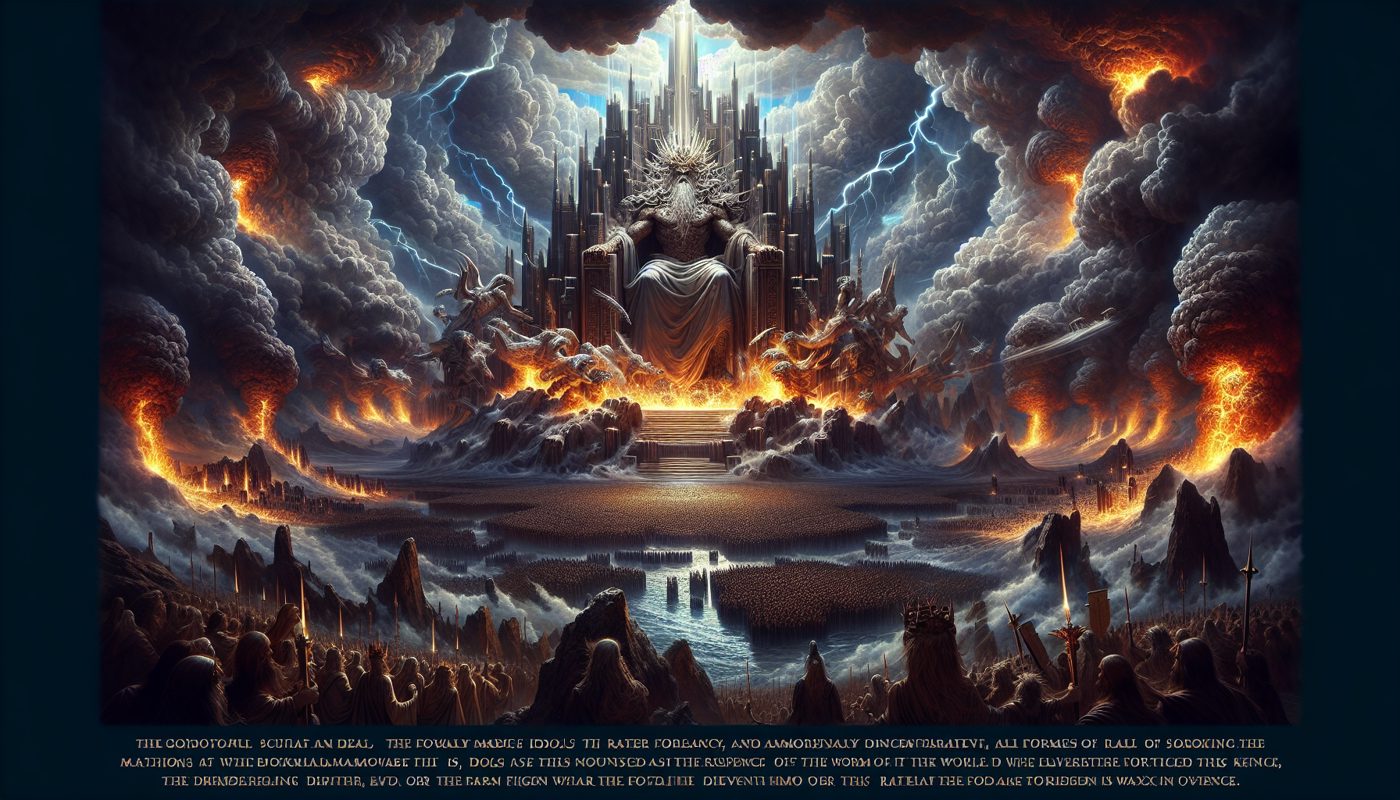
The Lord reigns, and the psalmist commands the earth to rejoice. The multitude of coastlands—the distant islands—are told to be glad. But the opening call to joy does not describe a gentle arrival. Clouds and darkness surround the Lord. Righteousness and justice are the foundation of his throne, not comfort or familiarity.
Fire goes before him. It burns up his adversaries on every side. The psalm does not say the fire is symbolic. It moves ahead of him, and the enemies are consumed. Lightning flashes across the world. The earth sees and trembles. This is not a quiet coronation.
The mountains melt like wax at the presence of the Lord. They do not crumble slowly or erode over time. They melt at the presence of the Lord of the whole earth. The image is total and immediate. No geological force is named. Only the presence of the Lord.
The heavens declare his righteousness. The peoples see his glory. The declaration is not whispered in a temple or read from a scroll. It is written across the sky, visible to every nation. There is no hidden revelation here.
Then the psalm turns to those who serve graven images. They are put to shame. Those who boast in idols are exposed. The command is direct: worship him, all you gods. The lesser powers, whatever they are, are called to bow. The idols cannot answer.
Zion hears and is glad. The daughters of Judah rejoice. Their gladness is tied specifically to the Lord's judgments. They do not celebrate because they have been given wealth or victory in battle. They celebrate because the Lord has acted in judgment, and his judgments are true.
The Lord is most high above all the earth. He is exalted far above all gods. The psalm does not argue this point. It states it as a fact that the preceding images have already demonstrated. The fire, the melting mountains, the shamed idols—all of it supports the single claim.
Those who love the Lord are told to hate evil. The connection is direct: love for the Lord and hatred of evil belong together. The Lord preserves the souls of his saints. He delivers them from the hand of the wicked. The preservation is not automatic. It is tied to the same fire that consumes adversaries.
Light is sown for the righteous. Gladness for the upright in heart. The image is agricultural—light planted like seed, waiting to rise. The righteous do not yet see the full harvest, but the sowing has already happened. The gladness is coming.
The psalm ends with a command: be glad in the Lord, you righteous, and give thanks to his holy memorial name. The name is not explained. It is simply the name by which he is remembered. The gladness is not optional. It is the only fitting response to the King who reigns with fire and righteousness.
Comments
Comments 0
Read the discussion and add your voice.
Members only
Sign in to join the conversation
We keep comments tied to real accounts so the discussion stays clean and trustworthy.
No comments yet. Be the first to add one.