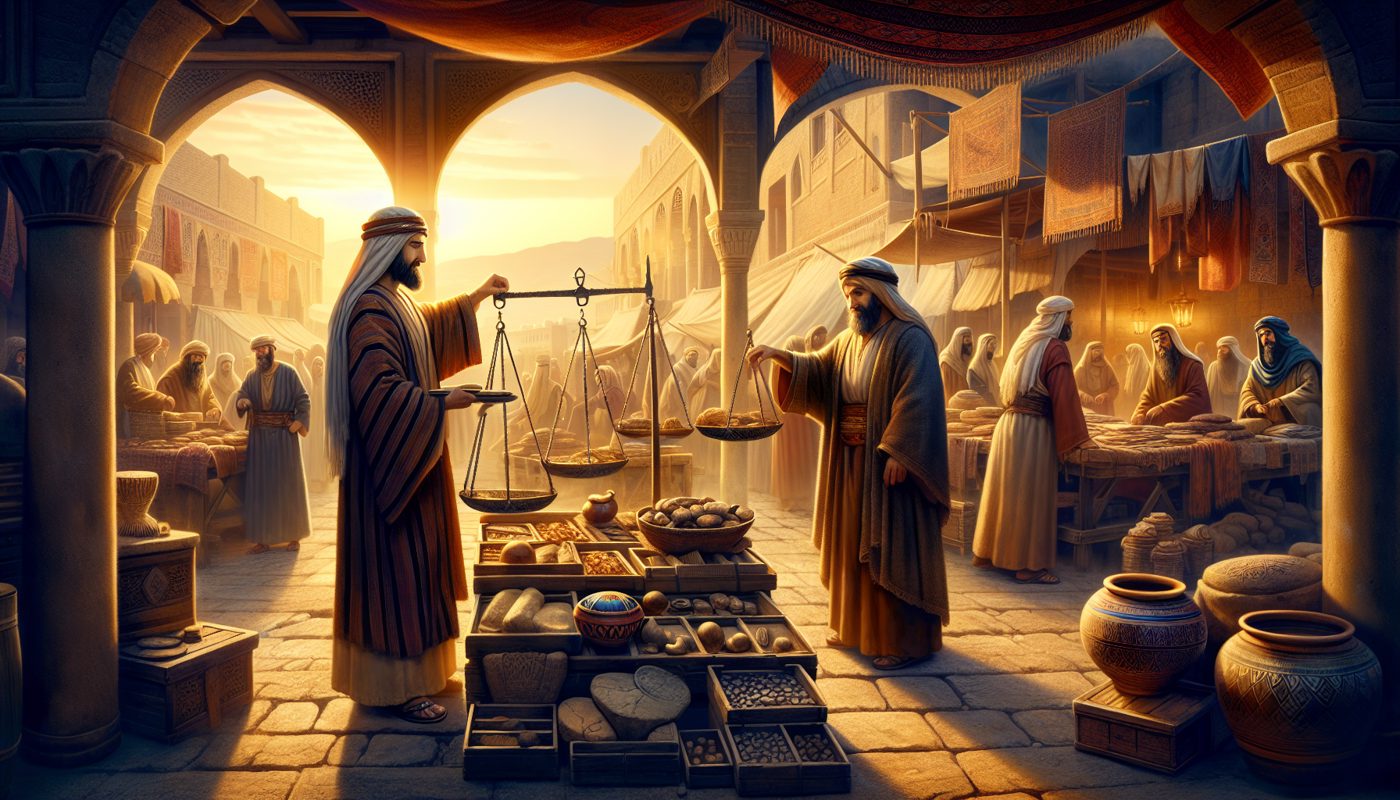
The book of Proverbs does not pause to tell a story. It presses its claims directly, one line after another, and chapter 11 is a dense weave of contrasts that leave no room for neutrality. The opening verse sets the terms: a false balance is an abomination to the Lord, but a just weight is His delight. This is not merely about commerce. It is about what the Lord sees when no one else is watching.
Pride and shame arrive together, the chapter says, while wisdom stays with the lowly. The integrity of the upright guides them, but the perverseness of the treacherous destroys them. The chapter does not argue these points. It states them as facts, as if the moral architecture of the world is simply built this way. Riches cannot help on the day of wrath; righteousness delivers from death. That is a heavy claim, and the chapter does not soften it.
The righteous are delivered out of trouble, and the wicked come in their place. The godless man destroys his neighbor with his mouth, but knowledge delivers the righteous. When the righteous prosper, the city rejoices; when the wicked perish, there is shouting. The chapter is blunt about public consequences. The blessing of the upright exalts a city; the mouth of the wicked overthrows it. A city is not neutral. It is shaped by the kind of people who live in it.
There is a sharp line drawn around speech. He who despises his neighbor lacks sense, but a man of understanding holds his peace. A gossip reveals secrets, but a faithful spirit conceals a matter. The chapter does not treat silence as weakness. It treats it as discipline. Where there is no guidance, the people fall; safety is found in the multitude of counselors. The solitary man who trusts his own judgment is not admired here.
The chapter also warns against financial entanglements. He who puts up security for a stranger will suffer for it, but he who hates giving pledges is safe. This is not a prohibition against generosity. It is a warning against foolish obligation. The merciful man does good to his own soul; the cruel man troubles his own flesh. The wicked earn deceptive wages, but the one who sows righteousness gets a sure reward.
One of the most striking images in the chapter is a ring of gold in a swine's snout. That is what a beautiful woman without discretion is like. The image is deliberately jarring. Beauty without judgment is not merely wasted; it is grotesque. The chapter does not flatter. It sees clearly, and it expects the reader to see clearly too.
The desire of the righteous ends only in good; the expectation of the wicked is wrath. There is a strange paradox in the middle of the chapter: some people scatter and yet increase; others withhold more than is right and only end up in want. The liberal soul will be made fat; he who waters will himself be watered. The one who withholds grain is cursed by the people, but blessing rests on the head of the one who sells it. The marketplace is not a neutral space. It is a place where the Lord's delight or abomination is made visible.
He who trusts in his riches will fall, but the righteous will flourish like a green leaf. He who troubles his own house will inherit the wind, and the fool will be servant to the wise of heart. The fruit of the righteous is a tree of life, and he who is wise wins souls. The chapter ends with a sobering reminder: if the righteous are recompensed on earth, how much more the wicked and the sinner. The scales are not rigged. The Lord sees the just weight and the false one, and He does not confuse them.
Comments
Comments 0
Read the discussion and add your voice.
Members only
Sign in to join the conversation
We keep comments tied to real accounts so the discussion stays clean and trustworthy.
No comments yet. Be the first to add one.