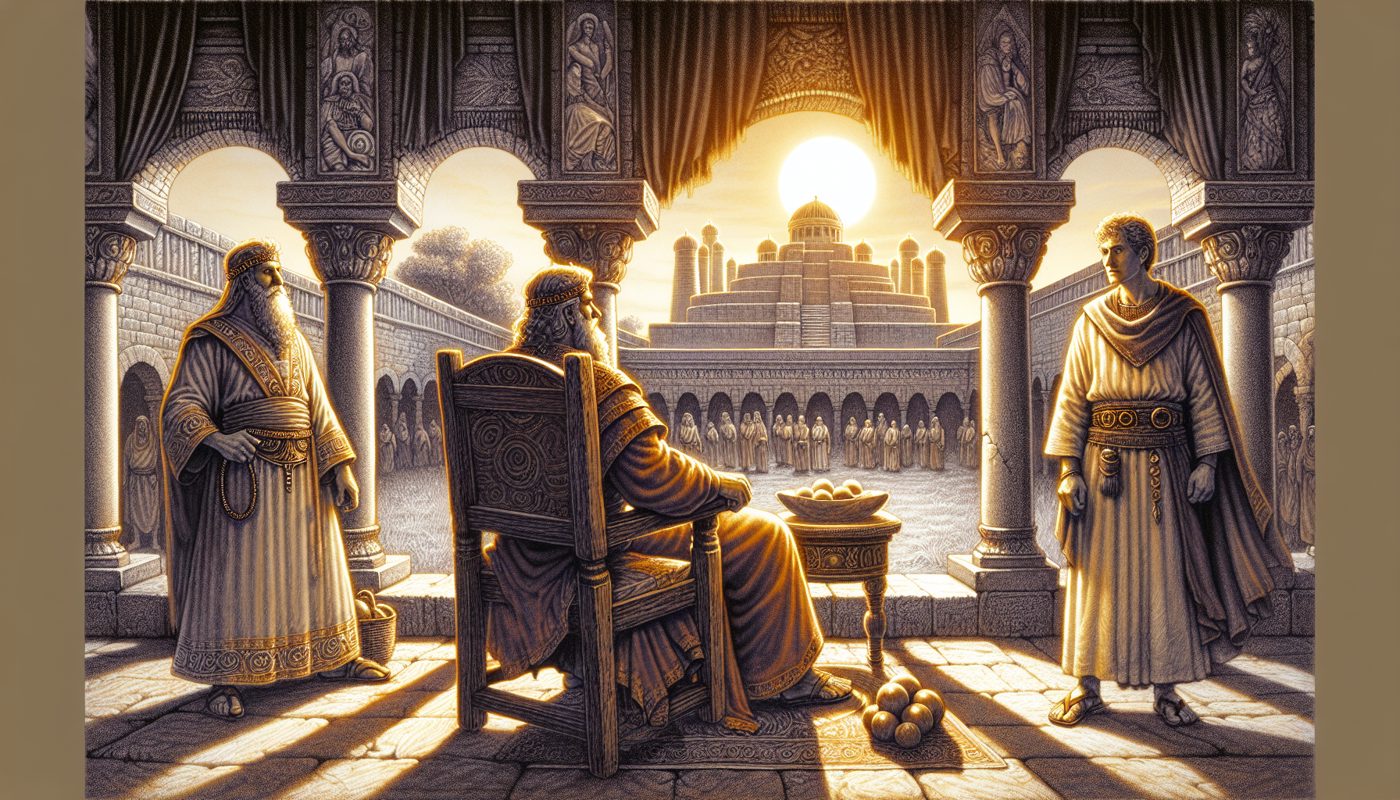
Proverbs 21 opens with a statement that unsettles every claim to self-rule: the king’s heart is a channel in the Lord’s hand, turned wherever He wills. The chapter does not flatter the throne. It places the highest human authority under a current that the ruler himself does not control.
The second verse sharpens the tension. Every man sees his own way as right, but the Lord weighs the hearts. This is not a general proverb about self-deception. It is a judicial claim. The king, the merchant, the farmer each carries an internal version of events that feels true. The chapter insists that the Lord does not accept that version at face value.
To do righteousness and justice, the text says plainly, is more acceptable to the Lord than sacrifice. This is not a dismissal of worship. It is a ranking. The ritual system is real, but it is secondary to the concrete act of making things right between people. A high look and a proud heart are called sin outright—no qualification, no context needed.
The proverbs then move through a series of compressed observations about how life actually works. The thoughts of the diligent lead to plenteousness; haste leads only to want. Treasures gained by a lying tongue are vapor driven by those who seek death. Violence sweeps away the wicked because they refuse to do justice. The cause and effect is not mechanical—it is moral, and the chapter treats it as reliable.
There is a strong contrast between the crooked way of the guilty and the right work of the pure. The pure are not perfect; their work is simply aligned with what is straight. The wicked, by contrast, desire evil and show no favor to a neighbor. The chapter does not soften this. It does not explain the wicked away.
Two verses about a contentious woman in a wide house and a desert land may seem like domestic advice, but they function as a test of priorities. A wide house means nothing if the person inside it makes life unbearable. The proverb forces a choice between comfort and peace.
The righteous man considers the house of the wicked and sees how the wicked are overthrown to their ruin. This is not gloating. It is observation. The righteous learn by watching what happens to those who refuse justice. The one who stops his ears at the cry of the poor will himself cry out and not be heard. The chapter ties hearing to being heard—a reciprocal judgment that the wealthy and powerful often forget.
A gift in secret pacifies anger, and a present in the bosom turns away strong wrath. This is not a bribe. It is a recognition that anger can be disarmed by something offered quietly, without public demand. The righteous find joy in doing justice; the workers of iniquity find it destruction. The same act produces opposite results depending on who is doing it.
The man who wanders from the way of understanding rests in the assembly of the dead. That is a stark destination. He who loves pleasure becomes poor; he who loves wine and oil does not become rich. The wise have treasure and oil in their dwelling; the foolish swallow it up. The chapter keeps returning to the same point: what you love determines what you lose.
He who follows after righteousness and kindness finds life, righteousness, and honor. The three are bound together. You do not get honor without the other two. A wise man scales the city of the mighty and brings down the strength of its confidence. The wise do not need an army. They need understanding.
Keeping the mouth and tongue keeps the soul from troubles. The proud and haughty man is called a scoffer by name. The sluggard’s desire kills him because his hands refuse to labor. Some people covet greedily all day; the righteous give and do not hold back. The sacrifice of the wicked is an abomination, especially when brought with a wicked mind. A false witness perishes; the man who hears speaks so as to endure.
A wicked man hardens his face. The upright establishes his ways. There is no wisdom, no understanding, no counsel against the Lord. The horse is prepared for the day of battle, but victory belongs to the Lord. The chapter ends where it began: human preparation is real, but the outcome is not in human hands.
Comments
Comments 0
Read the discussion and add your voice.
Members only
Sign in to join the conversation
We keep comments tied to real accounts so the discussion stays clean and trustworthy.
No comments yet. Be the first to add one.