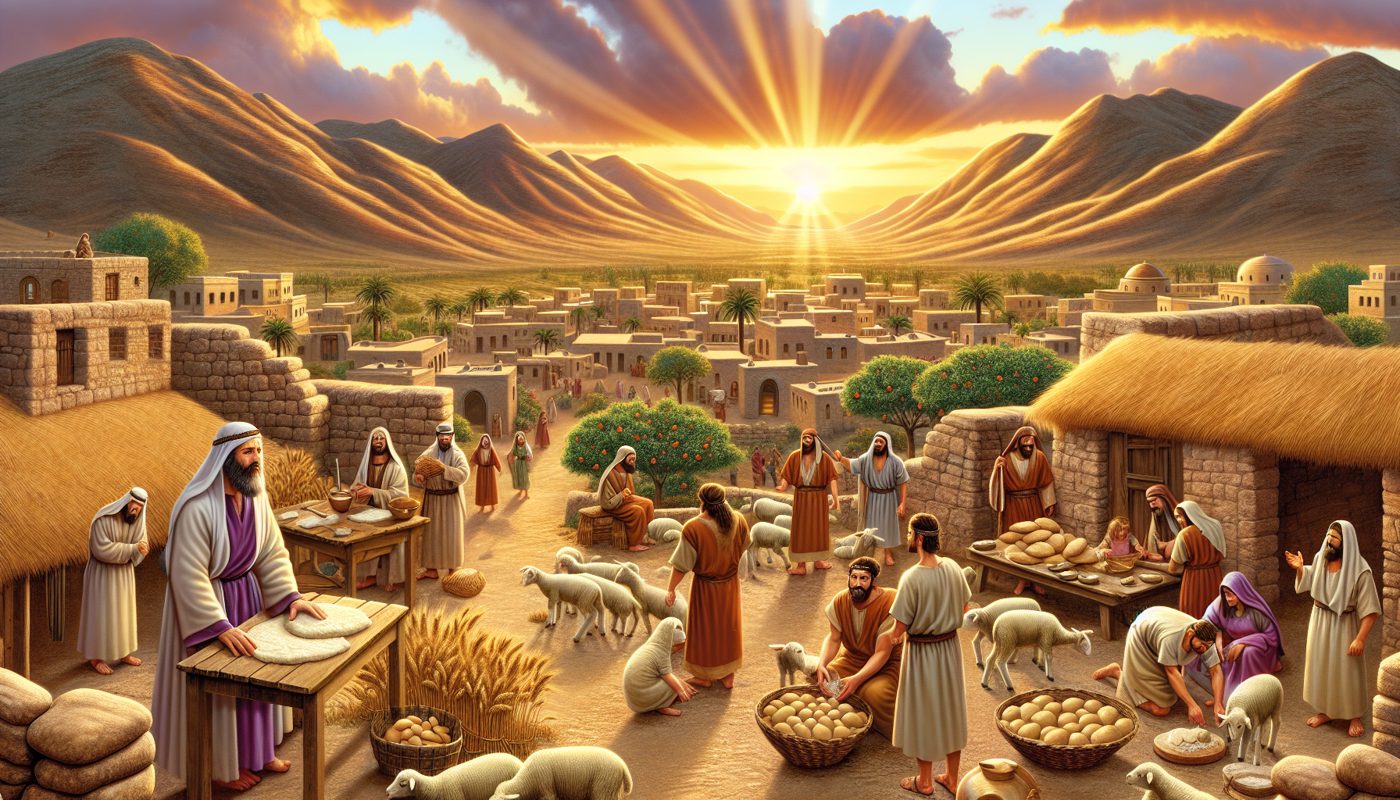
Deuteronomy 16 does not tell a story about a man named Eliezer or a village called Bethany. The chapter is a block of instruction, and it opens with a hard command: observe the month of Abib and keep the Passover to the Lord, because in that month the Lord brought Israel out of Egypt by night. No narrative padding is needed. The law itself carries the weight.
The Passover sacrifice must be slaughtered not in any town or at any local gate, but only at the place the Lord chooses to cause his name to dwell. That centralization is the spine of the chapter. The lamb or goat from the flock, or an animal from the herd, is roasted and eaten that same evening at the going down of the sun, and by morning the people turn and go back to their tents. No leftovers. No leaven in all their borders for seven days. The unleavened bread is called the bread of affliction, a direct link to the haste of the exodus.
Then the chapter counts seven weeks from the time the sickle first hits the standing grain. That is the Feast of Weeks, a freewill offering given according to how the Lord has blessed each household. The command is specific: rejoice before the Lord, and include your son, your daughter, your male servant, your female servant, the Levite inside your gates, the sojourner, the fatherless, and the widow. The feast is not a private family meal. It is a public act of joy that deliberately includes the people who have no land and no income of their own.
The Feast of Tabernacles comes after the threshing floor and the winepress are finished. Seven days of rejoicing, again in the place the Lord chooses, again with the same list of included dependents and outsiders. The chapter says plainly that the Lord will bless the people in all their increase and in all the work of their hands, and the result is that they are to be altogether joyful. That phrase is not a suggestion. It is a command tied to the blessing.
Three times a year every male must appear before the Lord at the chosen place: at the Feast of Unleavened Bread, at the Feast of Weeks, and at the Feast of Tabernacles. No one comes empty-handed. Each man gives as he is able, according to the blessing the Lord has given him. The rhythm of the year is built around these three gatherings, and the geography of worship is not optional.
Then the chapter shifts. Without a break in the text, it moves from festival law to judicial law. The people are told to appoint judges and officers in every town, tribe by tribe, and those judges must judge with righteous judgment. They must not twist justice, show partiality, or take a bribe. The reason given is blunt: a bribe blinds the eyes of the wise and twists the words of the righteous. The command is to follow what is altogether just, so that the people may live and inherit the land the Lord is giving them.
The chapter closes with two prohibitions that seem abrupt but are not accidental. No Asherah pole of any kind of tree may be planted beside the Lord's altar. No sacred pillar may be set up. The Lord hates these things. The connection to the feasts and the courts is structural: the place where the Lord causes his name to dwell must not be corrupted by foreign cult objects, and the judges who sit at the gates must not be corrupted by bribes. The purity of worship and the integrity of justice belong to the same covenant.
The chapter does not describe a single journey to Jerusalem. It does not name a single worshiper or judge. It lays down the calendar, the location, the social obligation, and the moral boundary all in one stretch of text. The feasts are not merely sentimental memorials. They are commanded gatherings that bind the community to the Lord's name, to the land's harvest, and to the people who have no other provision. And the justice system that operates in the same towns is held to the same standard as the altar.
Comments
Comments 0
Read the discussion and add your voice.
Members only
Sign in to join the conversation
We keep comments tied to real accounts so the discussion stays clean and trustworthy.
No comments yet. Be the first to add one.