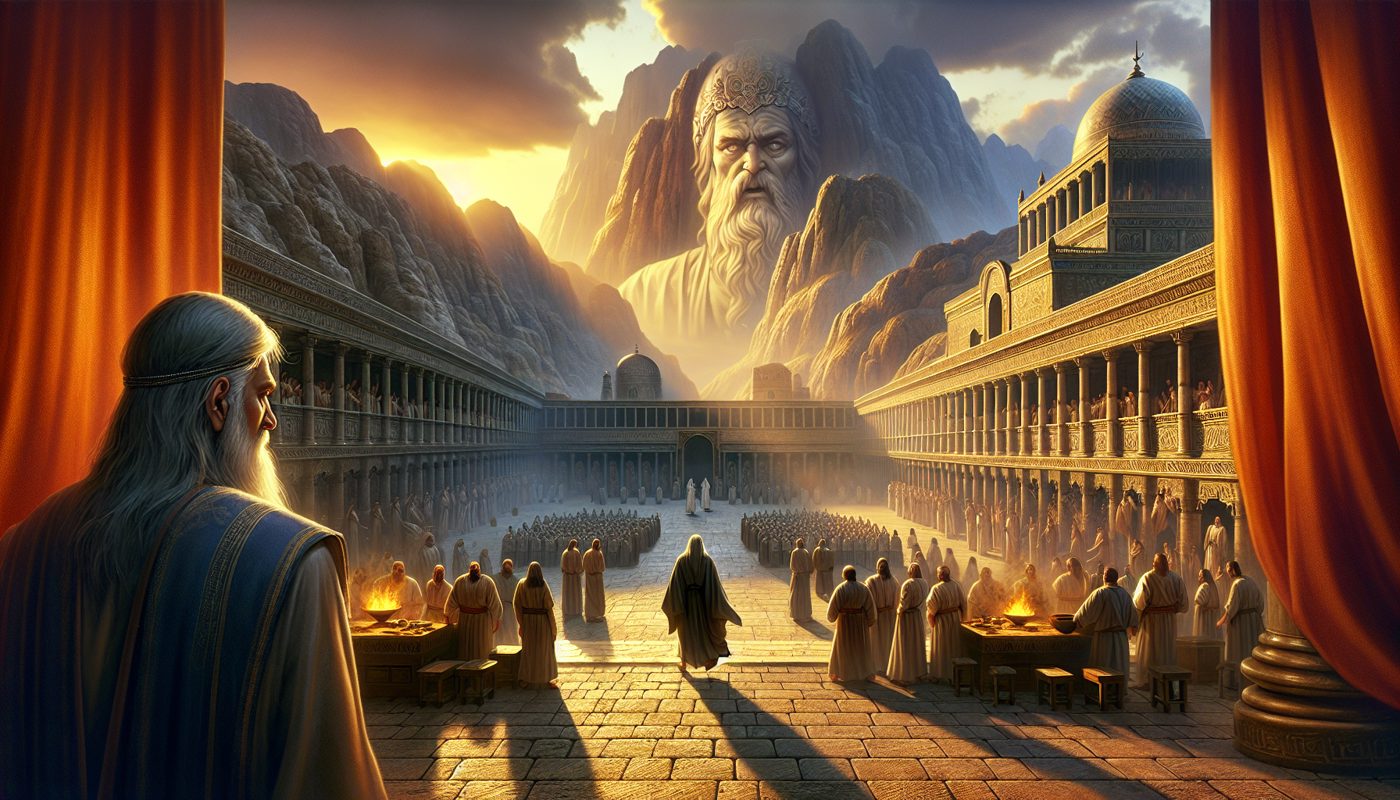
The chapter opens with a single, blunt sentence: David struck the Philistines and subdued them. No prayer is recorded, no divine speech precedes the action. The text simply reports that David took the bridle of the mother city out of the Philistines' hand. Whatever that phrase exactly means—whether a literal bridle, a symbol of authority, or a strategic stronghold—the effect is clear: the old Philistine grip on Israel was broken by force.
Then comes Moab. David measured them with a line, making them lie down on the ground. Two lines were for death, one full line was kept alive. The Moabites became servants and brought tribute. The numbers are precise, the method is cold, and no moral judgment is offered. The reader is left to sit with the fact that David, the man after God's own heart, conducted a campaign of selective slaughter against a neighboring people who had once given his own family refuge.
Next, David struck Hadadezer son of Rehob, king of Zobah, as Hadadezer was attempting to recover his dominion at the River. David took from him seventeen hundred horsemen and twenty thousand foot soldiers. He hamstrung all the chariot horses except a hundred. This was a deliberate act: chariot horses were valuable war assets, but David chose to cripple them rather than build his own chariot force. The chapter does not explain why, but the restraint is notable.
The Syrians of Damascus came to help Hadadezer, and David struck down twenty-two thousand of them. He then placed garrisons in Syria of Damascus, and the Syrians became his servants, bringing tribute. The text repeats a phrase that becomes the spine of the whole chapter: the Lord gave victory to David wherever he went.
David took the gold shields carried by Hadadezer's servants and brought them to Jerusalem. From Betah and Berothai, cities of Hadadezer, he took an enormous quantity of bronze. The metal and the gold were not kept for personal display alone; the chapter later says that David dedicated these things to the Lord, along with the silver and gold taken from all the nations he subdued.
Then Toi, king of Hamath, heard that David had defeated Hadadezer. Because Hadadezer had been at war with Toi, Toi sent his son Joram to David with vessels of silver, gold, and bronze. This was not tribute under duress; it was a diplomatic blessing, a salute from a neighboring king who saw David as a useful ally against a common enemy.
David dedicated all these gifts to the Lord, together with the spoils from Syria, Moab, Ammon, Philistia, Amalek, and the plunder of Hadadezer. The dedication is reported as a single act, but it covers multiple campaigns. The text does not say how the dedication was performed—whether the objects were placed in the tabernacle, stored for the future temple, or melted down. What matters is the pattern: the wealth of conquered nations was not David's private fortune; it belonged to the Lord.
David also made a name for himself when he returned from striking down eighteen thousand Syrians in the Valley of Salt. He placed garrisons in Edom, and all Edomites became his servants. Again, the Lord gave victory to David wherever he went. The repetition of that sentence is the chapter's theological anchor: David's military success is not attributed to his own genius or ruthlessness, but to the Lord's consistent favor.
The chapter closes with a shift in tone. David reigned over all Israel, and he executed justice and righteousness for all his people. The list of his officials follows: Joab over the army, Jehoshaphat as recorder, Zadok and Ahimelech as priests, Seraiah as scribe, Benaiah over the Cherethites and Pelethites, and David's sons as chief ministers. The list is dry, administrative, and final. After the violence of the campaigns, the text lands on the ordinary machinery of government. Justice and righteousness are not abstractions here; they are the daily work of named men in specific offices.
The chapter never explains how David reconciled the slaughter of Moab with the execution of justice. It does not justify the hamstringing of horses or the garrisons in Edom. It simply reports what happened and then declares that the Lord gave victory. The reader is left to hold the tension: a king who struck down thousands, who measured captives with a line for death, and who also administered justice and brought gold to the Lord. The chapter offers no resolution to that tension. It only insists that both things are true.
Comments
Comments 0
Read the discussion and add your voice.
Members only
Sign in to join the conversation
We keep comments tied to real accounts so the discussion stays clean and trustworthy.
No comments yet. Be the first to add one.